Nana Banana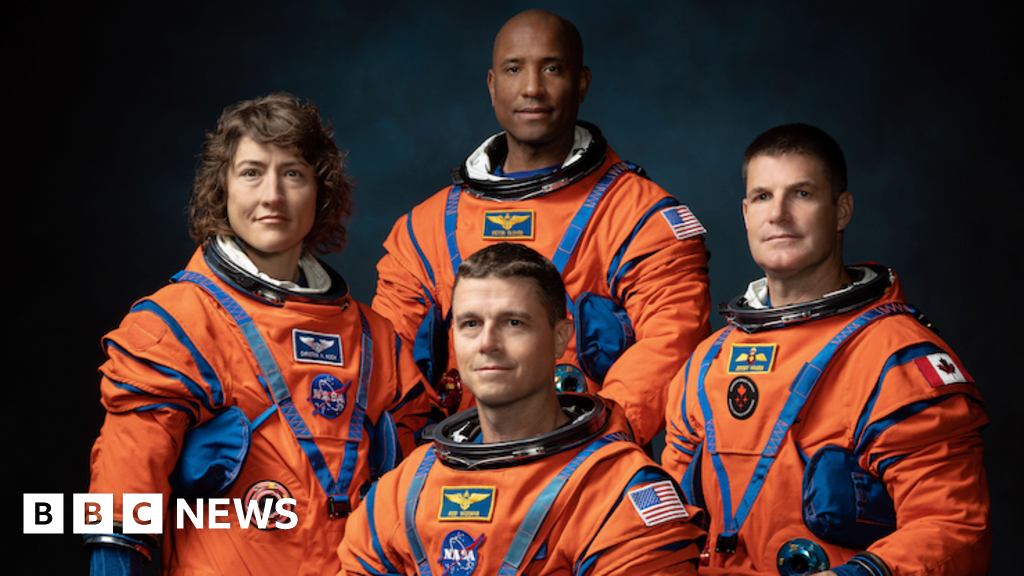
The dawn of a new era in lunar exploration is approaching, with NASA preparing for the Artemis II mission, the first crewed journey to the Moon in over half a century. This monumental endeavor aims to propel humanity further into deep space than ever before, setting the crucial groundwork for future lunar landings and a sustained human presence on our celestial neighbor. While initial reports hinted at an early 2024 launch, the mission is now officially targeted for September 2025, reflecting the complex and meticulous preparations required for human spaceflight.
In a significant preparatory step, NASA recently rolled out its colossal Space Launch System (SLS) Moon rocket and the Orion Space Capsule from the iconic Vehicle Assembly Building (VAB) to Launch Complex 39B at Kennedy Space Center. This intricate maneuver, undertaken by the massive crawler-transporter-2, covered a distance of approximately four miles and took nearly 12 hours, underscoring the sheer scale and engineering marvel behind the Artemis program. Once at the launch pad, engineers embark on a rigorous series of preparations, meticulously connecting ground support equipment. This includes vital electrical lines, sophisticated fuel environmental control system ducts, and the intricate cryogenic propellant feeds necessary to fuel the rocket.
A critical milestone in the pre-launch sequence is the "wet dress rehearsal," scheduled for late January (though this timing also shifts with the overall launch schedule). During this comprehensive prelaunch test, the SLS rocket will be fully fueled with its super-cold propellants, allowing teams to practice every step of the countdown procedure as if it were launch day, without actually igniting the engines. This rehearsal is paramount for identifying and resolving any potential issues with the rocket, spacecraft, or ground systems. Should any anomalies arise, the SLS and Orion might be rolled back to the VAB for additional work, a testament to NASA’s unwavering commitment to astronaut safety and mission success.
Assuming all systems prove ready after the wet dress rehearsal and subsequent checks, the earliest possible launch date for Artemis II is now September 2025. However, the precise timing of any space launch is not solely dependent on the readiness of the hardware; the Moon itself must be in the correct orbital position, dictating specific launch windows. These windows are carefully calculated to ensure the most efficient trajectory, optimal lighting conditions for maneuvers, and a safe return path. Typically, these opportunities occur for about one week at the beginning of each month, followed by approximately three weeks where no launch opportunities exist. The intricate dance of celestial mechanics means that even slight delays can push a launch back by weeks or even months, a common reality in the demanding world of space exploration.
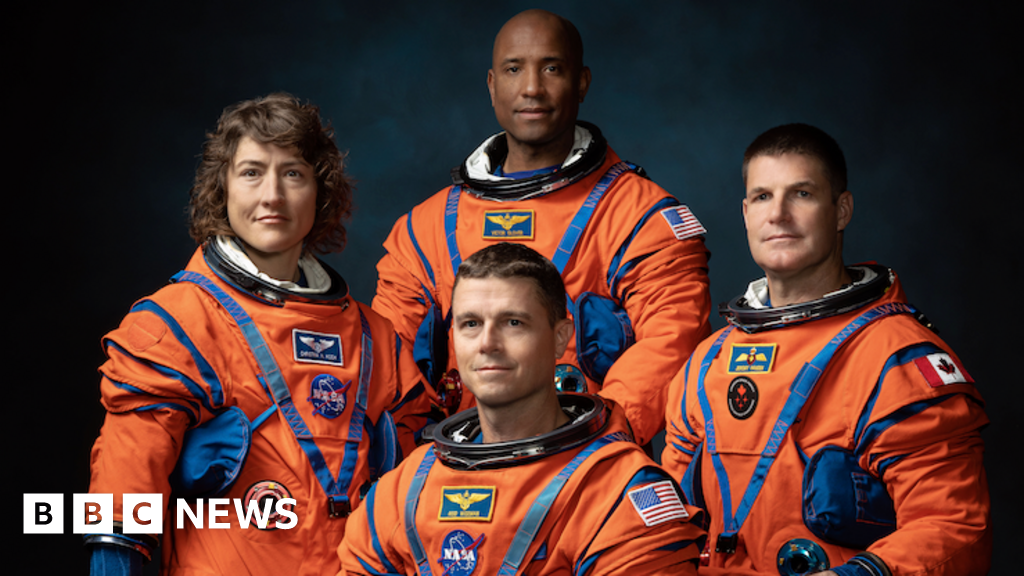
The four trailblazing astronauts chosen for the Artemis II mission represent a blend of experience and pioneering spirit. The crew includes NASA Commander Reid Wiseman, a veteran of the International Space Station, who will lead the mission. Piloting the Orion spacecraft is Victor Glover, who holds the distinction of being the first African American astronaut to live and work on the ISS for an extended duration. Mission Specialist Christina Koch is another highly experienced NASA astronaut, renowned for her record-breaking 328-day continuous stay in space and participation in the first all-female spacewalk. Completing this historic quartet is Jeremy Hansen, a mission specialist from the Canadian Space Agency (CSA), who will become the first Canadian to venture to the Moon.
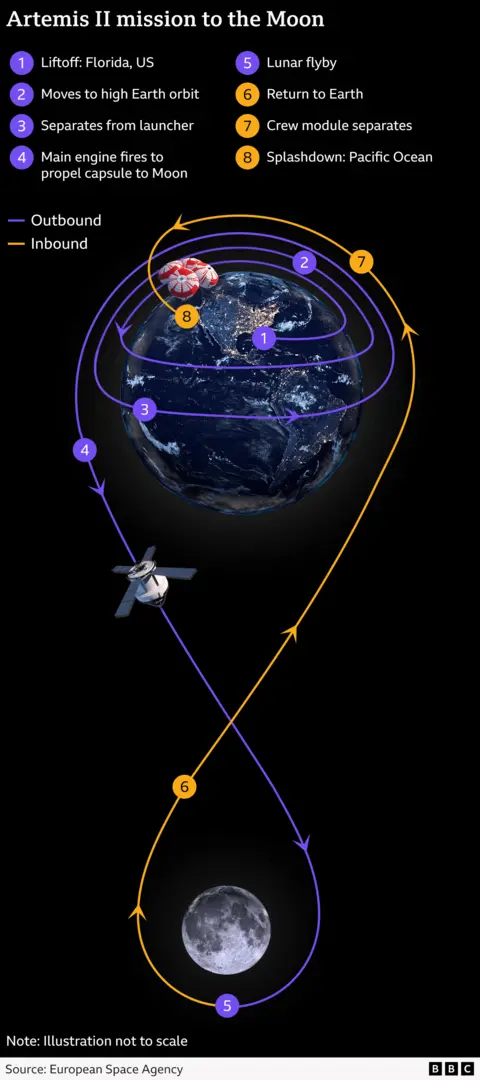
Artemis II marks the first crewed flight of the SLS and Orion, and its primary objective is to thoroughly test the spacecraft’s systems with humans on board. Once in Earth orbit, the astronauts will engage in crucial evaluations, including manually flying the capsule to practice steering and aligning the spacecraft – vital skills for future lunar landings. Following these initial checks, the crew will embark on a trajectory that takes them thousands of kilometers beyond the Moon, further than any human has traveled before. During this lunar flyby, they will meticulously assess Orion’s life-support, propulsion, power, and navigation systems under deep-space conditions, pushing the boundaries of human endurance and technological capability.
Beyond their roles as operators, the crew will also serve as vital medical test subjects, providing invaluable physiological data and imagery from the deep space environment. They will live and work in the relatively small cabin of the Orion spacecraft, experiencing prolonged weightlessness. While radiation levels will be higher than those typically encountered on the International Space Station, which orbits within Earth’s protective magnetosphere, they are still considered safe for the mission duration. The return journey will be a dramatic re-entry through Earth’s atmosphere, culminating in a precision splashdown off the west coast of the United States in the Pacific Ocean, where recovery teams will be standing by.
Crucially, the Artemis II mission will not land on the Moon. Its purpose is to validate the Orion spacecraft and the SLS rocket’s human-rated capabilities, paving the way for the subsequent Artemis III mission, which aims to return astronauts to the lunar surface. NASA currently states that the launch of Artemis III will take place "no earlier than" 2027, though many experts believe 2028 is a more realistic timeframe given the complex development challenges.
The selection of the human landing system for Artemis III remains a critical decision. It will either be SpaceX’s Starship lunar lander or a design proposed by Jeff Bezos’s Blue Origin. Both companies are developing innovative technologies to transport astronauts from lunar orbit to the surface. Furthermore, new spacesuits, specifically designed for lunar surface operations and crafted by the US company Axiom Space, are still undergoing development and testing.
When Artemis III finally launches, the astronauts will be heading to the Moon’s south pole, a region of immense scientific interest due to the potential presence of water ice in permanently shadowed craters. This resource could be vital for future lunar bases, providing potable water, breathable air, and even rocket fuel. Following Artemis III, NASA’s ambitious vision includes a sustained human presence on the Moon. Subsequent missions, Artemis IV and V, will begin the construction of Gateway, a small space station orbiting the Moon. This lunar outpost will serve as a staging point for future missions, enabling longer stays on the surface and supporting the operation of new robotic rovers. The Artemis program also emphasizes international collaboration, inviting more countries to participate in building a long-term human presence on and around the Moon.
The last crewed Moon mission, Apollo 17, touched down in December 1972 and returned to Earth later that month, bringing an end to the historic Apollo program. In total, 24 astronauts have journeyed to the Moon, with 12 of them having walked on its surface. Of those 24 lunar travelers, a dwindling number – just five – are still alive today, a poignant reminder of the passage of time since humanity last stepped on another celestial body. America’s initial foray to the Moon in the 1960s was driven primarily by the geopolitical imperative of winning the Space Race against the Soviet Union. Once this objective was achieved, political enthusiasm and public interest waned, leading to a significant reduction in funding for future lunar endeavors.
The Artemis program, by contrast, is born from a renewed desire to return humans to the Moon, but with a fundamentally different approach. This time, the goal is not merely to plant a flag, but to establish a long-term, sustainable presence, leveraging cutting-edge technology and fostering extensive commercial and international partnerships.
Beyond NASA’s ambitious plans, several other nations and space agencies harbor aspirations to send their own astronauts to the Moon, largely targeting the 2030s. The European Space Agency (ESA) is a key partner in the Artemis program, with European astronauts set to join later missions to Gateway and potentially the lunar surface. Japan’s space agency, JAXA, has also secured seats for its astronauts on future Artemis flights.
Independently, China is aggressively pursuing its own crewed lunar program, developing its craft with a target of a first landing near the Moon’s south pole by 2030. Russia, despite facing significant sanctions, funding pressures, and technical setbacks, continues to articulate plans for flying cosmonauts to the surface and constructing a small lunar base sometime between 2030 and 2035, though these timelines are widely considered optimistic. India, following the resounding success of its Chandrayaan-3 mission, which achieved a historic landing near the lunar south pole in August 2023, has expressed its ambition to send its own astronauts to the Moon by approximately 2040. This bold objective is part of a broader push to expand India’s human spaceflight program beyond low Earth orbit. The resurgence of lunar interest underscores a new global space race, driven not just by national prestige, but by scientific discovery, resource utilization, and the long-term goal of establishing humanity as an interplanetary species.
Additional reporting by Kevin Church.




 George Anjay

 Ramos Leo
 Nakalama John