Nana Banana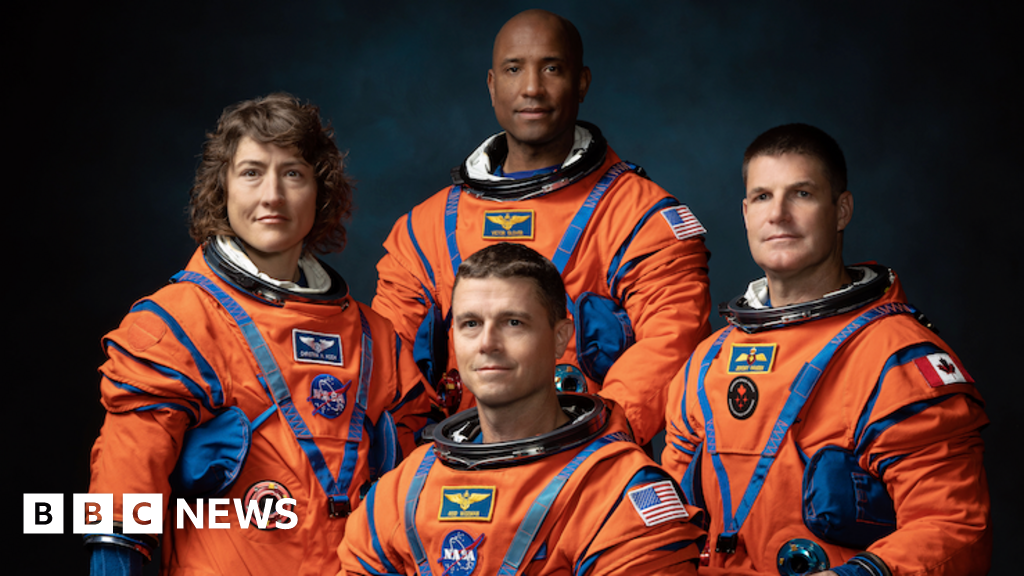
The dawn of a new era in lunar exploration is rapidly approaching, as NASA gears up to launch the first crewed mission to the Moon in over half a century. Artemis II, a pivotal step in humanity’s ambitious return to our celestial neighbour, is currently slated for launch as early as the first week of February. This historic voyage will not only push the boundaries of human spaceflight further than ever before but also lay crucial groundwork for an eventual human landing on the lunar surface, a feat not achieved since the iconic Apollo missions of the 1960s and 70s.
In a significant preparatory milestone, NASA recently completed the meticulous rollout of its colossal Space Launch System (SLS) Moon rocket and the Orion Space Capsule. This awe-inspiring journey saw the towering assembly emerge from the immense Vehicle Assembly Building (VAB) and slowly make its way to the launch pad at Kennedy Space Center. The sheer scale of this undertaking underscores the complexity and precision required for such a mission. The Artemis II mission, anticipated to span approximately 10 days, promises to take its four-person crew deeper into space than any humans have ventured previously, serving as a critical test flight for the technologies and procedures essential for sustainable lunar exploration.
When does Artemis II launch?
The monumental four-mile journey of the SLS rocket and Orion capsule, transported by the massive crawler-transporter-2, was a spectacle in itself, taking nearly 12 hours of careful manoeuvring. This specialized vehicle, designed to move some of the largest structures on Earth, demonstrated the meticulous planning involved in every stage of the mission preparation. With the stack now firmly on the launch pad, engineers are embarking on an intensive series of pre-launch preparations. These include the intricate process of connecting vital ground support equipment, such as electrical lines that power the spacecraft, environmental control system ducts that regulate temperature and humidity, and the cryogenic propellant feeds that will ultimately fuel the rocket. Each connection is a testament to engineering precision, ensuring all systems are go for launch.
A critical hurdle before the definitive launch date is the "wet dress rehearsal," scheduled for the end of January. This comprehensive pre-launch test involves fully fueling the rocket with its propellants – liquid oxygen and liquid hydrogen – and then draining them, simulating the exact procedures of a launch countdown without actually lifting off. The wet dress rehearsal is an invaluable opportunity for NASA to identify any potential issues with the rocket, ground systems, and operational procedures under real-world conditions. Should any anomalies or technical challenges arise during this rigorous test, NASA retains the option to roll back the SLS and Orion to the Vehicle Assembly Building for further assessment and necessary repairs or adjustments. This commitment to safety and thoroughness is paramount for crewed missions.
Assuming all systems perform flawlessly during the wet dress rehearsal and subsequent checks, the earliest possible launch date for Artemis II would be Friday, February 6th. However, the timing of a lunar mission is not solely dependent on the rocket’s readiness. The precise alignment of the Moon in its orbit relative to Earth is a critical factor, dictating narrow "launch windows" that occur periodically. These windows are carefully calculated to ensure the most fuel-efficient trajectory to the Moon and back, while also accounting for various abort scenarios and communication pathways. In practice, this means that optimal launch opportunities typically arise during approximately one week at the beginning of each month, followed by roughly three weeks during which no suitable launch windows exist. This cyclical availability necessitates careful planning and flexibility in the mission schedule. While specific dates for subsequent windows beyond the initial February target are yet to be officially released, the mission team will be working within these monthly constraints to identify the optimal time for this historic flight.
Who are the Artemis II crew and what will they be doing?
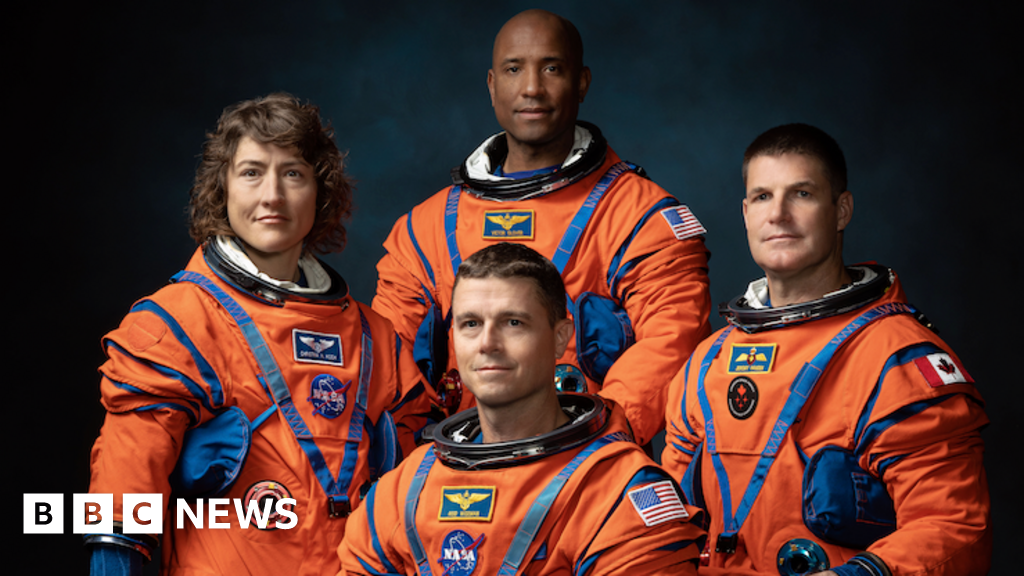
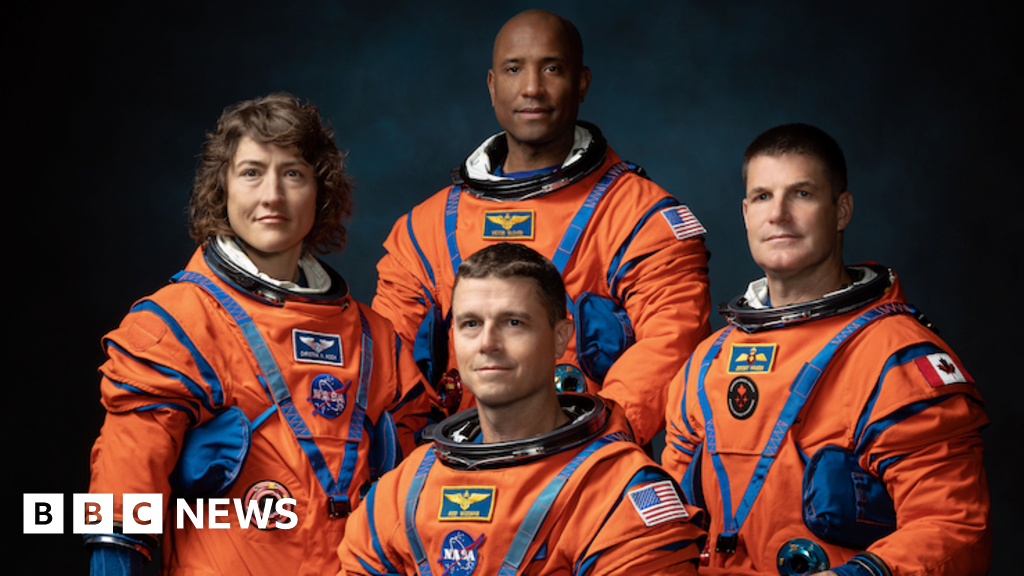
The four individuals chosen for this momentous mission represent the pinnacle of astronaut capability and international collaboration. Leading the crew as commander is NASA’s Reid Wiseman, an experienced Navy pilot and former International Space Station (ISS) flight engineer, bringing invaluable leadership and operational expertise. Piloting the Orion spacecraft will be Victor Glover, another highly accomplished Navy pilot and veteran of a long-duration mission aboard the ISS, where he contributed to numerous scientific experiments and spacewalks. Mission Specialist Christina Koch holds the record for the longest single spaceflight by a woman and has extensive experience in spacewalks, making her an indispensable member of the team for testing critical systems. Completing this elite quartet is Jeremy Hansen of the Canadian Space Agency, who will serve as the second mission specialist, marking a historic moment as the first Canadian to venture to the Moon. Hansen’s participation underscores the growing international partnership in lunar exploration.
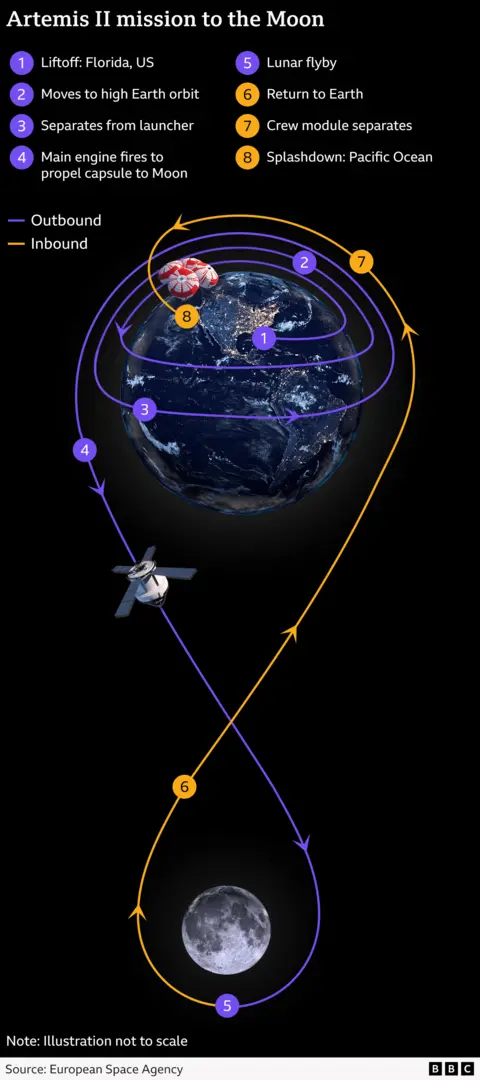
Artemis II is designated as the first crewed flight of the Space Launch System (SLS) and the Orion spacecraft, making it a crucial testbed for future deep-space missions. Once the crew is safely in Earth orbit, their initial task will involve meticulously testing how the Orion spacecraft handles. This will include manually flying the capsule, allowing the astronauts to practice steering, manoeuvring, and precisely lining up the spacecraft, skills that will be vital for future docking operations and intricate lunar landings. This hands-on control ensures that human intervention can complement automated systems when necessary.
Following these critical in-orbit tests, the crew will embark on their deep-space journey, heading thousands of kilometres beyond the Moon. During this extended traverse, a primary objective will be to rigorously check Orion’s life-support, propulsion, power, and navigation systems. This includes evaluating the environmental control systems that maintain a breathable atmosphere and comfortable temperature, testing the engines for trajectory corrections, verifying the reliability of the electrical power generation and distribution, and confirming the accuracy of the navigation systems that will guide them through cis-lunar space.
Throughout their mission, the crew will also serve as vital medical test subjects. They will continuously send back invaluable physiological data and imagery from deep space, allowing scientists to study the effects of prolonged exposure to the unique environment beyond low Earth orbit. While the radiation levels encountered on this mission, though higher than on the International Space Station, are still considered safe for the mission duration, the data collected will be crucial for understanding and mitigating risks for future, longer-duration deep-space flights to the Moon and eventually Mars. The astronauts will live and work in the relatively small nine-cubic-meter cabin of the Orion module, experiencing continuous weightlessness, a unique challenge that tests both their physical and psychological resilience.
Upon their return to Earth, the astronauts will endure a high-speed, bumpy re-entry through the atmosphere, a critical test of Orion’s heat shield and structural integrity. Following this fiery descent, a series of parachutes will deploy to slow the capsule before it executes a precision splashdown off the west coast of the United States, in the Pacific Ocean. Recovery teams will then be on standby to retrieve the crew and spacecraft, bringing an end to this landmark mission.
Will Artemis II land on the Moon?
Crucially, Artemis II will not land on the Moon. Its primary purpose is to serve as a comprehensive flight test for the SLS rocket and Orion spacecraft with a crew on board, laying the indispensable groundwork for a lunar landing by astronauts in the subsequent Artemis III mission. While NASA has publicly stated an ambitious target of 2028 for the launch of Artemis III, many experts in the space community believe this timeline is highly optimistic given the numerous technical and logistical challenges that remain.
Several key components vital for a lunar landing are still under development. The final choice for the Human Landing System (HLS) – the spacecraft designed to transport the crew from lunar orbit down to the surface and back – has not yet been solidified. Currently, SpaceX’s Starship lander is in development, but it requires significant testing and refinement. Jeff Bezos’s Blue Origin is also developing a competing lander concept. Furthermore, new spacesuits designed for lunar surface operations, specifically tailored for the Moon’s south pole environment, are being developed by US company Axiom Space and are not yet ready for flight. These critical pieces of hardware must be fully developed, tested, and integrated before a landing mission can proceed.
When Artemis III finally flies, its astronauts will be heading to the Moon’s south pole, a region of immense scientific interest. This area is believed to harbour significant quantities of water ice within permanently shadowed craters, a resource that could be vital for future lunar bases, providing potable water, breathable air, and even rocket fuel. This strategic focus on the south pole underscores NASA’s long-term vision for a sustained human presence on the Moon.
Beyond Artemis III, the program aims for an enduring human presence. Artemis IV and V missions are planned to begin the construction of Gateway, a small modular space station that will orbit the Moon. Gateway will serve as a staging point for lunar surface missions, a science laboratory, and a crucial communications relay. Subsequent missions will see more Moon landings, the expansion of Gateway with additional sections, and the deployment of new robotic rovers for enhanced surface exploration and resource prospecting. Critically, these future phases envision a broader international collaboration, with more countries involved in keeping people living and working on and around the Moon for extended periods, fostering a truly global effort in lunar science and exploration.
When was the last Moon mission?
The last time humans walked on the Moon was during the Apollo 17 mission, which touched down in December 1972 and returned to Earth later that month. This marked the culmination of the Apollo program, a monumental achievement in human history. In total, 24 astronauts have journeyed to the Moon, and a remarkable 12 of them have had the privilege of walking on its dusty surface, all as part of the Apollo missions. Of these 24 pioneering lunar voyagers, a dwindling number – just five – are still alive today, serving as living links to that golden age of space exploration.
America’s initial push to the Moon in the 1960s was primarily driven by the intense geopolitical rivalry of the Cold War, aiming to assert technological and ideological dominance over the Soviet Union. Once this ambitious goal was decisively achieved with Neil Armstrong’s "giant leap for mankind," the political enthusiasm and public interest in costly future Moonshots gradually waned. Consequently, the funding allocated for further lunar exploration diminished, leading to a long hiatus in human lunar missions. The focus of human spaceflight shifted towards low Earth orbit, culminating in the Space Shuttle program and the construction of the International Space Station.
The Artemis program represents a renewed global commitment to returning humans to the Moon, but with a fundamentally different ethos. This time, the motivation extends beyond geopolitical competition, encompassing scientific discovery, economic opportunities, and the development of sustainable long-term capabilities. The program is built around cutting-edge new technology, including the powerful SLS rocket and the versatile Orion capsule, and relies heavily on commercial partnerships with private aerospace companies like SpaceX, Blue Origin, and Axiom Space for various critical elements, from landers to spacesuits. This collaborative approach aims to create a more resilient and cost-effective pathway for human expansion into deep space.
Do other countries plan to send astronauts to the Moon?
The drive to return to the Moon is not exclusive to the United States. Several other nations and international consortia have articulated ambitious plans to send their own astronauts to the lunar surface, primarily targeting the 2030s. The Artemis program itself is a testament to international cooperation, with European astronauts already set to join later Artemis missions, leveraging the contributions of the European Space Agency (ESA), such as the Orion Service Module. Japan has also secured seats on future Artemis missions, reflecting its significant contributions to space exploration.
Beyond the Artemis framework, China is aggressively pursuing its own independent lunar program. The nation is actively developing its own powerful launch vehicles and spacecraft, with a stated goal of achieving a first crewed landing near the Moon’s south pole by 2030. China’s long-term vision includes establishing a permanent lunar research station, demonstrating its commitment to becoming a major player in lunar exploration.
Russia, a historical pioneer in space, continues to voice aspirations of flying cosmonauts to the lunar surface and establishing a small base sometime between 2030 and 2035. However, the Russian space program currently faces significant challenges, including the impact of international sanctions, persistent funding pressures, and technical setbacks. These factors collectively cast a shadow of optimism on its ambitious timetable, making its goals appear highly challenging to achieve within the stated timeframe.
India, following the resounding success of its Chandrayaan-3 mission, which achieved a historic landing near the lunar south pole in August 2023, has also expressed clear ambitions to one day see its own astronauts walking on the Moon. Building on its burgeoning human spaceflight program, Gaganyaan, India’s space agency has set out an aspirational goal of sending astronauts to the Moon by approximately 2040. This bold objective forms a key part of India’s broader strategy to expand its human spaceflight capabilities beyond low Earth orbit and establish a significant presence in deep space exploration.
The collective efforts of these nations and international partnerships herald a new era of lunar exploration – a multi-faceted endeavour that promises unprecedented scientific discovery, technological innovation, and a sustained human presence beyond Earth.
Additional reporting by Kevin Church.



 atisusanti
 Nakalama John
 George Anjay