Ramos Leo
"It seems to be pretty rife!" So quipped Sir Keir Starmer before Christmas, addressing the persistent whispers about his future as Prime Minister. Though delivered with a smile during a session of Parliament’s Liaison Committee, the remark underscored an extraordinary political reality: despite leading the Labour Party to a resounding general election victory and a commanding 174-seat majority just 18 months prior, the corridors of Westminster are rife with speculation about whether he will still be in Number 10 a year from now. This isn’t merely internal party chatter; this unusual vulnerability for a leader with such a fresh mandate has been noted in foreign capitals, with one seasoned diplomat observing, "There’s another roll of the dice coming. The same numbers might still come up. But they might not."
The fulcrum of this political year, and indeed Starmer’s premiership, is set to arrive on Thursday, May 7th, 2026. This date marks a confluence of crucial elections: to the Welsh Parliament (Senedd), the Scottish Parliament, and numerous local authorities across England. The outcomes will have profound consequences, shaping how significant parts of the UK are governed and, more pointedly, determining the career trajectory – or abrupt end – for various political leaders, most notably the Prime Minister himself. A very senior Labour figure recently admitted, "I wouldn’t insult your intelligence by trying to pretend campaigning to replace him isn’t going on." This "campaigning with a small ‘c’" involves discreet conversations, strategic positioning, and clandestine planning, largely hidden from public view but no less potent.
The fear within Labour is that the party is poised for an "almighty shellacking" in these elections, particularly given its current positions of power. Labour currently governs in the Senedd and controls many urban councils in England. A significant loss of councillors or devolved parliament members would cripple the local political infrastructure, impacting the "foot soldiers" vital for future campaigns. While some within the party fret that waiting until after the elections to address Starmer’s leadership might be "too late," most anticipate the true crunch point will emerge in the immediate aftermath of polling day. Starmer’s loyalists are urging their colleagues to "hold our nerve," adding, "We’ve got to. What’s the alternative?" – a testament to the lack of a clear, unified successor.

A near-universal consensus, spanning from Starmer’s most ardent supporters to his harshest critics within Labour, is that the government must drastically improve its ability to articulate its vision and define its purpose. This "cliché critique" – that the party struggles with storytelling – persists because many believe there has been insufficient improvement. "We campaigned offering ‘change’ but we have to be better at explaining what we’re doing, why we’re doing it and when, realistically, we might do it by," argues one supporter, highlighting a frustration that resonates widely. A Labour critic lamented, "I despair at the storytelling. The Budget was a shambles. Politicians need to be like teachers: walk people through things. Don’t line up the excuses. Make an argument. Pick a fight." This sentiment points to a perceived lack of clear direction and forceful advocacy from Downing Street.
In response, a "blitz of public facing activity" is anticipated from Downing Street in the early new year, leveraging various platforms from social media to traditional interviews with political reporters and "influencers." The central message will be crucial: 2026 must be framed as the year when the "change" Labour promised at the general election begins to manifest tangibly, with a particular focus on alleviating the ongoing cost of living crisis. Starmer’s supporters emphasize that stability is a virtue, reminding detractors that he uniquely secured the electoral mandate – a legitimacy no successor would immediately possess. They warn that any replacement, emerging from what would likely be a "mighty messy leadership process," would inherit the same intractable problems that have challenged Starmer. The implicit message: "Be careful what you wish for."

Despite these warnings, the list of potential successors circulates. Health Secretary Wes Streeting is currently the most widely discussed, often praised for his media presence and articulate communication. Yet, he is not alone. Greater Manchester Mayor Andy Burnham, with his significant public profile and independent power base, is frequently mentioned. Home Secretary Shabana Mahmood, a rising star, is also seen as a strong contender, along with others quietly positioning themselves. However, even among Labour MPs disillusioned with Starmer, a wariness exists. "A fortnight on from Wes Streeting becoming prime minister, folk would still be saying he’s good on the telly but actually wondering how much he’s actually going to be able to change," one Labour MP, no fan of the current PM, observed. A similar critique shadows other "prime ministerial wannabes," underscoring a fundamental challenge: even if the party concludes Starmer must go, can it genuinely agree on a demonstrably "better" alternative? Labour’s history typically lacks the ruthless dispatching of leaders seen in the Conservative Party, and Starmer is undeniably determined. Thus, amidst all the clamor for change, the prospect of "no change" should not be underestimated.
However, Sir Keir Starmer faces a formidable array of challenges. First, Wales. The 2026 Senedd elections will see an expanded parliament, new, larger constituencies, and a proportional voting system. For Labour, this presents a "confluence of headaches," primarily the issue of "double incumbency." Being in power in both Cardiff and Westminster makes it exceedingly difficult to deflect blame for any perceived failings. The mood within Welsh Labour is described as "beyond bleak" as they confront the genuine prospect of losing control of the devolved government for the first time since the Senedd’s inception in 1999. In 2015, Scotland’s seemingly impregnable Central Belt fell to the SNP; in 2019, Labour’s "red wall" in England crumbled. Now, the party faces a potential "shrivelling" of its power base in Wales, an outcome neither of those previous seismic shifts entailed. The psychological impact of losing Wales could be immense. Plaid Cymru, the Welsh nationalists, are notably "upbeat," buoyed by recent successes like the Caerphilly Senedd by-election. Reform UK also appears "highly competitive." This raises complex post-election questions: Could Plaid lead a coalition, or even a less formal arrangement that critics might brand a "coalition of the losers"? Or might they refuse, potentially forcing another election, further destabilizing the political landscape?
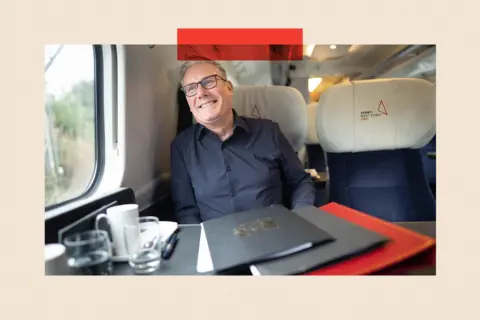
Secondly, London presents its own set of trials. Labour currently governs 21 of the 32 councils up for election in the capital. "May looks really rough," confesses a plugged-in senior Labour figure in London. "There’s Reform in the outer boroughs. The Greens in places like Hackney. Gaza-leaning independents in places like Redbridge. And we have so, so many MPs and party members in London. Come the weekend after the elections they’ll be fretting in so many different directions all at the same time." The defection of five Labour councillors in Brent to the Green Party weeks prior to this article’s publication serves as a stark warning. Even some Conservatives harbor hopes of gains in traditionally Labour areas like Wandsworth and Westminster.
As for Scotland, Labour’s strategy will be to urge Scottish voters to "consider the SNP’s 18 years in government in Scotland, not Labour’s 18 months in government at Westminster," as one senior Scottish Labour figure articulated. They will stress that voters are electing a First Minister, not a Prime Minister, and highlight their stronger financial position compared to the SNP. However, recent opinion polls suggest the UK Labour government is more unpopular in Scotland than the SNP Scottish Government, and the growing influence of Reform in Scotland cannot be ignored.
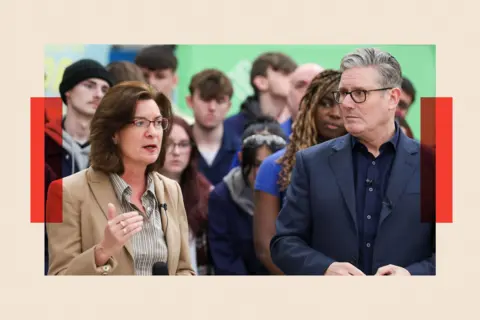
Beyond Labour’s direct challenges, the fortunes of other parties will also indirectly shape Starmer’s year. Outside London, in the rest of England, the Liberal Democrats are ambitious to build on their 2024 parliamentary seat gains, primarily in the south. Failure to do so might spark internal grumbles about Sir Ed Davey’s leadership, despite their 72 MPs. The Green Party of England and Wales, under its new leader Zack Polanski, elected in September, has seen a sharp surge in opinion poll support. Polanski, described as more thoughtful in private than his public persona suggests, now faces increased scrutiny and the daunting task of rapidly scaling up the party’s infrastructure to match its growth. This Green surge, particularly in urban areas, could further complicate Labour’s electoral calculus.
Even the Conservatives, currently enduring a slump in popularity parallel to Labour’s, play a role. Such a concurrent trough is unusual; typically, one party’s decline coincides with the other’s ascent. This dismal poll rating imperils Conservative leader Kemi Badenoch, although her standing among Tory MPs reportedly rose significantly after a well-received party conference speech and improved performances at Prime Minister’s Question Time. Yet, her party’s weak position leaves her vulnerable, just as Labour’s challenges leave the Prime Minister exposed.

Ultimately, however, it is Sir Keir Starmer’s future in office – or the potential lack thereof – that will dominate much of the political discourse in 2026. Leading a government in the UK over the past decade has offered vanishingly little job security; Starmer is the sixth Prime Minister in a decade. A complex interplay of factors – Brexit, the global pandemic, flatlining living standards, international conflict, the proliferation of electorally viable political parties, and the pervasive influence of social media – has contributed, as some at Westminster observe, to a significantly shorter shelf-life for modern British leaders. It will indeed be quite a year ahead.


 Roy Suryo
 Nana Banana
 atisusanti
 Nakalama John
 George Anjay