Nana Banana
The notion of delegating the intimate and complex task of elderly care to machines might once have seemed confined to the pages of science fiction. Yet, in a quiet lab in north-west London, a glimpse into this potential future is already being assembled. Three black metal robotic hands, devoid of the familiar claws or pincers, articulate with an unsettling precision on an engineering workbench. Each hand possesses four fingers and a thumb, meticulously designed with joints mirroring human anatomy, opening and closing in slow, deliberate movements.
"We’re not trying to build Terminator," quips Rich Walker, the director of Shadow Robot, the innovative firm behind these advanced prosthetics. With his distinctive long hair, beard, and spectacles, Walker projects the image of a visionary technologist with a humanist bent, rather than a cold-hearted inventor. He speaks with evident pride as he showcases his company’s creations, driven by a clear philosophy: "We set out to build the robot that helps you, that makes your life better, your general-purpose servant that can do anything around the home, do all the housework…"
However, Shadow Robot’s ambition extends far beyond household chores. Their work is fundamentally aimed at addressing one of the most pressing societal challenges facing the UK: the escalating crisis in social care. The statistics paint a stark picture: a report by the charity Skills for Care last year revealed a staggering 131,000 vacancies for adult care workers in England. Concurrently, Age UK estimates that approximately two million individuals aged 65 and over in England are living with unmet care needs. The demographic shift is relentless; by 2050, forecasts suggest that one in four people in the UK will be aged 65 or over, threatening to place an even greater, unsustainable burden on an already fragile care system.

This is the void into which robotics proponents believe their innovations can step. The previous government, acknowledging the urgency, committed £34m to the development of care robots. In 2019, it boldly predicted that "within the next 20 years, autonomous systems like… robots will become a normal part of our lives, transforming the way we live, work and travel." But is this "techno-solutionism"—a term that conjures images from dystopian films—a realistic or even desirable path forward? And, perhaps most critically, can we truly entrust our elderly relatives, or ourselves in our most vulnerable moments, to what are, at their core, sophisticated machines?
Workouts with Pepper the robot
To understand the practical implications of integrating robots into care, one need only look to Japan, a nation grappling with its own advanced demographic challenges. Ten years ago, the Japanese government proactively began offering subsidies to robot manufacturers, encouraging the development and widespread adoption of care robots in nursing homes. This initiative was directly fuelled by their rapidly ageing population and a persistent shortage of care staff.
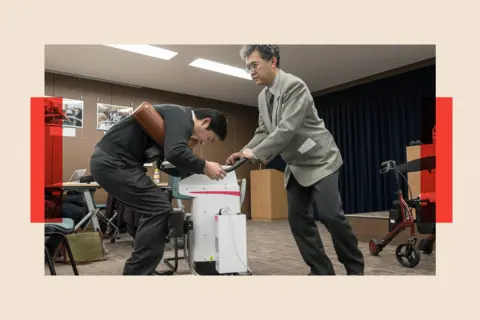
Dr. James Wright, an AI specialist and visiting professor at Queen Mary University of London, embarked on a seven-month immersion in this evolving landscape. His research focused on observing the efficacy and acceptance of these robots within a Japanese care home environment. Three distinct types of robots were under scrutiny. The first, named HUG and developed by Fuji Corporation, presented as a highly advanced walking frame. Equipped with supportive pads, HUG was designed to assist carers in lifting residents from beds to wheelchairs or toilets, thereby easing the physical strain on human staff.

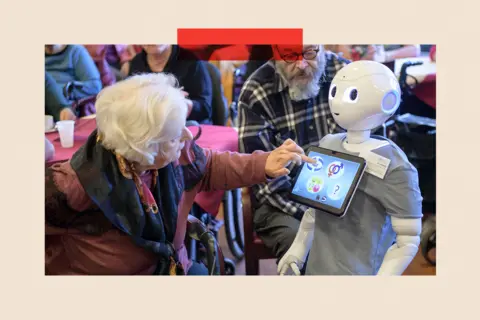
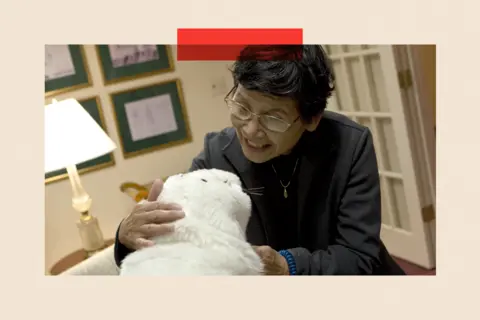
The second robot, Paro, resembled a baby seal, its purpose rooted in emotional stimulation for dementia patients. Paro was programmed to respond to human touch with movements and sounds, aiming to provide comfort and engagement. Finally, a small, humanoid robot named Pepper, with a friendly demeanour, was employed to lead exercise classes, demonstrating routines with its articulating arms and delivering instructions.
Dr. Wright admits he initially harboured a degree of optimism, influenced by the prevailing narrative. "I was expecting that the robots would be easily adopted by care workers who were massively overstretched and extremely busy in their work," he recounts. "What I found was, almost the opposite."
His observations revealed a stark reality: the robots, far from alleviating the burden, often added to it. The most significant drains on staff time were the mundane tasks of cleaning and recharging the machines, but above all, troubleshooting when they malfunctioned. "After several weeks the care workers decided the robots were more trouble than they were worth and used them less and less, because they were too busy to use them," Dr. Wright explains. Specific challenges emerged: HUG required constant repositioning to avoid obstructing residents; Paro, despite its therapeutic intent, caused distress to one resident who developed an unhealthy attachment; and Pepper’s exercise routines proved ineffective due to its diminutive stature and a high-pitched voice that was difficult for elderly residents to hear.
The developers of these robots have, predictably, responded to Dr. Wright’s findings. Fuji Corporation stated they have since refined HUG’s design, making it more compact and user-friendly. Takanori Shibata, Paro’s creator, highlighted its 20 years of use and cited trials demonstrating "clinical evidence of [the] therapeutic effects." Pepper, now under new ownership, has undergone substantial software updates. While these advancements are noteworthy, Dr. Wright’s initial study underscored critical lessons about the practical integration of technology into human-centric care.

Rich Walker of Shadow Robot, while acknowledging these early hurdles, remains undeterred, arguing that dismissing care robots outright would be premature. He contends that the next generation of these machines will possess vastly superior capabilities.
From labs to the real world
Professor Praminda Caleb-Solly at the University of Nottingham shares this forward-looking perspective, dedicating her efforts to bridging the gap between laboratory innovation and real-world application. "We are trying to get these robots out of the labs into the real world," she affirms. To achieve this, she established Emergence, a network designed to connect robot manufacturers with potential business users and, crucially, with the elderly individuals who would ultimately interact with these technologies. This direct engagement seeks to gather authentic feedback on what older people truly desire from robotic assistance.
The responses are diverse, yet coalesce around several key themes. Many expressed a preference for robots with intuitive voice interaction and, understandably, a non-threatening aesthetic—some even requested a "cute design." But the most consistent demand centered on practicality: robots that could adapt to their evolving needs, and critically, machines that were self-charging and self-cleaning. As one participant succinctly put it: "We don’t want to look after the robot – we want the robot to look after us."
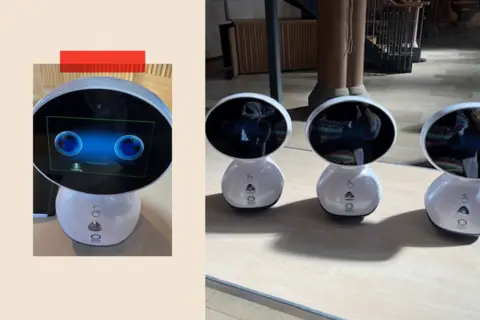
Across the UK, some businesses are already embarking on these practical trials. Caremark, a home care provider, has been testing "Genie," a small, voice-activated robot, with clients in Cheltenham. One man with early-onset dementia found solace in asking Genie to play Glenn Miller songs, highlighting the potential for personalized comfort and companionship. Overall, however, reactions have been "like Marmite," according to director Michael Folkes – some clients enthusiastically embraced Genie, while others were less impressed. Folkes is keen to emphasize that these devices are not intended to replace human carers, but rather to augment them: "We’re trying to build a future where carers have more time to care."
Robot hands: learning from evolution
Back in the London laboratory of Shadow Robot Company, Rich Walker outlines another monumental challenge: perfecting the robotic hand. "For the robot to be useful, it needs to have the same ability to interact with the world as [a] human does," he explains. "And for that it needs human-like dexterity."
The robotic hand Walker demonstrates is undeniably nimble, a marvel of metal and plastic fitted with 100 sensors. It boasts a dexterity and strength comparable to a human hand, with each finger moving precisely to meet its thumb, culminating in an "OK" gesture. It can even solve a Rubik’s Cube single-handedly. Yet, despite these impressive feats, it remains a considerable distance from mastering more delicate tasks, such as skillfully wielding a pair of scissors or carefully picking up fragile objects.
"The way we use a pair of scissors is quite mind-blowing when you think about it," Walker marvels. "If you try and analyse what happens, you’re using your sense of touch in subtle and precise ways and receiving feedback, which makes you adjust the way you cut. How do you tell a robot how to do that?"
Walker’s team, collaborating with 26 other engineering firms, is tackling this intricate problem as part of the Robot Dexterity Programme. This initiative, supported by the government agency Advanced Research and Invention Agency (ARIA), champions high-risk, high-reward scientific research with the potential to transform society. Professor Jenny Read, the project’s leader, reveals that their approach involves studying animal movement to inform a complete reimagining of robot design. "One of the very striking things about animal bodies is their grace and efficiency," she notes. "Evolution has ensured that, in fact. I think gracefulness really is a form of efficiency."
Replicating human muscles
Inspired by nature’s efficiency, Guggi Kofod, a Danish engineer and entrepreneur, is striving to develop artificial muscles for robots, offering an alternative to conventional motors. His Denmark-based firm, Pliantics, is in the nascent stages of this ambitious undertaking, but has already made a crucial breakthrough in identifying a durable material capable of performing the task.
Kofod’s motivation is deeply personal. "Several people near me died from dementia very recently," he shares. "I see from the people who are caring for dementia patients, and it is very challenging. So, if we could build systems that help them to not be scared, and that help them live at least a decent level of life… That’s incredibly motivating for me."
The artificial muscles designed by Pliantics are crafted from a soft material that mimics biological muscles, extending and contracting in response to an electric current. This offers a promising path towards more fluid and natural robotic movement. Guggi Kofod is collaborating with Shadow Robot within the ARIA project, aiming to create a human-sized robotic hand powered by these artificial muscles. The ultimate goal is for this hand to detect minute pressure changes when gripping an object, instinctively knowing when to cease squeezing, much like the sensitive skin on human fingertips.
What robots mean for carers
While the technological advancements are exciting, Dr. Wright, who meticulously observed the Japanese robot trials, raises a final, sobering concern. He fears that if care robots gain widespread adoption, they could inadvertently worsen conditions for human carers. "The only way that economically you can make this work is to pay the care workers less and have much larger care homes, which are standardised to make it easy for robots to operate in," he argues. "As a result, there would be more robots taking care of people, with care workers being paid a minimum wage to service the robots, which is the opposite of this vision that robots are going to give time back to care workers to spend quality time with residents, to talk." This perspective highlights the potential for a race to the bottom, where the human element of care is devalued and marginalized in favour of cost-efficiency.
Other experts, however, maintain a more optimistic outlook. Gopal Ramchurn, a professor of artificial intelligence at the University of Southampton and CEO of Responsible AI, believes the industry is poised for significant growth. "It’s going to be a huge industry, given the deficit we have in the workforce right now. The demand for carers as our population ages will be huge," he asserts. His company focuses on ensuring that AI systems are developed responsibly, prioritizing safety, reliability, and trustworthiness.
Ramchurn points to developments like Elon Musk’s Optimus humanoid robot, which performed tasks and mingled at a Tesla event, as clear indicators that, whether we embrace them or not, robots are an inevitable part of our future. "We are trying to anticipate that future, before the big tech companies come in and deploy these things without asking us what we think about them," he adds. He stresses the critical importance of developing appropriate regulations and ethical frameworks now, to ensure that these sophisticated machines truly serve humanity, rather than dictating our future. "We need to be ready for that future," he concludes, underscoring the urgency of proactive, thoughtful integration of robotics into the sensitive realm of elderly care. The question of trust, therefore, remains central to this unfolding narrative, demanding careful consideration and transparent development every step of the way.
Additional reporting: Florence Freeman. Top image credit: Jodi Lai/BBC (Picture is illustrative and not representative of any specific robots in the article)
BBC InDepth is the home on the website and app for the best analysis, with fresh perspectives that challenge assumptions and deep reporting on the biggest issues of the day. You can now sign up for notifications that will alert you whenever an InDepth story is published – click here to find out how.


 George Anjay

 Ramos Leo
 Nakalama John