Roy Suryo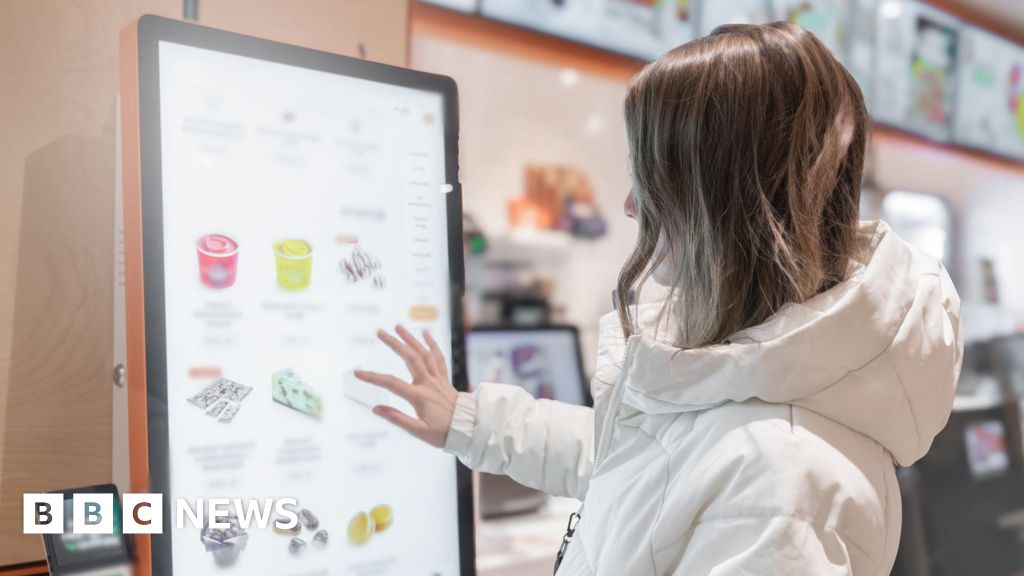
On an industrial estate on the outskirts of Birkenhead on Merseyside, a UK company is quietly revolutionizing how we shop, driven by the subtle yet powerful forces of behavioural science. Evoke Creative, a firm specializing in self-service terminals, is at the forefront of this transformation, crafting the interactive screens that have become ubiquitous in everything from fast-food giants like McDonald’s to public services such as libraries. These touchscreens, often referred to as kiosks, are not just a technological convenience; they are meticulously designed instruments that significantly boost sales, a phenomenon rooted in the scientific understanding of human behaviour and decision-making.
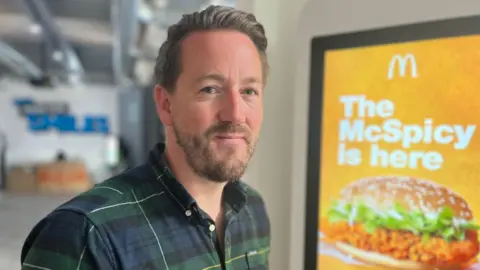
Dean Ward, the founder and chief product officer at Evoke Creative, explains the multi-faceted appeal of these machines. "Firstly, you are removing the psychology of speaking to someone and feeling judged, we think that is a key factor," Ward states. He elaborates on the subtle anxieties associated with human interaction in a transactional setting: "Would you like extra fries? Would you like to go large? Not all people, but I think there’s definitely a large proportion of people who may feel judged in those instances, and may say no." This elimination of perceived judgment creates a more relaxed and less pressured environment for the customer.
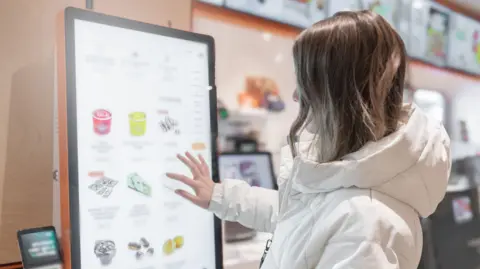
Beyond the removal of social pressure, the visual design and interactive nature of self-service terminals play a crucial role. "Plus, there’s really good product imagery on the terminals, so you can see the product, you can see what’s in it, you can see all the other products linked to it as well. So there’s that," Ward continues. This enhanced product visualization allows customers to make more informed choices and explore options they might not have considered when presented with a limited menu or a hurried verbal interaction.
The concept of "upselling" is also expertly woven into the customer journey on these screens. Ward highlights, "And also around upsell. At every opportunity within the customer journey on the terminal, you are asked would you like to add this, would you like to do that? Because you’ve got more time and you’re not being judged, you’re very much more inclined to actually say yes to these things." The uninterrupted, unhurried nature of the self-service experience encourages customers to consider add-ons and upgrades, leading to larger basket sizes.
The data strongly supports Ward’s observations. According to Vita Mojo, a provider of similar technology whose clients include fast-food chains Leon and Honest Burgers, a staggering 61% of customers spend more when ordering at a terminal compared to a traditional till. This increase can be as substantial as 40% per order, demonstrating the significant financial impact of these seemingly simple interfaces.
The application of behavioural science in shaping consumer choices is not a new phenomenon, even if the term itself is relatively recent. Companies have long employed psychological tactics to influence purchasing decisions. A historical example is the 1940s RJ Reynolds cigarette campaign, which famously proclaimed "more doctors smoke Camels than any other cigarette." This strategy tapped into the "authority bias," a concept widely recognized in behavioural science today.
Ben Jones, from the business consultancy The Behavioural Architects, explains this bias: "Authority bias is the tendency we have to align our opinions, or our behaviours, with someone we see as an authority or an expert on something. When we’re unsure, we don’t know what to do, it’s kind of easy to follow the lead of those who we think are credible or knowledgeable." This principle is still evident today in advertisements for toothpaste featuring dentists’ recommendations or sportswear endorsed by athletes.
While RJ Reynolds may have been an early adopter, the principles of behavioural science are now widely utilized, from major brands to international organizations like the United Nations (UN). In the UK, one of the most successful applications of behavioural science has been the introduction of auto-enrolment in workplace pensions, initiated in 2012. This policy has led to over 10 million more people saving for a pension, largely due to "default bias." This bias refers to our inherent tendency to stick with the pre-selected or default option, similar to how many people retain their phone’s original ringtone.
"Generally, it’s our tendency to go with the option that’s already selected, or the option that’s already presented to us as the default setting," Jones explains. "We make thousands of decisions every single day, and defaults are one of those things that just helps us manage that overload of choices we’re always having to make. They let us act quickly. And one of the big success stories for defaults is the automatic enrolment in pension schemes, because many of us procrastinate saving for retirement. And the default really helps overcome the inertia we have and supports a positive long-term outcome."
The influence of behavioural science extends to even seemingly mundane choices, such as selecting wine in a supermarket. An experiment conducted by Adrian North and his colleagues at Leicester University demonstrated this effect. By alternating the background music in a supermarket between French accordion tunes and German oompah music, they observed a significant shift in wine sales. On days with French music, French wine outsold German wine, and vice versa. Crucially, customers were not consciously aware of the music’s influence, yet the sales data clearly reflected its impact.
The World Food Programme (WFP), a branch of the UN, has also harnessed behavioural science to drive positive societal change. In Tunisia, the WFP collaborated with marketing giant Ogilvy to produce a TV drama series titled "Salla Salla." The script was carefully crafted using behavioural science principles to convey messages about healthy eating and reducing food waste in a way that resonated with viewers. Takwa Khelifi from the WFP noted, "Because, if you know the facts only, it doesn’t change people and doesn’t change behaviour. We all know better, but we don’t do better." The series proved highly successful, becoming the fourth most-watched show on Tunisian TV and leading to a notable 22% reduction in bread consumption.

From self-service kiosks that encourage impulse purchases and larger orders to pension schemes that combat procrastination and public health campaigns that subtly alter dietary habits, behavioural science is a pervasive and powerful force shaping our decisions. Brands, governments, and international organizations are all leveraging its insights to influence our choices in ways we may not even perceive, demonstrating its profound impact on both individual behaviour and societal outcomes.



 Ramos Leo
 atisusanti
 Nakalama John
 George Anjay