George Anjay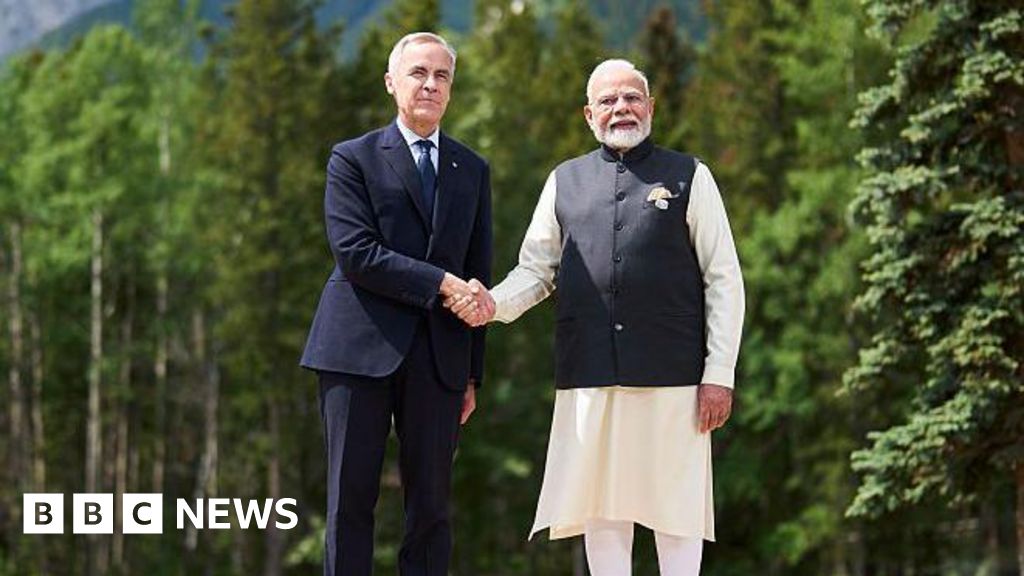
Canadian Prime Minister Mark Carney is undertaking a crucial diplomatic mission to India, aiming to mend strained bilateral ties and forge stronger economic partnerships amidst a shifting global landscape. The visit, which began in Mumbai with meetings involving key business leaders and continues in New Delhi for high-level discussions with Prime Minister Narendra Modi, represents a significant diplomatic pivot for Canada. This strategic engagement signals a mutual desire to reduce reliance on the United States, a shared concern amplified by recent trade protectionism.
The rapprochement between Canada and India is particularly noteworthy given the dramatic deterioration of relations that occurred just last year. The diplomatic crisis was triggered by former Prime Minister Justin Trudeau’s public accusation that India was involved in the extrajudicial killing of Hardeep Singh Nijjar, a prominent Sikh separatist, on Canadian soil. This allegation was vehemently denied by India, leading to tit-for-tat expulsions of diplomats, suspension of visa services, and a chilling effect on bilateral interactions. However, both nations now appear to have prioritized pragmatism and mutual interest over past grievances, paving the way for this pivotal visit.
For Prime Minister Carney, the primary objective of this trip is economic diversification. Canada, like many nations, is seeking to broaden its international trade relationships to mitigate the impact of fluctuating global economic conditions and protectionist policies, particularly those emanating from the United States. A key focus of Carney’s agenda is to revitalize and advance negotiations for a comprehensive free trade agreement with India, a pact that has been under consideration for over fifteen years. The previous suspension of these talks, directly linked to the diplomatic fallout, underscores the urgency and significance of Carney’s current efforts.
The allegations surrounding Nijjar’s death continue to resonate within segments of Canada’s Sikh diaspora. Some community members have expressed concerns about ongoing transnational repression by India and have criticized the government’s perceived prioritization of economic interests over their security. Vina Nadjibulla, vice-president of the Asia Pacific Foundation of Canada, described the situation as requiring "delicate handling." Despite these sensitivities, Canadian officials have emphasized that national security and foreign interference are subjects of "robust" discussion between the two countries. They have also conveyed that Canada does not currently believe the Indian government is implicated in violent crimes or threats on Canadian soil, a crucial precondition for undertaking such a high-level visit. However, some Canadian lawmakers, like MP Sukh Dhaliwal, have voiced skepticism, suggesting that the official assessment of India’s threat level is "disconnected from the reality."
Canada has made a concerted effort to re-engage with India in recent months. This diplomatic outreach began with an invitation to Prime Minister Modi for the G7 summit in Alberta, followed by a series of meetings between Canadian Foreign Minister Anita Anand and her Indian counterpart, S. Jaishankar. India’s National Security Advisor, Ajit Doval, also visited Ottawa recently, further signaling a thaw in relations. Carney’s itinerary deliberately eschews cultural stops and visits to regions with significant Indo-Canadian and Sikh populations, such as Punjab, which were common in previous high-level Canadian visits. This strategic focus on Mumbai, India’s financial capital, and New Delhi, where he will meet Prime Minister Modi, clearly signals that the current priority is squarely on trade and strategic cooperation. Discussions are expected to encompass critical sectors such as energy, technology, artificial intelligence, and defense, with an eye on attracting top talent to Canada. Furthermore, both leaders are anticipated to address the impact of tariffs imposed by the Trump administration, which have affected both their economies. As Nadjibulla pointed out, Canada’s status as the only G7 nation without a preferential trade agreement with India "adds urgency" to Carney’s mission, creating a "window of opportunity" that must be seized.
From India’s perspective, the current diplomatic overtures from Canada represent a "win-win" scenario, especially in the context of a rapidly evolving global geopolitical and economic environment. The past year saw a sharp deterioration in India-Canada relations, marked by public disputes, visa service suspensions, and the expulsion of diplomats. However, the landscape has dramatically shifted. India has been actively pursuing and securing new free trade agreements, demonstrating its openness to expanding economic partnerships. Simultaneously, the imposition of tariffs by the United States under President Trump has created a shared challenge for both India and Canada, compelling them to seek alternative avenues for economic resilience. Prime Minister Carney himself has articulated the current global climate as a "rupture, not a transition," emphasizing the need for nations to be actively engaged to avoid being marginalized.
For Prime Minister Modi, normalizing relations with Canada offers significant domestic and international advantages. On the domestic front, the visit will bolster his image as a strong leader capable of navigating complex international relations and refusing to yield to external pressure. Canada’s acknowledgment that it does not currently link the Indian government to violent crimes or threats on its soil is a significant diplomatic victory for India, helping to mitigate the reputational damage from the earlier accusations. However, the most substantial benefits for India lie in the potential for enhanced trade and strategic cooperation.
India has faced considerable pressure regarding its energy imports, including substantial tariffs on exports to the US and calls to reduce its reliance on Russian oil. Consequently, Delhi has been actively seeking to diversify its energy portfolio, making Carney’s visit particularly opportune. While a comprehensive trade deal may require time to finalize, immediate gains are anticipated in the energy sector. The Modi government’s ambitious plans for expanding its civilian nuclear power capacity necessitate a stable and consistent supply of uranium. A 10-year uranium supply agreement between Canada and India is highly probable, providing India with a crucial resource for its energy security. Additionally, discussions are expected to explore increased Canadian exports of crude oil and natural gas, further supporting India’s energy diversification strategy. Any partner that can guarantee a long-term, stable supply of energy resources like uranium, oil, and gas is highly valued by India, and Canada fits this profile effectively. This strategic alignment suggests that Prime Minister Modi will likely extend a warm welcome to Prime Minister Carney, underscoring the mutual benefits of this renewed partnership.
The strategic use of punitive tariffs by the United States has undeniably compelled many global leaders to re-evaluate their foreign policy and economic strategies. As Prime Minister Carney has observed, the certainty of a rules-based international order is diminishing, necessitating that middle powers find ways to support each other. The swiftness with which India and Canada have moved to mend their relationship underscores the acute awareness of both Prime Ministers regarding these contemporary global realities and their shared commitment to navigating them through strengthened bilateral ties and strategic cooperation.



 atisusanti
 Nakalama John