
 Nana Banana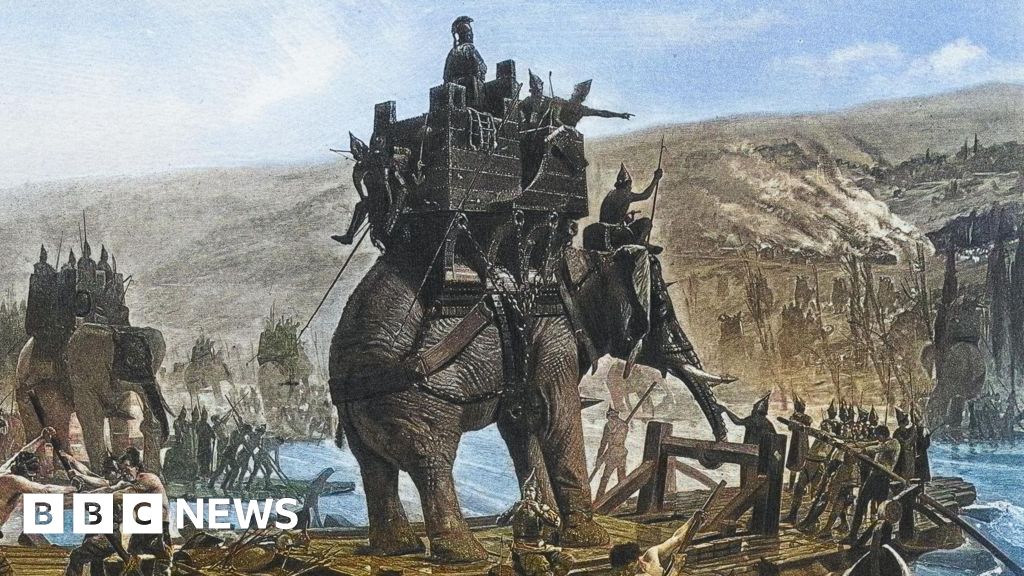
For centuries, the tale of Hannibal’s march from Carthage, across the Iberian Peninsula and the Alps, into the heart of Roman Italy has captivated historians and the public alike. Depictions in ancient texts and artwork have long suggested the pivotal role of war elephants in his military tactics, inspiring awe and terror in his enemies. However, direct archaeological evidence, particularly skeletal remains of these non-native animals in European contexts, has remained elusive – until now.
The discovery was made at an Iron Age site known as Colina de los Quemados, situated near the modern-day city of Cordoba in southern Spain. A team of scientists, led by Professor Rafael M. Martínez Sánchez, unearthed the crucial elephant bone beneath a collapsed wall. This specific context suggests that the animal may have perished during a conflict or significant event, rather than being part of a ceremonial burial or a later deposit. The bone itself, described as a 10cm cube-shaped fragment from an elephant’s foot, is a rare and invaluable piece of the historical puzzle.
The rarity of such a find cannot be overstated. As the research team highlighted in their paper published in the Journal of Archaeological Science: Reports, "Beyond ivory, the discovery of elephant remains in European archaeological contexts is exceptionally rare." Elephants were not indigenous to ancient Europe, making their presence a direct indicator of human transportation and use, most notably for military purposes during periods like the Punic Wars. The absence of numerous remains underscores the immense logistical challenges involved in moving and maintaining such colossal creatures far from their natural habitats.
Hannibal Barca, a name synonymous with military genius, was a Carthaginian general from the city-state of Carthage, located in modern-day Tunisia. He is widely considered one of the most successful commanders in classical history. His epic struggle against the Roman Republic, primarily during the Second Punic War (218-201 BCE), reshaped the political landscape of the Mediterranean. The Punic Wars were a series of three major conflicts fought between Carthage and Rome for regional supremacy, with the Second Punic War being the most famous due to Hannibal’s daring offensive.
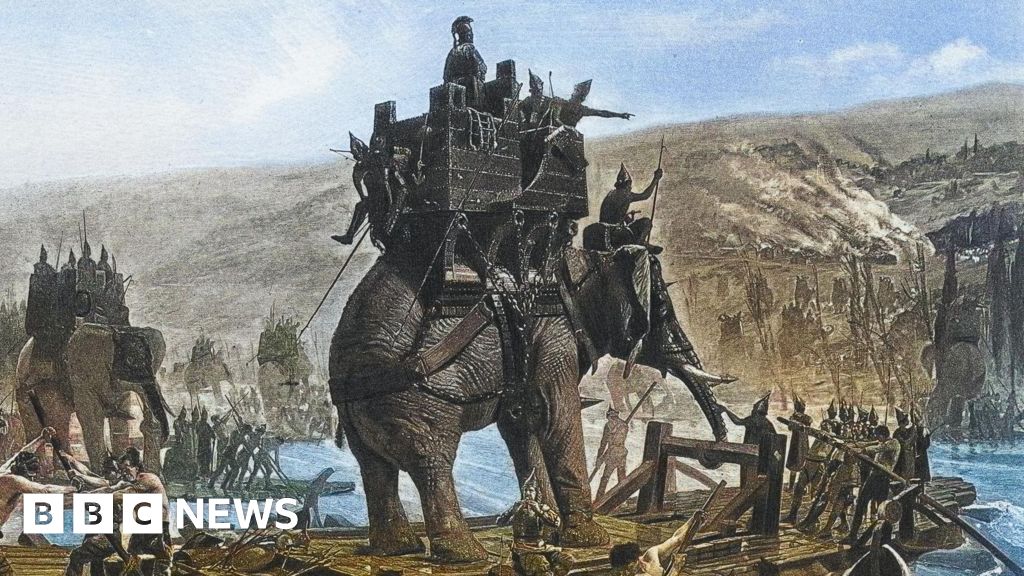
It was during this Second Punic War that Hannibal embarked on his legendary invasion of Italy. His strategy involved marching his army, including infantry, cavalry, and a contingent of war elephants, from Carthaginian territories in North Africa, through Hispania (modern-day Spain and Portugal), across the Pyrenees, through Gaul (modern-day France), and most famously, over the treacherous Alps. This monumental feat in 218 BCE, involving an initial 37 elephants, is often cited as one of the greatest military maneuvers in history, showcasing Hannibal’s audacious vision and his army’s incredible endurance.
The elephant bone found in Spain, however, is presumed to be from an animal that died before reaching the Alps. This detail is crucial, as it provides archaeological verification for the presence of Hannibal’s elephants during the initial, often overlooked, stages of his campaign in the Iberian Peninsula. Hispania was a vital staging ground and source of resources for Carthage, and the movement of elephants through this region would have been a significant undertaking, requiring immense organization and resources. This find validates the historical accounts of his army’s composition even before the most famous leg of its journey.
To ascertain the age and origin of the bone, Professor Martínez Sánchez and his team employed advanced scientific techniques. Carbon dating was used to estimate the bone’s age, a process that measures the decay of radioactive carbon-14 isotopes in organic material to determine how long it has been since the organism died. The results consistently placed the bone within the timeframe of the Second Punic War, strengthening the link to Hannibal’s campaign.
Furthermore, comparative anatomical analysis was performed to identify the species. The researchers meticulously compared the morphological characteristics of the ancient bone with those of modern elephants and extinct steppe mammoths. This detailed examination allowed them to confidently conclude that the bone belonged to an elephant, not a mammoth, ruling out a native prehistoric species. While it confirms the bone is from an elephant, the precise species remains a challenge to determine, as Hannibal’s elephants are believed to have been primarily North African Forest Elephants (a smaller subspecies of African elephants) or possibly even Asian elephants, though the latter is less likely for the Carthaginian army. Distinguishing between these species based on a single foot bone fragment can be complex and may require further genetic analysis if sufficient DNA can be extracted.
The archaeological context of the discovery at Colina de los Quemados also lent weight to its interpretation. During excavations in 2020, the team uncovered other artifacts contemporaneous with the bone, including artillery, coins, and ceramics. The presence of these items strongly suggests that the site was not merely a quiet burial ground but rather an active area during the Punic Wars, possibly a battleground, a military camp, or a place where significant events transpired. The collapsed wall under which the bone was found further hints at a sudden or violent end for the animal.
The logistical implications of Hannibal’s elephants are immense. As non-native species and the largest living terrestrial animals, these beasts would have required complex transportation, often by ship from North Africa to Hispania. Maintaining them on campaign involved vast quantities of food and water, specialized handlers, and protection from disease and injury. The academics noted that it is "very unlikely that dead animals were transported," and the fact that the bones were "unattractive" (not ivory or decorative) suggests they were not imported for craft or luxury, but rather died where they were found. This supports the hypothesis that the elephant was part of a living military contingent.
The psychological impact of war elephants in ancient warfare cannot be overstated. Their sheer size, thunderous charge, and alien appearance instilled terror in opposing forces, often breaking enemy lines and causing widespread panic. Hannibal’s deployment of these "living tanks" was a key component of his tactical genius, even if many perished during the harsh Alpine crossing and subsequent battles in Italy.
In their concluding remarks, the scientists emphasized the profound significance of this discovery: "While [the bone] would not represent one of the mythical specimens Hannibal took across the Alps, it could potentially embody the first known relic – so sought after by European scholars of the Modern Age – of the animals used in the Punic Roman wars for the control of the Mediterranean." This find bridges the gap between legendary historical accounts and tangible archaeological proof, bringing the incredible story of Hannibal’s war elephants a step closer to concrete reality. It provides invaluable insight into the logistical scale and the composition of ancient armies, grounding the often-mythologized narrative of the Punic Wars in the physical evidence of the past. Future research, including potential DNA analysis or isotopic studies to determine the elephant’s diet and geographical origin, promises to unlock even more secrets from this ancient bone, further illuminating one of history’s most epic military campaigns.




 Nakalama John
 George Anjay
 Ramos Leo


 atisusanti