
 George Anjay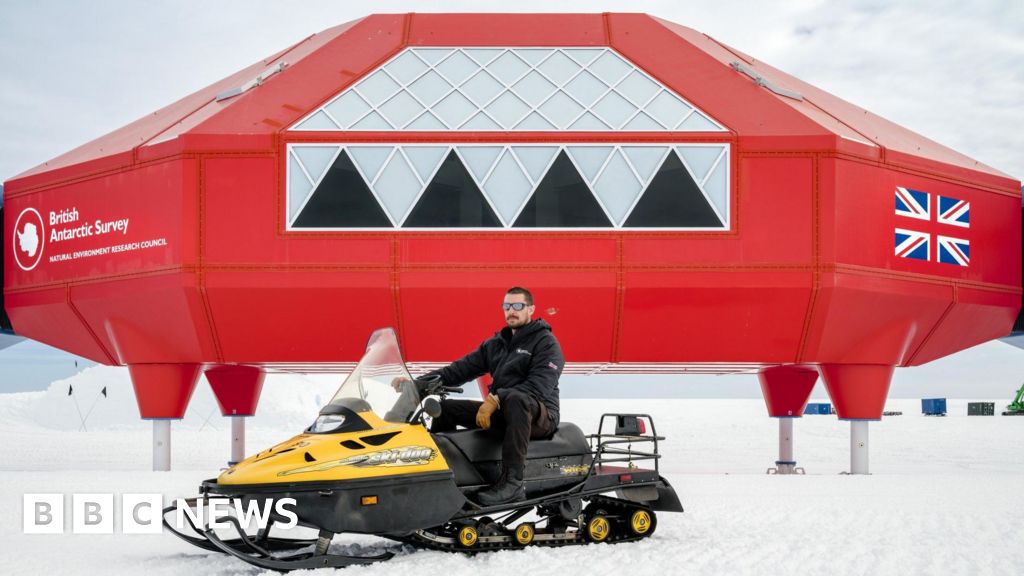
Both the UK and US’s research facilities in Antarctica are actively seeking individuals to join their remote outposts, offering a unique blend of adventure and essential operational roles. The British Antarctic Survey (BAS) and the US Antarctic Program (USAP) are not just looking for scientists; a diverse range of skilled professionals are in demand, from carpenters and electricians to chefs and even hairdressers. The opportunity to live and work on the world’s most pristine continent, however, comes with significant challenges, most notably extreme cold and profound isolation.
Dan McKenzie, now 38, embodies the spirit of adventure that draws people to the frozen south. Leaving his hometown of Wigan, England, at the young age of 19, he embarked on a career that has taken him to numerous remote corners of the globe. His current role as station leader at the Halley VI Research Station, operated by the British Antarctic Survey, is by far his most remote and demanding. Halley VI is one of five vital research facilities managed by BAS, the UK’s leading polar research institute.
McKenzie’s journey to Antarctica was fueled by an innate desire for exploration. "I’ve always been adventurous and interested in finding the most wild places," he explains, speaking via a satellite-connected video call. "I used to be a seafarer, and I didn’t want to carry on on ships, but to do something similar. I thought this would align pretty well with the skills that I’ve got."
The day McKenzie spoke to the BBC, the Antarctic summer was in full swing, with temperatures hovering around a "balmy" -15°C. The view from his station was a breathtaking panorama of white stretching to the horizon, a starkly beautiful landscape under a vast expanse of pure blue sky. He notes that -15°C is considered pleasant, with average temperatures often dipping to -20°C and capable of plummeting to -40°C during the harshest periods.
During the Antarctic summer season, which runs from November to mid-February, McKenzie oversees a team of 40 individuals at Halley VI. These stations are crucial for monitoring various aspects of the Antarctic environment and its unique wildlife. Halley VI’s scientific focus is on collecting space and atmospheric data, conducting vital research on the Brunt Ice Shelf upon which it is situated, and studying the depletion of the Earth’s ozone layer. The summer months also bring perpetual daylight, culminating in a spectacular sunset that can last for weeks, a phenomenon that can disrupt natural sleep patterns.
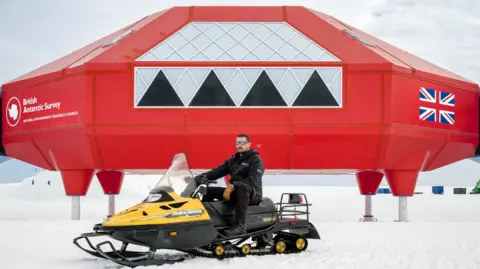
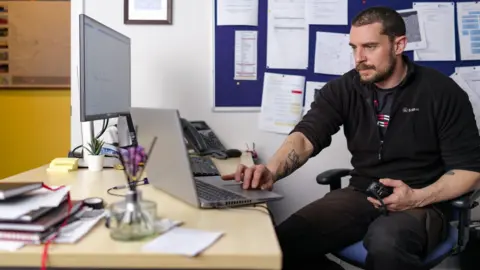
McKenzie’s progression to station leader was a testament to his dedication and adaptability. He first set foot "on the ice" in 2019, commencing his Antarctic career as a mechanical maintenance engineer at BAS’s Rothera Research Station, located over 1,000 miles from Halley VI. His current responsibilities are multifaceted, encompassing the management of supplies, ensuring health and safety protocols are rigorously followed, and leading training initiatives for his team. Crucially, McKenzie also serves as a vital source of emotional support, helping his colleagues navigate the challenges of isolation and the inevitable interpersonal conflicts that arise in such close-knit, confined living and working environments. "People come into your office and say they’re not having a very good day, or something’s happened at home, and you have to try and see if you can support them. It’s very varied," he states.
McKenzie is part of a larger contingent of approximately 120 BAS employees who contribute to the Antarctic summer season. While most, including McKenzie, will return to the UK by the end of May, a dedicated group of up to 50 will remain to experience the profound darkness of the Antarctic winter. For the rest of the year, McKenzie will be based at BAS headquarters in Cambridge. He has, however, experienced overwintering in Antarctica previously, a period he describes with a unique sense of liberation. "When the winter comes, you feel this incredible sense of freedom as most people leave," he shares. "You just feel like you’re the most free person in the world. You’ve got this tight knit group of people, and you all really care about each other – you become like a little family. Everyone looks after each other."
Each year, BAS recruits up to 150 new individuals for its Antarctic operations. While scientific and engineering expertise forms the core of the workforce, a substantial 70% of positions are operational, essential for maintaining the smooth functioning of the research stations. These roles include medics, doctors, and plumbers, in addition to the electricians and chefs already mentioned. The remuneration for these positions starts at £31,244 per annum, with the added benefits of travel, accommodation, meals, and all necessary gear to contend with the extreme climate being provided.
Globally, approximately 5,000 individuals contribute to Antarctic research and operations during the austral summer, spread across 80 research stations managed by around 30 different nations. Both BAS and the US Antarctic Program regularly advertise their vacancies online. BAS also hosts an annual open day in March, providing an opportunity for prospective applicants to learn more.
However, those drawn to the allure of Antarctic adventure must possess a realistic understanding of the demanding realities of life on the continent. Access to fresh food is limited, and alcohol consumption is strictly regulated. Accommodation at BAS facilities consists of shared dormitories, and staff adhere to a seven-day work rota. The rigorous selection process employed by BAS is designed to identify candidates with strong conflict-handling and problem-solving skills, followed by comprehensive pre-deployment training.
Mariella Giancola, BAS’ head of HR, highlights that beyond the physical challenges and the pervasive cold, the intense proximity to colleagues and the structured routine can present the most significant hurdles for individuals. She likens the experience to "going back to uni," where personal space is minimal. "We get a lot of people saying, ‘I don’t have a problem dealing with people’. And then they realise that they are not comfortable sharing spaces with other people," she observes. "It’s important to be comfortable with the fact that you are not going to have any privacy because people are right in your face. Then they go from the freedom they have at home, to being told by a station leader about the rules and regulations. A small number of people struggle with that."
Dr. Duncan Precious, a clinical psychologist who served in similar roles within the British and Australian armed forces from 2013 to 2020, and is now the clinical director and resilience consultant for CDS Defence & Security, concurs that while the physical dangers of Antarctica are undeniable, social dynamics can often prove more problematic. He notes that when interpersonal relationships deteriorate in such a confined environment, the fallout can be difficult to manage and rectify. Nevertheless, Dr. Precious suggests that individuals drawn to the unique lifestyle of Antarctica are likely to be resilient and thrive on what he terms "good stress," a trait also observed in those who opt for military service.
Despite the considerable physical and psychological demands, McKenzie asserts that the extraordinary experiences and the profound satisfaction of contributing to crucial environmental research are unparalleled. He candidly admits that his initial month in Antarctica was challenging. "When I first got down here, it was hard to be sharing a room with people, and the weather was quite miserable. For the first month I thought, ‘maybe this isn’t the thing for me’," he recounts. However, this sentiment quickly shifted. "But then you start to get out, and you see whales, seals and islands on boats, and then little trips out in small aircraft. And you think, ‘this is pretty brilliant’. This year, I’ve been so lucky to see an emperor penguin colony. It’s like something from a David Attenborough documentary."


 Ramos Leo
 Roy Suryo
 atisusanti
 Nakalama John