
 Nana Banana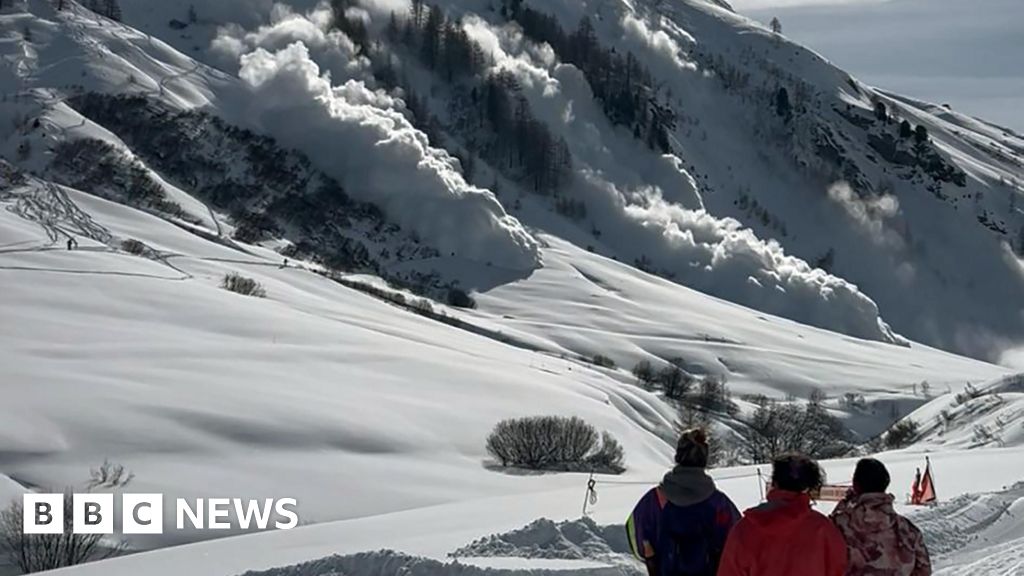
The winter season of 2023-2024 has cast a stark spotlight on the inherent dangers of mountainous regions, particularly for winter sports enthusiasts. While avalanches are a perennial concern in the Northern Hemisphere during peak ski season, a series of deadly incidents across Europe and the United States has prompted widespread alarm and raised critical questions about snowpack stability, climate change, and human preparedness. With more than 90 fatalities recorded across the Alps and other mountain ranges this season, the scale of the human toll has surpassed recent averages, leading many to wonder if this winter is witnessing an unprecedented surge in these powerful natural phenomena.
A particularly tragic event unfolded on a recent Tuesday in California, claiming the lives of eight skiers and leaving one person unaccounted for following a deadly incident in Nevada County. This tragedy, coupled with an unusually high number of fatalities in the European Alps, has intensified scrutiny on avalanche safety protocols and the environmental factors contributing to these disasters. The conditions leading to the California avalanche appeared distinct from those in Europe. California had been emerging from a prolonged "snow drought," a period of significantly reduced snowfall. Experts noted that the recent snowfall, while welcome, was not considered exceptional in volume. However, the dynamics of a snow drought followed by intense, rapid snowfall can create extremely hazardous conditions. When new, heavy snow falls on an existing snowpack that is either very hard, icy, or virtually non-existent, it struggles to bind effectively. This creates unstable layers, where the fresh, loose snow sits precariously on an unstable foundation, easily triggered into a slide.
In contrast, Europe has experienced a far different and equally dangerous meteorological pattern. The Alps, a magnet for winter sports, have been battered by two major storms within a single week, depositing immense quantities of heavy snow. These significant snowfalls, combined with powerful winds, have led to extraordinarily high avalanche warning levels across an unusually expansive swathe of the Alpine region. The consequences have been severe, with dozens of people killed this season, including three Britons, underscoring the widespread danger. One Alpine resort grimly suggested that the current conditions could be the most perilous it has witnessed this century, highlighting the extreme nature of the present winter. Beyond the direct threat to skiers, the recent heavy snows have caused broader disruption, necessitating the evacuation of several communities in Switzerland and northern Italy, triggering widespread power outages, and even leading to a train derailment at Goppenstein in the south-western Swiss canton of Valais. This begs the question: is there a common thread connecting the seemingly disparate events in the American West and the heart of Europe?
The immediate inclination is to attribute such widespread and severe weather anomalies to climate change. Indeed, the concept of a shifting climate influencing weather stability offers a compelling, albeit complex, explanation. Simon Mason, a senior scientist at SEI US, posits that there is growing evidence suggesting climate change will lead to more abrupt and intense precipitation events, interspersed with extended dry periods. This pattern seems to resonate with the European experience, which has recently endured several seasons with lower-than-average snowfall, followed by significant dry spells in the early part of this winter, culminating in the recent deluges. However, Mason cautions against drawing direct causal links too quickly, emphasizing that avalanche risk is controlled by numerous factors, with precipitation being just one. Therefore, predicting the precise evolution of avalanche risks under future climate change scenarios remains challenging.
Adding further nuance to the discussion, climatologist Christoph Marthy observed to Swiss outlet SRF that the current Alpine winter, characterized until recently by dominant high pressure systems and extended dry periods, appears to contradict the typical expectations of a climate change-influenced winter. Benjamin Zweifel, from the Swiss Federal Institute for Snow and Avalanche Research, concurred, telling the BBC that the recent storms are "only one piece of the puzzle." He elaborated that the primary challenge this winter has been the formation of a "very weak snowpack" with "very persistent weak layers." These unstable layers develop during prolonged periods without new snow and consistently low temperatures, which allow existing snow crystals to transform into weak, faceted crystals (like depth hoar) that fail to bond properly with subsequent layers of fresh snow. When new snow falls on such a weak foundation, even moderate loads can trigger a massive slide.
Beyond the macro-level weather patterns, temperature itself has a direct and significant impact on avalanche dynamics. The US Northern Rocky Mountain Science Center highlights that wet snow avalanches, which are projected to become more frequent as global temperatures rise, are particularly dangerous. They are notoriously difficult to predict and are less understood compared to their dry snow counterparts. Wet snow avalanches are primarily caused by a weakening in the internal strength of the snowpack, often initiated by rainfall, intense solar radiation, or abnormally warm temperatures that cause the snow to become saturated or melt. The centre’s research indicates that their frequency is expected to increase in a warming climate. Furthermore, a 2021 research paper published in the journal Frontiers in Physiology suggests that warmer and wetter snow could significantly diminish a person’s chances of survival if caught in an avalanche. This is because denser, wetter snow can lead to more rapid asphyxiation and create greater pressure on the body. Additionally, thinner overall snow cover, another potential consequence of changing climate patterns, may increase the risk of blunt trauma injuries as victims are more likely to strike underlying terrain or obstacles. Collectively, these observations point to four interconnected and destabilizing issues reshaping avalanche dynamics: the erratic oscillation between periods of drought and heavy precipitation, the sheer intensity and volume of precipitation events, the increasing prevalence of wetter snow, and the direct impact of rising temperatures leading to melting within the snowpack.
Amidst these environmental challenges, human behavior also plays a crucial role in the escalating number of incidents. Blaise Agresti, a high-mountain guide based in Chamonix, France, pointed out on Sud radio that a significant factor in Europe’s spike in avalanche deaths is the changing behavior of skiers, particularly a growing appetite for higher levels of risk. He noted that an increasing proportion of winter sports enthusiasts are venturing off-piste, with estimates suggesting that as many as 25% of skiers now engage in off-piste activities. While the allure of untouched powder and challenging terrain is undeniable, off-piste skiing carries substantially higher risks.
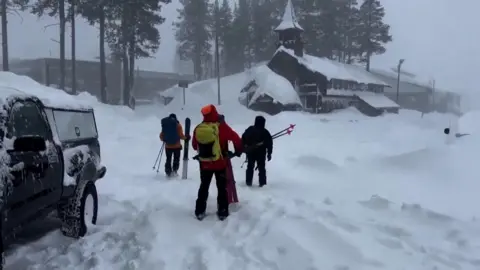
Way-marked pistes, or groomed trails, are generally subject to rigorous safety measures. These include pre-emptive avalanche blasting, where explosives are used to trigger controlled slides in potentially dangerous areas, and regular flattening and compacting of snow by grooming machines to stabilize the snowpack and reduce the risk of spontaneous avalanches. In situations of extreme danger, pistes can be temporarily closed, as has occurred frequently during recent high-warning periods. However, even with these sophisticated forecasting and blasting techniques, a zero-risk environment is unattainable, and avalanches can occasionally still impact pistes declared safe. Experts advise caution, suggesting it is prudent to avoid pistes located directly beneath mountainsides covered with particularly deep, powdery-looking snow.
In response to heightened threats, some resorts have taken extraordinary measures. The French resorts of Tignes and Val d’Isere, for instance, famously imposed a temporary lockdown during a period of severe avalanche threat, compelling residents and tourists to remain indoors for their safety. More generally, resorts aim to educate rather than prohibit off-piste activities. La Plagne, a French resort renowned for its extensive off-piste terrain, actively advises skiers to gather comprehensive information about current conditions, ensure they possess essential safety gear—an avalanche transceiver (beacon), a shovel, and a probe—and crucially, know how to use them effectively. The resort also strongly advocates for always venturing out with a professional guide and never alone. La Plagne further demonstrates its commitment to safety by hosting weekly safety days during high season and has recently invested in cutting-edge technology, including a drone equipped with a thermal camera, to enhance its avalanche detection and rescue capabilities.
Thomas Hager, a seasoned ski guide operating in Austria’s Zell am See region, shared a vital perspective on the BBC World Service’s Outside Source programme, highlighting how deceptive the seemingly tranquil appearance of snow can be. He drew a parallel with the ocean, noting that "snow looks so calm. It’s comparable to water. In an ocean you don’t see undercurrents, but local people know where the undercurrents are and where avalanches go off frequently." His advice is unequivocal: "Please always talk with local people and listen to the avalanche forecast." Hager also stressed the critical importance of carrying an avalanche airbag, a piece of equipment not legally mandated but proven to significantly increase a victim’s chances of remaining close to the snow’s surface during a slide, thereby improving their survivability.
While the recent spike in avalanche fatalities in Europe is undoubtedly concerning, it is important to contextualize it within historical data. According to the European Avalanche Warning Services, 95 people have died so far this season. This figure, while higher than the 70 recorded in the entire 2022-23 season and the 87 in 2023-24, is not entirely unprecedented. The 2020-21 season saw 131 fatalities, and the 2017-18 season recorded 147, placing the current figures within a comparable, though still alarming, range of past severe seasons.
However, when consulting meteorologists and weather watchers, a more striking picture emerges regarding the sheer intensity of this winter’s conditions. Meteo France’s team in Bourg-Saint-Maurice, near the Italian border, reported that their region transitioned from below-average snowfall to "remarkable" above-average snowfall in a span of less than 10 days. They stated, "Statistically speaking, we experience a situation like this once every eight years. This means a very significant avalanche risk." The Val d’Isere resort’s weather bulletin went further, describing a looming third wave of 30-50cm (12-20in) of snow, following two already significant storms, as a situation requiring "certain precautions." The resort added, "The situation has not been seen for a long time (perhaps since February 1999)," underscoring the exceptional nature of the current weather patterns and the associated risks.
This raises a crucial question: given the "remarkable" and historically rare weather conditions, have modern avalanche-warning systems, improved forecasting, and enhanced safety measures implemented by resorts in recent years managed to keep casualty figures from being even higher? Benjamin Zweifel believes there has been a "big effect," particularly in Switzerland, where fatalities currently stand at 13. He suggests that without these advancements, the situation could have been far more catastrophic. He notes, however, that France and Italy have reported higher fatalities—25 in each country—speculating that this disparity might be linked to "even more challenging conditions" prevailing in the western and southern Alps, which experienced the brunt of the recent storms.
Looking ahead, there is a glimmer of hope. The weather is expected to improve from Friday, offering a much-needed respite. This calmer period will allow resorts and mountain safety teams to conduct more extensive safety work, including controlled blasting and stabilization efforts, and will give the dangerously unstable snowpack time to settle and consolidate. However, even with improving weather, new risks may emerge. Sunny, south-facing slopes will begin to lose some of their snow as temperatures rise, potentially creating new weak layers or increasing the risk of wet snow avalanches as the snowpack undergoes melt-freeze cycles. Therefore, vigilance and adherence to safety guidelines will remain paramount for all who venture into the mountains in the coming weeks.



 Ramos Leo
 Nakalama John

 atisusanti

 George Anjay