George Anjay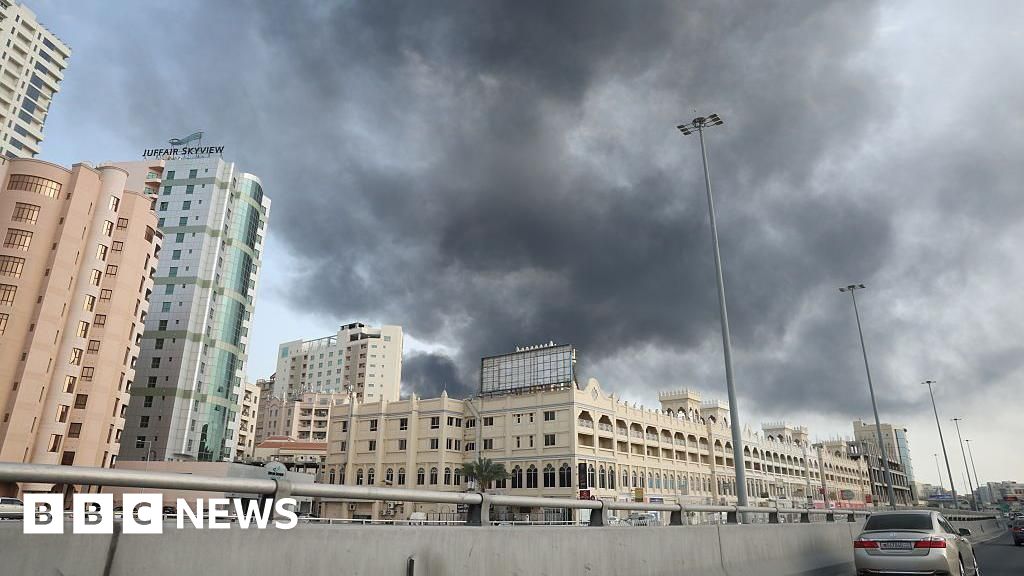
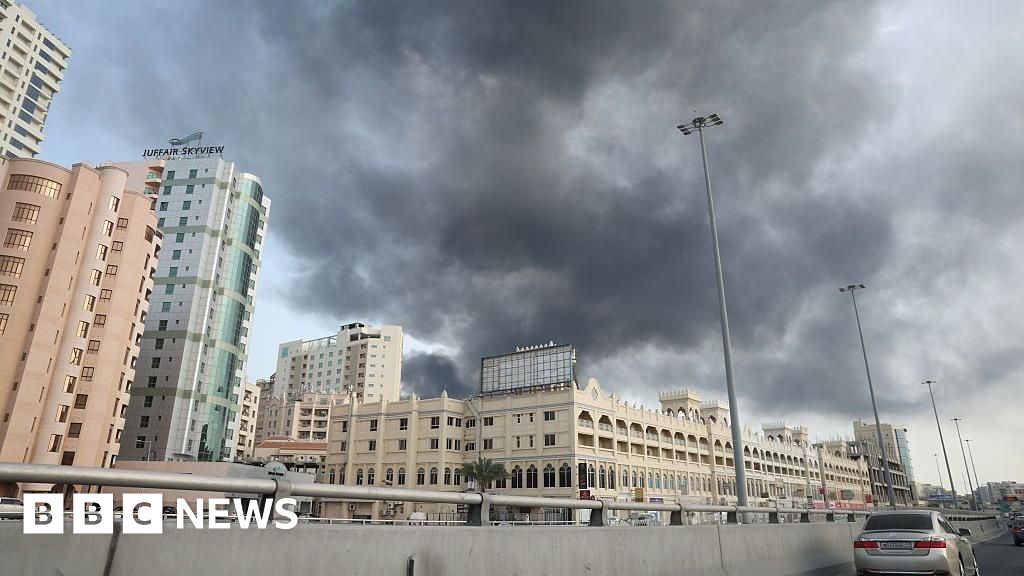
Videos appearing to show missiles and drones striking the vicinity of the US Fifth Fleet headquarters in Bahrain have amplified concerns about the effectiveness of American air defences in the Middle East and how the United States can counter potential Iranian retaliation. While there are no immediate reports of casualties, the US military likely received advance warning and implemented protective measures, including personnel evacuations. The incident highlights a critical vulnerability that could shape future US strategy in a volatile region.
According to former Royal Navy Commander Tom Sharpe, Bahrain was likely chosen by Iran as a high-profile target due to its historical lack of robust air defences. The visual evidence of a relatively slow-moving Iranian Shahed drone breaching defenses underscores this vulnerability, a stark contrast to Ukraine, where similar drones are often intercepted by basic high-caliber machine guns. This incident occurs despite recent reports of the US deploying additional sophisticated air defence systems to the region, including THAAD and Patriot Systems, designed to neutralize ballistic missiles. However, the sheer cost and limited numbers of these advanced systems raise questions about their ability to provide comprehensive protection across all US military bases and interests in the Middle East. For context, Ukraine, with fewer than 10 Patriot batteries, still struggles to adequately defend its capital, Kyiv.
The US Navy has also augmented its presence in the Gulf and the eastern Mediterranean with approximately a dozen Arleigh Burke-class Destroyers, vessels equipped with air defence capabilities that can intercept both drones and ballistic missiles. These destroyers have already demonstrated their efficacy in the Red Sea, intercepting nearly 400 Houthi drones and missiles between 2024 and 2026. Furthermore, the US has bolstered its regional air power, deploying over 100 fighter jets capable of intercepting aerial threats.
Despite these significant defensive assets, the scale of Iran’s offensive capabilities presents a formidable challenge. Prior to recent US and Israeli strikes, Iran was believed to possess an arsenal of around 2,000 short-range ballistic missiles and a substantial inventory of one-way attack drones. The Iranian Shahed drone, a weapon that has caused significant destruction in Ukraine, has likely benefited from technological advancements facilitated by Russia, which is now producing thousands of these drones monthly and is suspected of sharing technical expertise with Iran.
Sharpe’s experience during his Royal Navy tenure, which included war games simulating Iranian attacks on Middle Eastern military bases, revealed scenarios where missiles and drones inevitably penetrated limited air defences. He warns that if Iran were to launch a full-scale, rapid assault in response to perceived existential threats, the US could eventually exhaust its supply of THAAD and Patriot interceptors. He also emphasizes that Iran’s drone and missile capabilities are "massively dispersed," making them difficult to completely neutralize.
However, Edmund Fitton-Brown, a senior fellow at the Foundation for Defense of Democracies, suggests that while Iran is willing to retaliate, its actions may indicate a desire to avoid escalating the conflict into a wider war. The extent to which last year’s US and Israeli attacks may have degraded Iran’s military capabilities remains unclear, but early indications suggest the Iranian retaliation has been "rather moderate in scope." This assessment is further supported by the prolonged campaign against the Houthis in Yemen, where the US has damaged but not eradicated their missile and drone launch capabilities.
Historically, aerial campaigns alone have rarely achieved decisive victories or regime change, with the NATO-led bombing of Libya in 2011 serving as a rare, albeit chaotic, exception. Iran also possesses the capacity to threaten the US Navy with its extensive stock of anti-ship missiles and a fleet of small, fast, uncrewed attack boats. The potential for Chinese military support to Iran in recent months remains an unanswered question that could further complicate the strategic calculus.
Daniel Byman, a senior fellow at the Center for Strategic and International Studies in Washington, posits that while initial strikes might disrupt Iran’s leadership and military assets, the US "may struggle to sustain operations while Iran’s main path to survival is simply to endure." The ongoing conflict in Ukraine serves as a potent reminder of the critical importance of air defences, which remain President Volodymyr Zelensky’s foremost request to allies. Ukraine’s struggle against complex, multi-pronged attacks involving hundreds of drones and dozens of missiles highlights the immense difficulty of comprehensive defense. While the US possesses greater resources and, alongside Israel, is targeting Iran’s drone and missile production facilities and launch sites, the complete eradication of this threat is far from guaranteed. A protracted conflict would not only challenge Iran but also strain US weapon stocks and supply lines in a theater of operations far from its shores.




 atisusanti
 Nakalama John