Nana Banana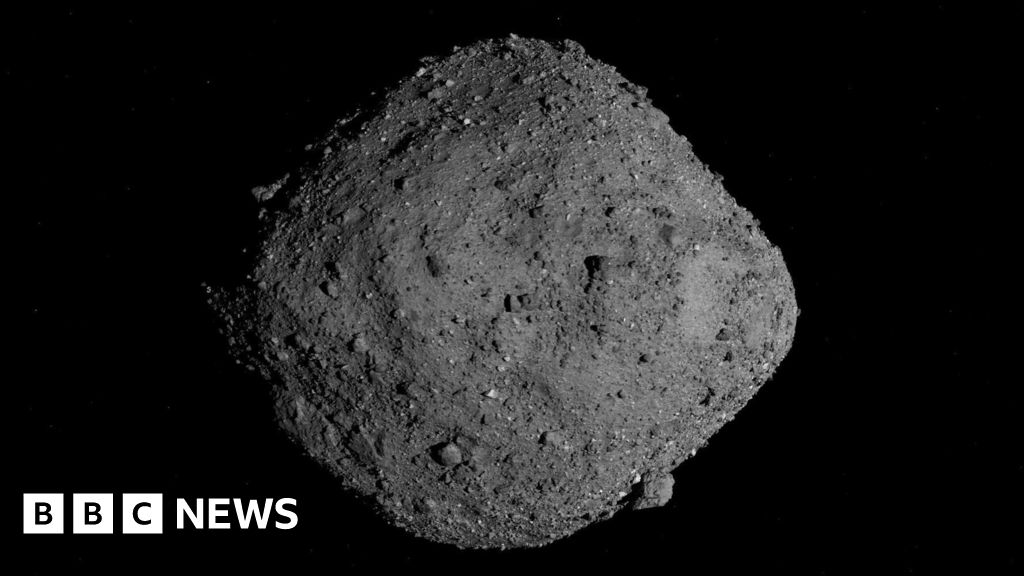
A groundbreaking analysis of samples retrieved from the asteroid Bennu has revealed the presence of chemical building blocks crucial for the emergence of life, marking a monumental step in humanity’s quest to understand its cosmic origins. The meticulously collected grainy dust from the 500-meter-wide celestial body, brought to Earth by NASA’s Osiris-REx spacecraft, contains an astonishingly rich array of minerals and thousands of organic compounds. Among these vital constituents are amino acids, the fundamental molecules that link together to form proteins, which are essential for virtually all biological processes. Furthermore, scientists have identified nucleobases – the very components that constitute the genetic material DNA – specifically adenine, guanine, cytosine, and thymine.
This extraordinary discovery does not imply that life ever existed on Bennu itself. Instead, it provides robust support for the long-standing scientific theory that asteroids, acting as cosmic delivery vehicles, transported these critical ingredients to Earth during the tumultuous early stages of our planet’s formation, billions of years ago. Such an ancient bombardment by space rocks is believed to have seeded Earth with the raw materials necessary for the genesis of life. Beyond Earth, scientists postulate that these same life-enabling compounds could have been similarly delivered to other worlds throughout our solar system, raising profound questions about the potential for extraterrestrial life.
"What we’ve learned from it is simply amazing," expressed Professor Sara Russell, a distinguished cosmic mineralogist at the Natural History Museum in London. Her sentiment underscores the profound implications of the findings. "It’s telling us about our own origins, and it enables us to answer these really, really big questions about where life began. And who doesn’t want to know about how life started?" The comprehensive findings, which detail the intricate molecular composition of the asteroid dust, have been rigorously peer-reviewed and published across two seminal papers in the prestigious journals Nature and Nature Astronomy, solidifying their significance within the scientific community.
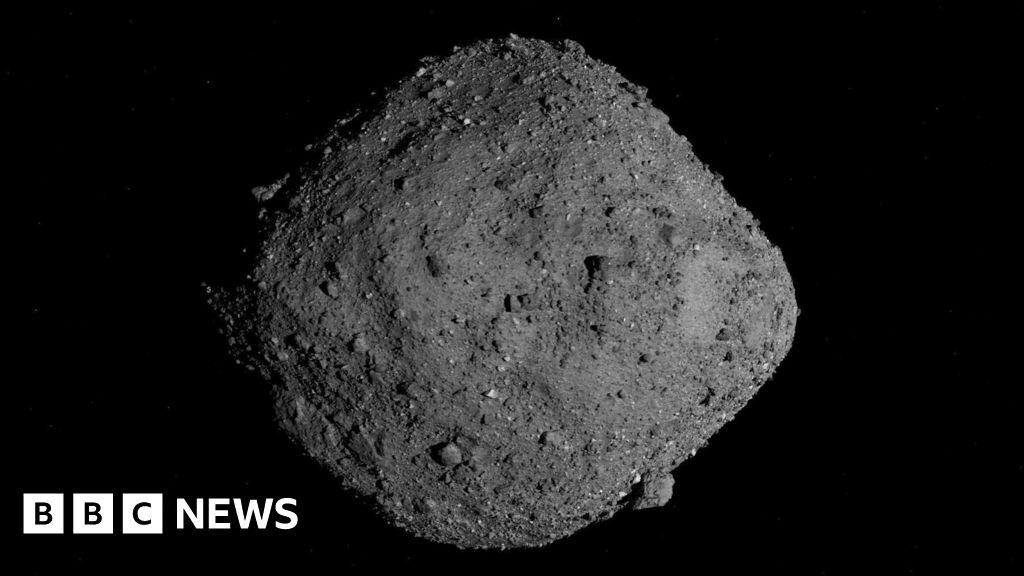
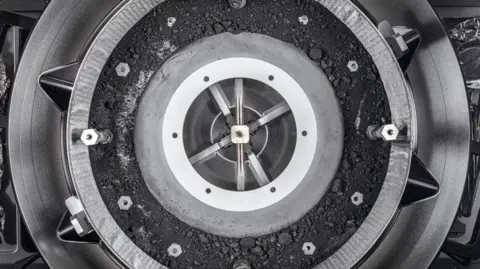
The successful acquisition of samples from Bennu represents one of the most audacious and technically challenging missions ever undertaken by NASA. The mission, officially named Osiris-REx (Origins, Spectral Interpretation, Resource Identification, Security-Regolith Explorer), launched in September 2016. After a journey of over two years, the spacecraft arrived at Bennu in December 2018, meticulously mapping its rugged surface. In October 2020, Osiris-REx executed a delicate "Touch-And-Go" (TAG) maneuver, unfurling its robotic arm equipped with a sampling mechanism called TAGSAM. This maneuver allowed it to briefly touch the asteroid’s surface and collect a precious quantity of material before safely backing away. The spacecraft then departed Bennu in May 2021, embarking on its return journey. On September 24, 2023, the sample capsule successfully re-entered Earth’s atmosphere and parachuted down into the Utah desert, marking the culmination of a seven-year mission.
Approximately 120 grams of pristine, black dust and small rocks were collected from Bennu. While this might seem a modest amount, it has proven to be an unparalleled scientific treasure trove, offering an untouched glimpse into the primordial solar system. This invaluable material was then carefully curated and distributed to scientific teams across the globe, including researchers in the UK, to undergo in-depth analysis. "Every grain is telling us something new about Bennu," Professor Russell emphasized, highlighting the incredible density of information contained within each microscopic particle. A mere teaspoonful of the asteroid’s material was entrusted to scientists in the UK, providing ample substance for groundbreaking research.
The new research has meticulously detailed that Bennu’s material is exceptionally rich in nitrogen and carbon-bearing compounds, which are indispensable for organic chemistry. These discoveries include an impressive 14 of the 20 amino acids commonly utilized by life on Earth to construct proteins. More remarkably, all four of the ring-shaped nucleobases that form the backbone of DNA – adenine, guanine, cytosine, and thymine – have been identified. Beyond organic molecules, the study also revealed a diverse array of minerals and various salts, providing compelling evidence that liquid water was once present on the asteroid. The detection of ammonia, a compound crucial for many biochemical reactions, further strengthens the case for Bennu’s role as a potential primordial chemical factory.
While some of these compounds have been previously detected in meteorites that have fallen to Earth, the unique combination and sheer abundance found in the Bennu samples, along with certain compounds never before identified in extraterrestrial material, make this discovery particularly significant. "It’s just incredible how rich it is," Professor Russell marvelled. "It’s full of these minerals that we haven’t seen before in meteorites and the combination of them that we haven’t seen before. It’s been such an exciting thing to study." The pristine nature of the Bennu sample, having been preserved in the vacuum of space, ensures that these findings are not contaminated by Earthly processes, providing an authentic snapshot of the early solar system’s chemical environment.
This latest study significantly reinforces the growing body of evidence supporting the hypothesis that asteroids and comets played a pivotal role in delivering both water and essential organic materials to the early Earth. Dr. Ashley King, also from the Natural History Museum, elaborated on this cosmic ballet: "The early Solar System was really turbulent and there were millions of asteroids like Bennu flying about." The prevailing theory suggests that these carbonaceous asteroids, rich in volatiles and organic compounds, ceaselessly bombarded the nascent Earth. These impacts are believed to have contributed significantly to the formation of our planet’s oceans and atmosphere, simultaneously providing the complex molecular precursors that ultimately paved the way for abiogenesis – the process by which life arose from non-living matter.
However, Earth was not an isolated recipient of these celestial gifts. Asteroids and comets would have impacted other planetary bodies throughout the solar system as well. "Earth is unique, in that it’s the only place where we have found life so far," Dr. King acknowledged, "but we know asteroids were delivering those ingredients, the carbon and the water, throughout the Solar System." This realization broadens the scope of astrobiological inquiry considerably. He added, "And one of the big things that we’re trying to understand now is, if you have the right conditions, why do we have life here on Earth – and could we potentially find it elsewhere in our Solar System?" This profound question now drives much of the ongoing exploration of Mars, as well as the icy moons of Jupiter and Saturn, such as Europa and Enceladus, which are thought to harbor subsurface oceans.
The analysis of the Bennu samples is still in its nascent stages. Scientists anticipate decades of meticulous research ahead, as they continue to unlock the secrets held within every microscopic speck of dust. Advanced analytical techniques, including scanning electron microscopy, mass spectrometry, and various forms of spectroscopy, will be employed to dissect the chemical makeup of these samples at an unprecedented level of detail. The findings from Bennu provide not only a window into Earth’s distant past but also a roadmap for understanding the distribution of life’s building blocks across our cosmic neighborhood, making it a key endeavor for future astrobiological investigations and our enduring quest to answer humanity’s most fundamental questions about life’s origins and its place in the universe.



 atisusanti
 Nakalama John
 George Anjay