George Anjay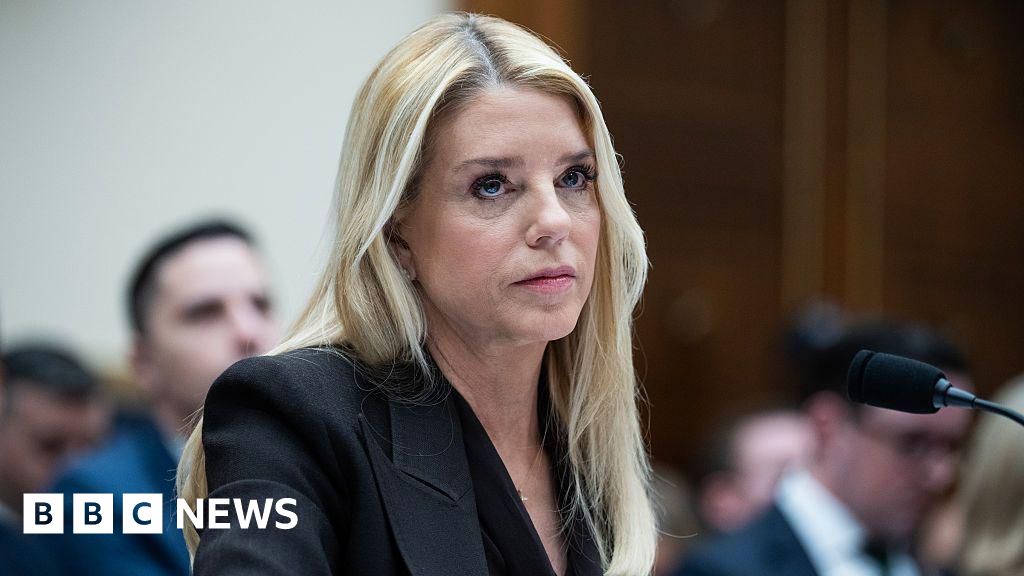
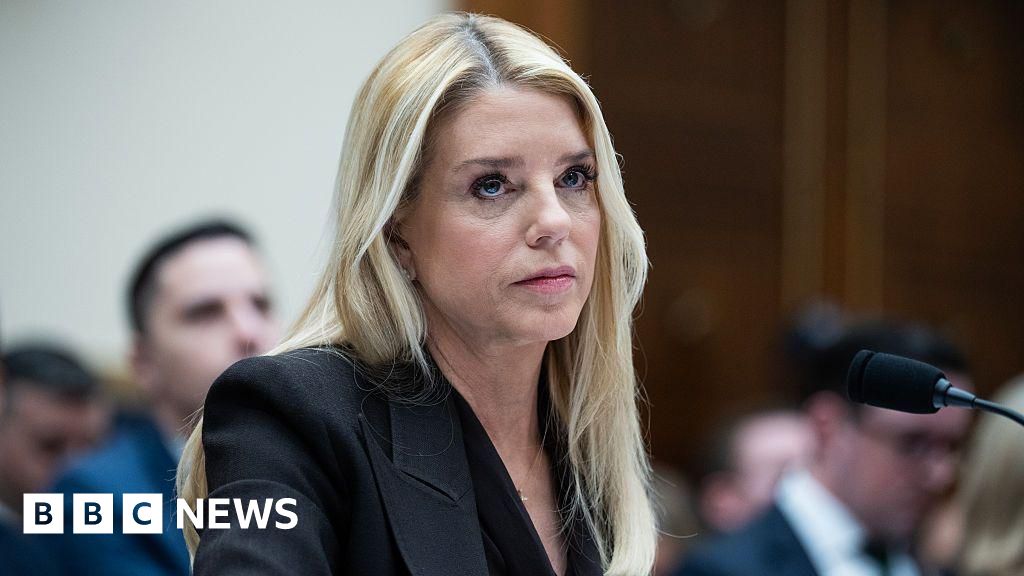
The US Department of Justice (DoJ) has faced significant criticism from lawmakers after asserting that all files mandated by the Epstein Files Transparency Act have been released, with critics arguing the disclosure is incomplete and potentially misleading. The controversy centers on a letter sent to members of the US Congress on Saturday by Pam Bondi, former Florida Attorney General and a consultant to the DoJ, and her deputy Todd Blanche. In this letter, they declared that all documents in the possession of the DoJ relating to Jeffrey Epstein’s illicit activities had been released and provided a list of names contained within these files. However, this declaration has been met with sharp rebuttals from key congressional figures, who contend that crucial information, particularly regarding the DoJ’s past investigative and prosecutorial decisions, has been withheld.
Kentucky Republican Representative Thomas Massie, a co-author of the Epstein Files Transparency Act, has been at the forefront of the criticism, calling for the DoJ to release internal memos that would illuminate past decisions on whether to charge Epstein and his associates. This demand stems from the specific provisions of the Act, which Massie and his colleagues believe obligate the DoJ to provide a comprehensive account of their handling of the Epstein case, not merely a compilation of documents that mention certain individuals. The ongoing saga follows the DoJ’s release of millions of new files related to the late sex offender Jeffrey Epstein earlier this month, a release that was intended to foster greater transparency but has instead ignited a fresh wave of scrutiny.
In their letter to Congress, Attorney General Bondi and Deputy Attorney General Blanche stated, "In accordance with the requirements of the Act, and as described in various Department submissions to the courts of the Southern District of New York assigned to the Epstein and Maxwell prosecutions and related orders, the Department released all ‘records, documents, communications and investigative materials in the possession of the Department’ that ‘relate to’ any of nine different categories." They further asserted that no records were withheld from this release "on the basis of embarrassment, reputational harm, or political sensitivity." The letter identified individuals listed in the files as those who "are or were a government official or politically exposed person," whose names appeared at least once in the released materials.
The nature of the individuals named in the files, as described by Blanche and Bondi, varied significantly. Some had "extensive direct email contact with Epstein or Maxwell," while others were merely referenced in documents or news articles contained within the vast trove of released materials. This broad categorization has led to confusion and outrage, particularly concerning the inclusion of prominent figures with no known direct involvement in Epstein’s criminal enterprises, alongside individuals with alleged connections.
Among the names disclosed are those of Donald Trump, Bill Gates, Prince Andrew, the Duke of York, and Bill Clinton. These individuals have previously been reported to have had associations with Epstein and Ghislaine Maxwell, his former associate. It is crucial to note that the mere appearance of these names in the documents does not imply any wrongdoing on their part. Indeed, each of these individuals has consistently denied any involvement in Epstein’s crimes. However, the inclusion of these high-profile figures has amplified public interest and intensified demands for full disclosure.
More controversially, the list also includes the names of deceased musicians Janis Joplin and Elvis Presley. This inclusion has been particularly baffling and has fueled accusations that the DoJ is either deliberately obfuscating the relevance of certain individuals or has failed to adequately vet the content of the released files. The inclusion of individuals who died decades before Epstein’s alleged crimes began, or whose connection to him is unclear, raises serious questions about the comprehensiveness and accuracy of the DoJ’s interpretation of the Transparency Act’s requirements.
The letter from Bondi and Blanche was formally addressed to key congressional leaders, including Senate Judiciary Committee Chairman Chuck Grassley and ranking member Dick Durbin, as well as House Judiciary Committee Chairman Jim Jordan and ranking member Jamie Raskin. This indicates the seriousness with which Congress is treating the matter and the pressure being exerted on the DoJ to ensure full compliance with the transparency law.

In a television interview on ABC’s "This Week" on Sunday, Representative Massie elaborated on his concerns. He argued that while the DoJ "wants to say they are done with this document production," there are still more critical files that warrant public release. Massie specifically accused the DoJ of "signing deliberative process privilege in order not to release some of the documents." He explained, "The problem with that is the bill that Ro Khanna and I wrote says that they must release internal memos and notes and emails about their decisions on whether to prosecute or not prosecute, whether to investigate or not investigate." This suggests a fundamental disagreement over the scope of what constitutes "relevant materials" and what exemptions the DoJ is lawfully permitted to claim.
Responding to the DoJ’s letter, California Democratic Representative Ro Khanna, who was instrumental in co-authoring the Epstein Files Transparency Act alongside Massie, publicly accused the DoJ of "purposefully muddying the waters on who was a predator and who was mentioned in an email." Khanna’s strong statement on social media platform X on Saturday highlighted the absurdity of the DoJ’s approach. He pointed out, "To have Janis Joplin, who died when Epstein was 17, in the same list as Larry Nassar, who went to prison for the sexual abuse of hundreds of young women and child pornography, with no clarification of how either was mentioned in the files is absurd." Larry Nassar, a former Olympic gymnastics doctor, was convicted of sexually abusing hundreds of female athletes. The juxtaposition of Joplin and Nassar, with no context provided for their inclusion, underscores the perceived lack of clarity and potential for misinterpretation in the DoJ’s release.
Khanna’s call to action was unequivocal: "Release the full files. Stop protecting predators. Redact only the survivor’s names." This plea emphasizes the core objective of the Transparency Act: to expose the network of individuals involved with Epstein and to hold accountable any parties who facilitated or enabled his crimes, while simultaneously protecting the identities of victims.
The BBC has reached out to the Department of Justice for an official comment on these criticisms. This latest development follows previous instances where US lawmakers had raised concerns about the improper redaction of files related to Epstein. In at least one prior instance, criticism from lawmakers led to a document being unredacted. Furthermore, lawyers representing Epstein’s victims have also voiced concerns about the most recent tranche of files, reporting that they contained email addresses and nude photographs in which the names and faces of potential victims could be identified. At that time, the DoJ attributed such errors to "technical or human error" and stated that all flagged files had been removed from public view. The ongoing discrepancies and controversies surrounding the release of these sensitive documents highlight the persistent challenges in achieving true transparency and accountability in the wake of the Jeffrey Epstein scandal.



 Ramos Leo
 Nakalama John

 atisusanti