Nana Banana
In true feline style, cats took their time in deciding when and where to forge bonds with humans, a journey far more recent and geographically distinct than previously understood. For centuries, the origin story of our beloved domestic cats, Felis catus, was shrouded in scientific mystery, with many theories pointing to the dawn of agriculture in the Fertile Crescent. However, new scientific evidence, meticulously gathered from ancient bones at archaeological sites, has rewritten this narrative, revealing that the shift from wild hunter to pampered pet happened much more recently – and in a completely different part of the world.

This groundbreaking research, involving extensive DNA analysis, suggests that cats began their close relationship with humans only a few thousand years ago, between 3,500 and 4,000 years ago, placing the origins of domestication firmly in northern Africa, specifically Egypt, rather than the Levant. This revelation drastically shortens the timeline of cat-human cohabitation, challenging the long-held belief that domestication occurred approximately 10,000 years ago alongside early agricultural settlements. As Professor Greger Larson of the University of Oxford eloquently put it, "They are ubiquitous, we make TV programmes about them, and they dominate the internet. That relationship we have with cats now only gets started about 3.5 or 4,000 years ago, rather than 10,000 years ago." This makes cats relatively latecomers to the domestic scene compared to dogs, which were domesticated tens of thousands of years earlier.
All modern domestic cats are descendants of a single species: the African wildcat (Felis silvestris lybica). For years, scientists grappled with the question of how, where, and when these elusive creatures shed their wildness to become the cuddly, yet independent, companions we know today. The subtle morphological changes between wild and domestic cats, unlike the more pronounced differences seen in dogs, made archaeological identification challenging. However, advancements in ancient DNA sequencing have provided an unprecedented window into their past. Researchers meticulously analyzed genetic material extracted from cat bones unearthed at numerous archaeological sites across Europe, North Africa, and Anatolia. By dating these ancient bones and comparing their DNA with the gene pool of contemporary domestic cats, a clearer picture of their evolutionary journey emerged.

The new evidence unequivocally points away from the traditional "dawn of agriculture" theory in the Levant. Instead, the genetic signatures suggest a more recent and localized event. "Instead of happening in that area where people are first settling down with agriculture, it looks like it is much more of an Egyptian phenomenon," Prof. Larson explained. This finding aligns perfectly with our existing knowledge of ancient Egyptian society, which famously revered cats. The land of the pharaohs, with its burgeoning agricultural practices, created an ideal environment for the initial stages of feline domestication. Vast grain stores, essential for feeding a growing population, attracted rodents, which in turn attracted African wildcats. These opportunistic felines likely began to tolerate human presence, benefiting from an abundant food supply without significant human intervention. This commensal relationship – where cats benefited from living near people, and humans, in turn, gained natural pest controllers – formed the foundation of their eventual domestication.
The Egyptians’ deep appreciation for cats went beyond their utilitarian value. Cats were not merely rodent catchers; they became integral to the culture, immortalized in intricate art, sculptures, and even revered as deities. The goddess Bastet, often depicted with the head of a lioness or a domestic cat, symbolized protection, fertility, and grace. The mummification of cats, often found in elaborate burials, further underscores their sacred status and the profound bond shared with humans. This strong cultural and religious association in ancient Egypt provides a compelling backdrop for the genetic evidence placing the origins of domestication there.
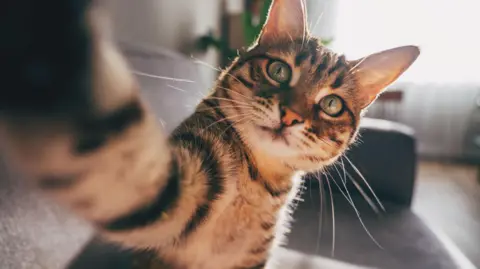
Once cats had forged this unique association with humans in Egypt, their journey across the globe began. Prized for their exceptional pest control abilities, they were invaluable companions for sailors and traders. "Ship cats" played a crucial role in protecting vital food supplies on maritime vessels, ensuring that grains and other provisions remained free from rodents during long voyages. This mode of transport facilitated their relatively rapid spread. Cats only reached Europe around 2,000 years ago, significantly later than previously believed. They journeyed across the continent with the expanding Roman Empire, gradually integrating into Roman households and settlements. From Europe, their travels continued eastward along the ancient trade routes of the Silk Road, eventually reaching China and other parts of Asia. Today, the adaptable and resilient nature of Felis catus has led to their presence in virtually every corner of the world, with Antarctica being one of the few exceptions.
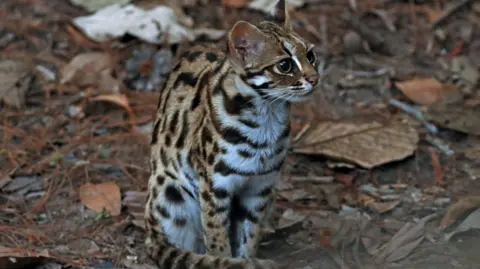
Adding another fascinating layer to the story of cat-human interaction, the scientists also unearthed a "new twist" regarding a different wild cat species in China. Long before the arrival of the domesticated African wildcat from the West, a native wild cat species, the leopard cat (Prionailurus bengalensis), engaged in its own independent commensal relationship with humans in China. These small, strikingly spotted wild cats inhabited human settlements in China for approximately 3,500 years. Archaeological findings, including the skull of a leopard cat discovered in a Han-dynasty tomb in Xinzheng City, Henan Province, provided key evidence of this unique cohabitation.
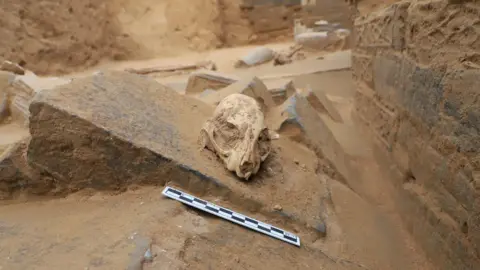
Professor Shu-Jin Luo of Peking University in Beijing described this early human-leopard cat relationship as essentially commensal, meaning two species lived alongside each other without significant harm to either, often with mutual benefit. "Leopard cats benefited from living near people, while humans were largely unaffected or even welcomed them as natural rodent controllers," she explained. However, unlike their African wildcat counterparts, leopard cats never underwent full domestication. They retained their wild instincts and continue to thrive as wild animals across Asia. It’s plausible that their specific behavioral traits, genetic makeup, or the later arrival of the more readily domesticated Felis catus led to this divergence. The African wildcat lineage proved more amenable to the specific pressures and opportunities presented by human settlements, eventually becoming the dominant domestic cat species worldwide.
Curiously, the story of the leopard cat has a modern-day echo. In a testament to their enduring appeal, leopard cats have recently been crossed with domestic cats to produce the distinctive Bengal cat breed. Recognized as a new breed in the 1980s, Bengal cats are celebrated for their striking, leopard-like coats and energetic personalities, carrying a visible link back to their wild Asian ancestors. This hybrid breed highlights the continuous, multifaceted relationship between humans and felines, blurring the lines between wild and domestic even in contemporary times.
The ongoing scientific exploration of feline ancestry continues to deepen our understanding of these enigmatic creatures. The precise timing and location of cat domestication underscore that while dogs were actively bred and trained for specific tasks, cats largely domesticated themselves, drawn to human settlements by the promise of easy prey. Their independent spirit, combined with their undeniable charm, has allowed them to carve out a unique and cherished place in human hearts and homes. The journey of cats from the African wilderness to global companions is a tale of subtle adaptation, mutual benefit, and a bond that, while relatively late in human history, has become undeniably profound.




 atisusanti
 Nakalama John
 George Anjay