
 Ramos Leo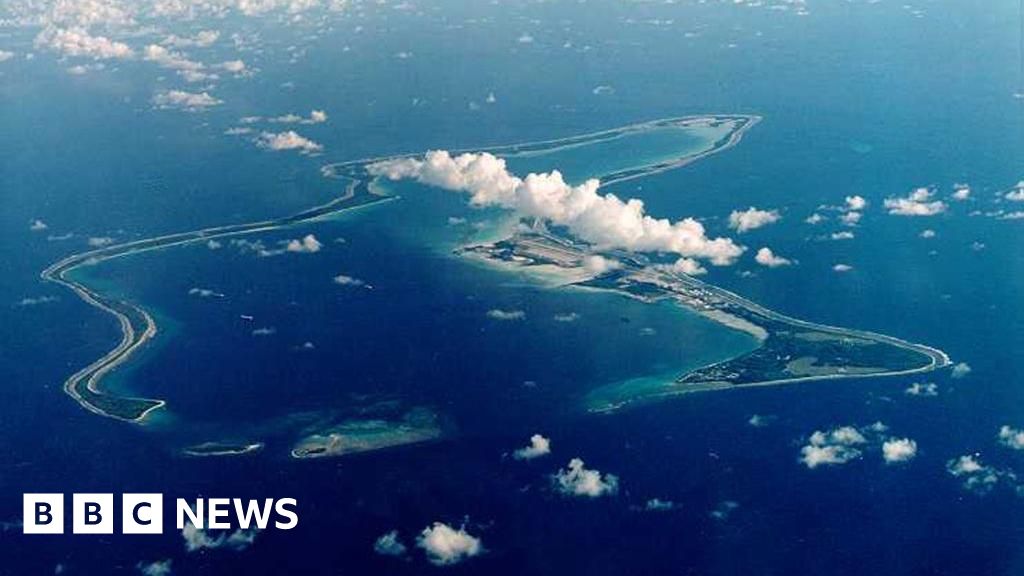
Writing on his social media platform, Truth Social, Trump declared unequivocally that "this land should not be taken away from the UK," warning that such a transfer would be "a blight on our Great Ally." His comments represent a significant shift in the narrative, particularly given his own administration’s previous tacit support for the deal and his recent "U-turns" on the issue, which saw him oscillate from calling the transfer an "act of great stupidity" to later deeming it the "best" the prime minister could achieve. This latest intervention, coming just ahead of planned talks between the US and Mauritius next week, has created a fresh headache for the UK government, which has staked its security policy on securing the long-term future of the base through this agreement.
In an immediate and firm response, the UK Foreign Office defended the proposed Chagos Islands deal, asserting its criticality for "the security of the UK and our key allies, and to keeping the British people safe." The statement emphasized that "The agreement we have reached is the only way to guarantee the long-term future of this vital military base." This position underscores the delicate balance the UK government believes it is striking: addressing the historical grievance of Mauritius and international legal pressure, while simultaneously safeguarding a crucial strategic asset. Prime Minister Sir Keir Starmer has consistently maintained that the deal is a necessary measure to protect the continued operation of the base, especially in light of Mauritius’s persistent legal challenges to British sovereignty over the islands.
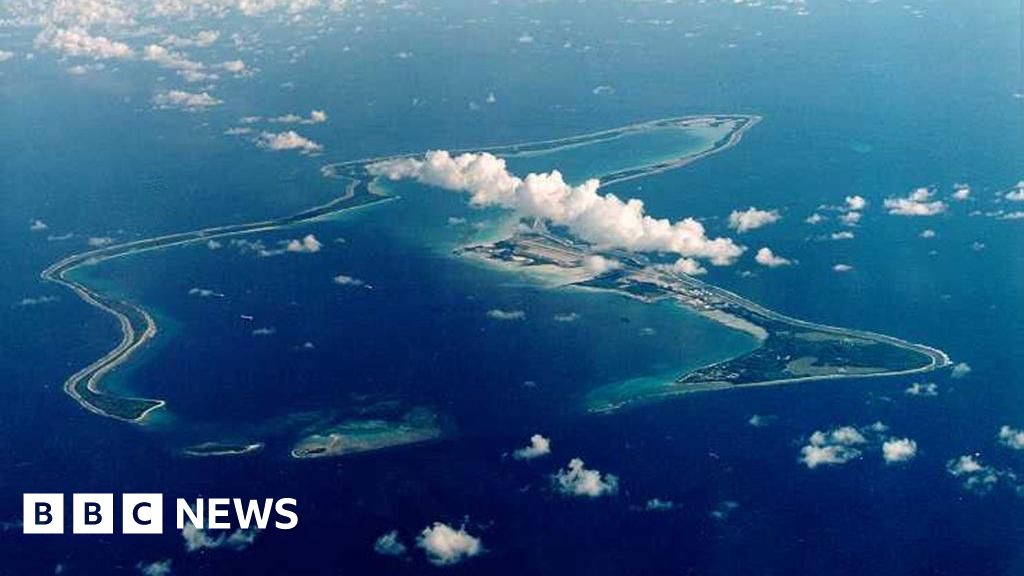
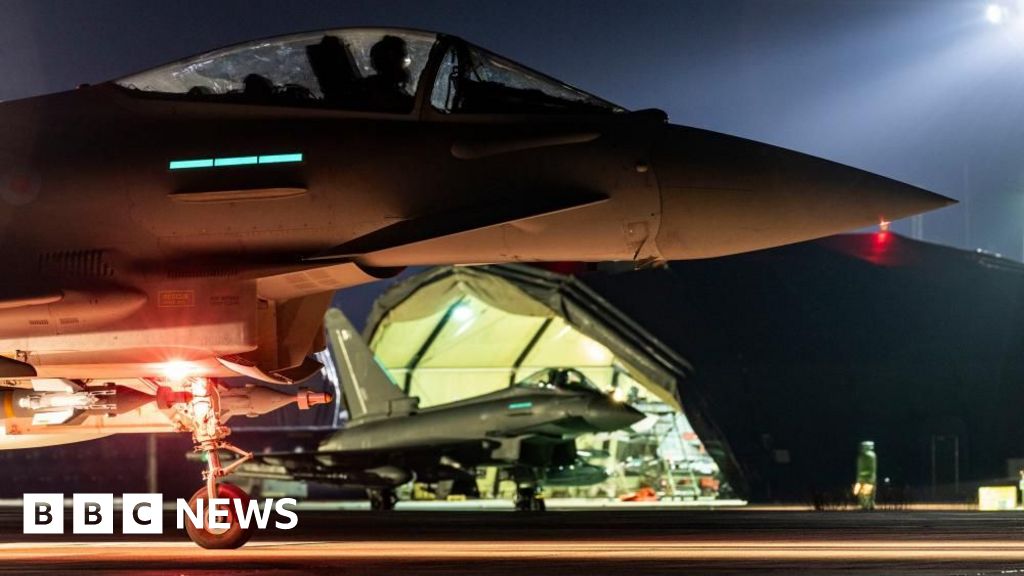
Diego Garcia, a coral atoll nestled in the heart of the Indian Ocean, serves as an indispensable joint military base for both the UK and US armed forces. Its geographical position is paramount, offering unparalleled access and projection capabilities across a vast and increasingly volatile region, stretching from the Middle East and East Africa to Southeast Asia. The base is equipped with a large airfield capable of handling heavy bombers, extensive naval facilities, and sophisticated intelligence-gathering infrastructure, making it a critical hub for global power projection, logistics, and surveillance operations.
Trump’s latest comments also highlighted the base’s potential utility in specific geopolitical scenarios. Referring to ongoing US-Iran talks regarding Tehran’s controversial nuclear programme, Trump stated, "Should Iran decide not to make a Deal, it may be necessary for the United States to use Diego Garcia and the airfield located in Fairford in order to eradicate a potential attack by a highly unstable and dangerous Regime." This explicit mention underscores the perceived value of Diego Garcia as a forward operating base for potential military action against adversaries, alongside other key US assets like RAF Fairford in the UK. The Republican president has frequently threatened military action against Iran over its crackdown on anti-government protests and its nuclear activities, which the US and its European allies suspect are aimed at developing nuclear weapons – a claim Tehran vehemently denies.
When questioned by the BBC about Trump’s fluctuating stance, White House press secretary Karoline Leavitt affirmed the seriousness of his latest pronouncement. "The post should be taken as the policy of the Trump administration, it’s coming straight from the horse’s mouth," Leavitt stated, adding, "When you see it on Truth Social you know it’s directly from President Trump, that’s the beauty of this president in his transparency and relaying this administration’s policies." This clarification solidified the notion that Trump’s views, however unpredictable, carry significant weight and directly impact the geopolitical calculations surrounding the Chagos deal.
The UK’s previous statements had made it clear that the deal could not proceed without the explicit support of the United States. The bill designed to enshrine the agreement into UK law has already been delayed, with no date set for its next stage in Parliament. UK Minister Alex Davies-Jones indicated that the bill would return to the House of Lords "as soon as parliamentary time allows," a statement that now rings with increased uncertainty given Trump’s intervention.
The history of the Chagos Islands, officially known as the British Indian Ocean Territory (BIOT), is long and contentious. The islands have been under British control since 1814. In 1965, the UK government controversially purchased the archipelago from the then-self-governing colony of Mauritius for £3 million, establishing it as a separate overseas territory. This move, which occurred just before Mauritius gained independence in 1968, was heavily criticized internationally and forms the core of Mauritius’s sovereignty claim.
The most infamous chapter in the islands’ history began in the late 1960s when Britain, in agreement with the United States, facilitated the construction of a major military base on Diego Garcia. To make way for the base, thousands of indigenous Chagossians were forcibly removed from their homes between 1968 and 1973, often under coercive and inhumane conditions. These displaced islanders, many of whom trace their lineage on the archipelago back generations, were resettled in Mauritius, the Seychelles, and the UK, primarily in Crawley, West Sussex. Their decades-long struggle for the right to return to their homeland and for compensation remains a profound humanitarian issue at the heart of the Chagos dispute. Mauritius has consistently argued that it was illegally coerced into ceding the islands as a precondition for its independence, a claim that has garnered significant international backing, including an advisory opinion from the International Court of Justice (ICJ) in 2019 and subsequent UN General Assembly resolutions calling on the UK to relinquish control.
Trump’s social media post also offered a glimpse into his broader ideological leanings, linking the Chagos issue to domestic political debates. "Prime Minister Starmer is losing control of this important Island by claims of entities never known of before," he wrote, adding, "We will always be ready, willing, and able to fight for the U.K., but they have to remain strong in the face of Wokeism, and other problems put before them." This conflation of a complex geopolitical issue with cultural and political grievances further complicates the UK’s position, placing it in a delicate balancing act between satisfying a key ally and adhering to international legal and humanitarian obligations.
The latest developments have predictably triggered a wave of condemnation from UK opposition figures, intensifying the political pressure on Sir Keir Starmer’s government. Shadow Foreign Secretary Dame Priti Patel called on the Prime Minister to "finally saw sense, U-turned and scrapped this appalling deal altogether," reflecting a sentiment that views the proposed transfer as a concession of British sovereignty. Liberal Democrat leader Sir Ed Davey seized on Trump’s unpredictable nature, stating, "Trump’s endless flip-flopping on the Chagos Islands shows why Starmer’s approach is doomed to fail." Meanwhile, Reform UK leader Nigel Farage went further, describing the proposed agreement as "the worst deal in British history" and warning that Starmer "risks alienating our most important ally by giving away the Chagos Islands."
The human element of the dispute was powerfully brought to the fore earlier this week when four Chagos islanders, vehemently opposing the handover deal, landed on a remote atoll within the Chagos Islands as an act of protest. They defiantly refused to leave despite threats of eviction from a British maritime patrol, highlighting their unwavering determination to reclaim their ancestral lands. Speaking to BBC Radio 4’s Today programme, Misley Mandarin, one of the Chagossians involved in the protest, declared, "they would have to drag me from my beach." He passionately argued that "there’s no reason" for the deal, asserting that "Mauritius never owned Chagos Islands in the first place." Mandarin issued a direct plea to the Prime Minister: "Keir Starmer, you could be a hero right now – don’t ratify that deal, cancel that deal and let Chagossians come back to their homeland as British." Their poignant appeal underscores the deep-seated historical injustices and the enduring desire of the Chagossian people to return to the territory from which they were forcibly removed.
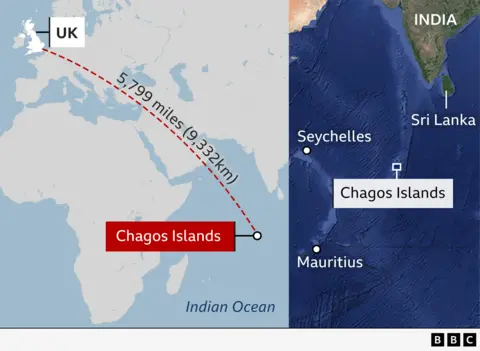
The Chagos Islands are located approximately 5,799 miles (9,332km) south-east of the UK and about 1,250 miles north-east of Mauritius, emphasizing their remote yet strategically critical position in the vast expanse of the Indian Ocean. The complex interplay of historical claims, international law, humanitarian concerns, and the geopolitical imperatives of a vital military base continues to make the Chagos Islands a focal point of international diplomacy and domestic political contention. Trump’s latest pronouncement has not only added another layer of complexity but also magnified the stakes for all parties involved, leaving the future of the Chagos Islands and the stability of the Diego Garcia base hanging in the balance.

 Roy Suryo
 atisusanti
 Nakalama John

 Nana Banana