Nakalama John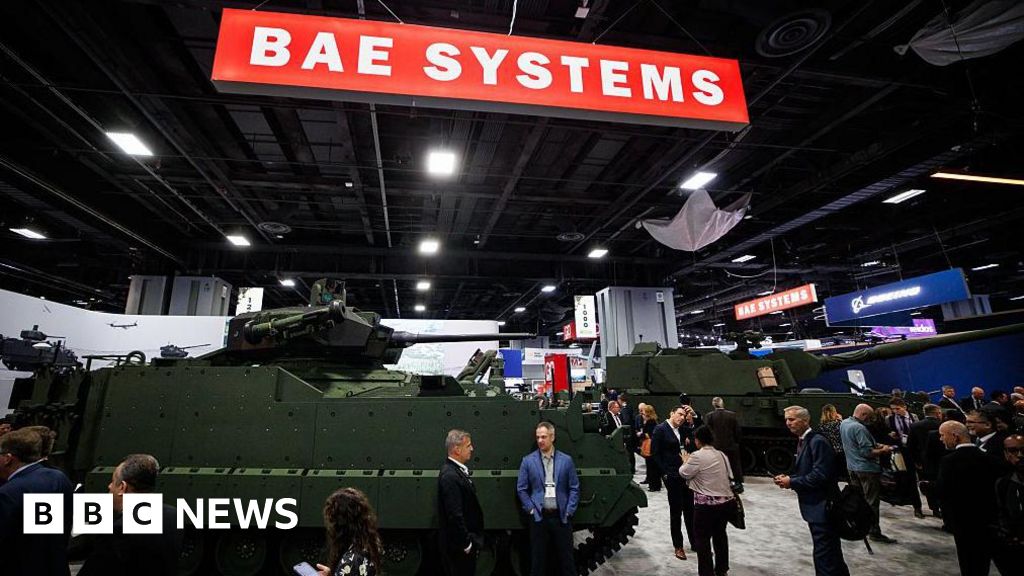
Defence giant BAE Systems, a behemoth in the global aerospace and security industry, has announced unprecedented financial results for 2025, revealing record sales and soaring profits amidst a backdrop of escalating global tensions. This triumphant declaration, however, stands in stark contrast to the ongoing industrial action by thousands of its employees at key sites in Lancashire, who are striking over what they deem to be an inadequate pay offer. The chasm between the company’s celebratory financial disclosures and its workers’ calls for a "fair share of the pie" highlights a deepening dispute that casts a shadow over BAE’s otherwise stellar performance.
On Wednesday, BAE Systems unveiled its 2025 annual report, showcasing a remarkable surge in its financial metrics. Sales for the year climbed by a substantial tenth, reaching an all-time high of £30.7 billion. This impressive revenue growth translated directly into a significant boost in profitability, with profit before tax soaring to £2.6 billion, up from £2.3 billion in the preceding year. The news sent positive ripples through the market, with BAE’s shares experiencing a 3% ascent following the announcement, reflecting strong investor confidence in the company’s trajectory. As Europe’s largest defence contractor and a major global player, BAE’s financial health is often seen as a barometer for the wider defence sector, and these figures underscore a period of robust growth for the industry.
At the heart of this success, according to Chief Executive Charles Woodburn, is the firm’s unparalleled order backlog. Woodburn, who has steered BAE since 2017, attributed this robust pipeline to the "new era of defence spending" being witnessed globally, driven by an increasingly volatile geopolitical landscape and "escalating security challenges." This environment has prompted governments worldwide to significantly ramp up their defence budgets, funneling substantial contracts into the hands of companies like BAE Systems. The company’s strategic positioning to provide both "advanced conventional systems and disruptive technologies" is seen as crucial for nations seeking to bolster their protective capabilities now and in the future. BAE further solidified its optimistic outlook by forecasting continued growth, projecting profits to expand by approximately 10% in 2026, signaling sustained momentum.
However, the jubilation within BAE’s boardrooms is not shared on the picket lines outside its Warton and Samlesbury facilities in Lancashire. Here, Unite, one of Britain’s largest and most influential trade unions, represents 5,000 BAE workers, with over 1,200 of its members currently engaged in targeted strike action. Unite’s General Secretary, Sharon Graham, unequivocally labelled BAE’s £2.6 billion annual profit as "little short of obscene." She asserted that the company, which is "making billions from government contracts," is simultaneously refusing to adequately compensate its workforce for their vital contributions. The union has issued a stern warning that strike action will persist until a more equitable pay offer is presented, underscoring the deep-seated frustration among the employees.
The crux of the dispute lies in the workers’ perceived disparity between their remuneration and the company’s monumental financial achievements. Unite local organiser Ross Quinn highlighted that the striking staff, earning an average salary of £50,000, are "crucial" to BAE’s operational success and product delivery. The union argues that these skilled individuals "know their value and want their fair share of the pie." Specifically, Unite points to the 2025 pay increases, where higher-skilled staff received a 3.6% rise "against their will," while those on the factory floor agreed to a 4.2% increase alongside an extra day off. Given the prevailing inflation rates at the time, these increases were widely considered to be below the cost of living, effectively diminishing real wages for many employees.
For 2026, BAE has tabled a 3.7% pay rise offer. However, the striking workers, acutely aware of the company’s record-breaking profitability, are demanding a 5.2% increase. This figure, they contend, is necessary to adequately compensate for the previous year’s below-inflation raises and to reflect their indispensable role in generating the company’s substantial earnings. The union’s stance is firm: the current offer is insufficient, especially when contrasted with the billions flowing into BAE’s coffers from burgeoning defence contracts.
In response to the industrial action and the union’s strong criticisms, a BAE Systems spokesperson reiterated the company’s position, stating that the current offer "is fair and ensures that our employees continued to receive market-leading pay and rewards, while balancing our need to be competitive and affordable for our customers." The company maintains that it is actively "engaging with unions" to resolve the dispute. While acknowledging the ongoing strikes, BAE expressed confidence in its ability to mitigate disruption. "With the majority of our employees working as normal, we are focused on minimising any disruption and implementing our robust contingency plans," the spokesperson affirmed, suggesting that the company believes the impact on its overall operations and production schedules will be manageable. The latest walkout commenced on 2 February and is expected to continue until at least 20 February, underscoring the prolonged nature of this industrial conflict.
The broader context of BAE’s success is rooted in a significant global shift towards increased defence spending. Richard Hunter, an analyst at Interactive Investor, succinctly captured this dynamic, noting that "BAE is basking in the increasing heat of geopolitical tensions with a set of results which have comfortably blown past estimates." The war in Ukraine, heightened tensions in the Indo-Pacific, and a general sense of global instability have spurred numerous governments, particularly NATO allies, to re-evaluate and augment their defence budgets. The United Kingdom is no exception. Prime Minister Sir Keir Starmer made a commitment last year to elevate core defence spending to 2.5% of national economic output, measured as gross domestic product (GDP), by April 2027. Furthermore, recent reports indicate that this figure could potentially rise even further to 3% by the end of the current parliamentary term, signalling a sustained period of investment in the defence sector that directly benefits contractors like BAE Systems.
This situation presents a complex ethical and socio-economic dilemma. While BAE Systems fulfils crucial national security requirements and delivers advanced military capabilities, the spectacle of record profits coinciding with worker strikes over pay raises questions about equitable wealth distribution within highly profitable industries. The striking workers believe they are entitled to a greater share of the prosperity they help create, particularly when the company’s success is driven by global events that often have devastating human consequences. The dispute underscores a widening gap between corporate earnings and employee compensation, a theme that resonates across various sectors, especially during periods of high inflation. For BAE, resolving this industrial dispute is not merely about financial outlay but also about maintaining morale, ensuring long-term industrial harmony, and protecting its reputation as a responsible employer, even as it navigates the complex and lucrative world of global defence. The ongoing standoff in Lancashire serves as a potent symbol of this larger tension, with no immediate resolution in sight.


 George Anjay
 Ramos Leo
 Roy Suryo
 atisusanti