 Ramos Leo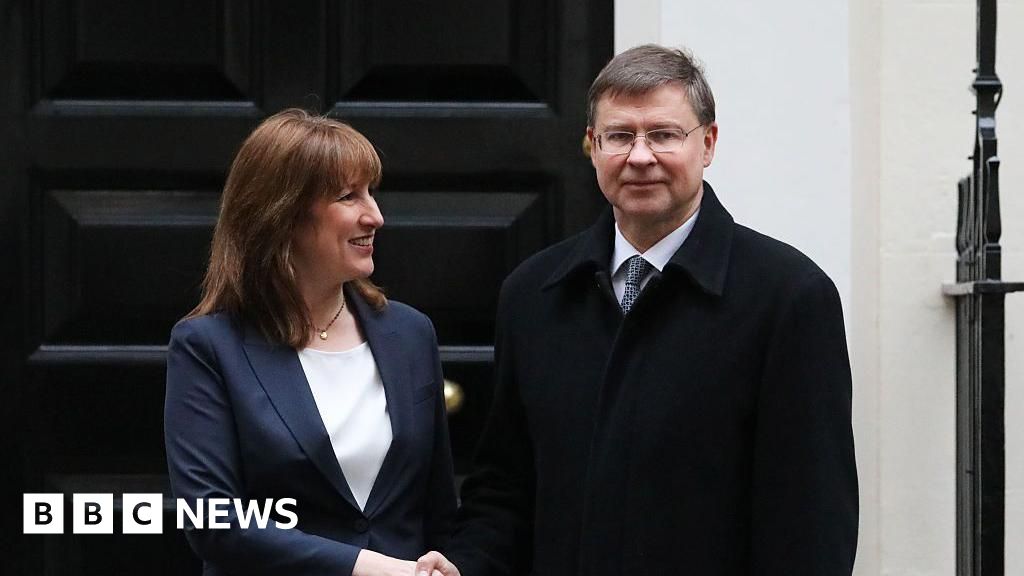
Dombrovskis’s remarks followed high-level discussions in London with key UK ministers, including Chancellor Rachel Reeves. Beyond the customs union, the Commissioner also indicated that significant progress could be made on removing "most" food checks currently burdening trade between the UK and the bloc. Furthermore, he opened the door to Britain’s potential re-entry into the EU’s substantial €150 billion ($177bn; £130bn) defence loans scheme, talks for which had previously stalled last year.
The backdrop to these discussions is a world grappling with increasing geopolitical friction, economic volatility, and a perceived erosion of established international norms. During an event in London, Chancellor Reeves underscored this sentiment, asserting that stronger ties between the UK and the EU are increasingly vital as "we are sliding towards a world where the rules are less clear." This shared concern for global stability appears to be a driving force behind the renewed European overtures.
A customs union, in its essence, represents a deeply integrated trade agreement designed to eliminate tariffs or taxes on all goods moving between member countries. For the UK and the EU, such an arrangement would significantly reduce the bureaucratic hurdles and costs associated with cross-border trade, potentially easing the flow of goods and boosting economic efficiency. Businesses, particularly those heavily involved in importing and exporting, would likely welcome the simplification and cost savings derived from the removal of customs declarations and duties.
However, the concept of a customs union also presents a significant ideological and practical challenge for those who championed Brexit. Critics argue that joining or forming a customs union with the EU would severely curtail the UK’s ability to forge independent trade deals with countries outside the bloc. This is because a customs union necessitates a common external tariff, meaning all members apply the same tariffs to goods imported from non-member countries. The UK would also be expected to conform to common standards and regulations set by the EU, thereby limiting its regulatory autonomy – a key principle often cited by proponents of a ‘Global Britain’ post-Brexit.
Labour’s official election manifesto, mindful of these complexities and the political sensitivities surrounding Brexit, explicitly ruled out signing up to the existing EU customs union. The party also stated it would not rejoin the EU’s single market, a more comprehensive economic area where countries adopt common laws in certain sectors to facilitate the free movement of goods, services, capital, and people – the "four freedoms." Despite this official stance, internal calls for a customs union with the EU have been growing among Labour MPs, with prominent figures like Justice Secretary David Lammy suggesting such a move could significantly boost economic growth.
When pressed by the BBC on whether Brussels would welcome discussions on Britain rejoining a customs union – distinguishing it from the existing one – Dombrovskis replied with careful optimism: "I cannot jump to conclusions, but I can say that we are ready to engage with an open mind and seek those areas of cooperation." This nuanced language suggests flexibility on the EU’s part, indicating a willingness to discuss bespoke arrangements rather than strictly demanding a return to pre-Brexit structures.
Dombrovskis further elaborated that the EU was certainly "open to discuss different areas as regards a single market," aligning somewhat with the current UK government’s preferred direction of sectoral alignment across a number of areas. However, he stressed that the most "mutually beneficial" arrangement would indeed be full membership of the single market, but unequivocally reaffirmed that this would necessitate adherence to the "four freedoms," including freedom of movement – a red line for both major UK political parties since Brexit.
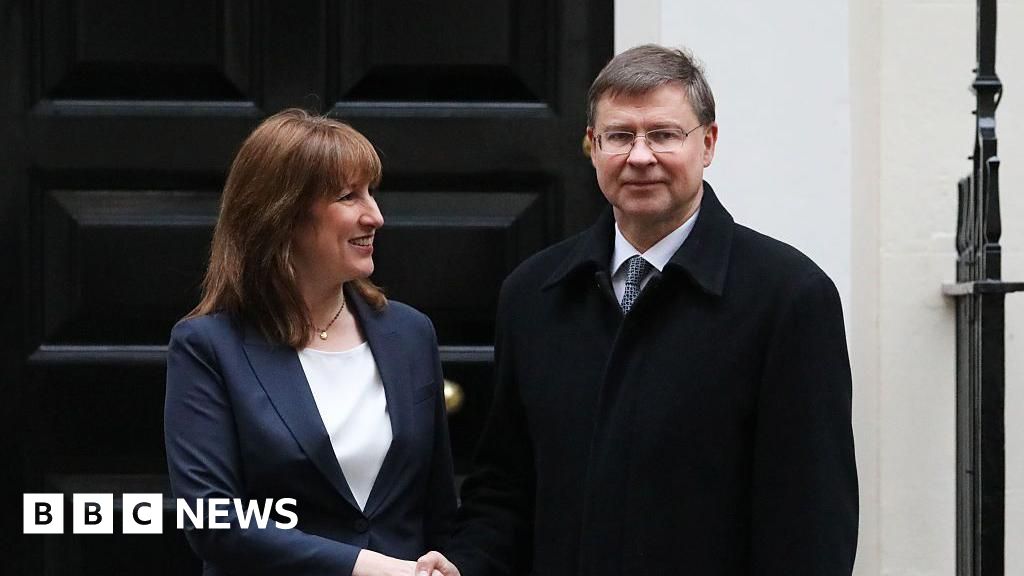
The significance of the London meetings extended beyond the individual statements. Reeves hosted Dombrovskis alongside European Commissioner for Trade Maroš Šefčovič, with UK cabinet ministers Peter Kyle and Nick Thomas Symonds also in attendance. This gathering, informally dubbed the "Quint" by diplomatic circles, is intended to meet regularly. Its primary objective is not formal Brexit renegotiation, but rather to coordinate responses to the drastic and rapid shifts in the global trade and economic environment. The very existence of this group, and its commitment to ongoing dialogue, signals a palpable desire on both sides for enhanced cooperation, acknowledging the shared challenges posed by global uncertainty.
At the meeting, Chancellor Reeves articulated a clear vision for renewed collaboration, telling the group that the UK and EU "share values and objectives when it comes to the economy, to trade, and to security." She further emphasized the "need to work together and as far as possible speak with one voice," highlighting the strategic imperative for a united front in a fragmented world.
Labour, in anticipation of potentially forming the next government, has already initiated several preliminary "side deals" with the EU. One such significant agreement on food standards, though yet to be finalised, holds immense promise. Dombrovskis indicated that, once this agreement is fully implemented, it could effectively eliminate almost all checks on goods moving between Britain and the EU. This would offer a substantial reprieve to firms currently grappling with complex border procedures that have, at times, led to considerable disruption and "chaos." The caveat, however, is that the UK would need to align with EU sanitary and phytosanitary (SPS) rules, again touching upon the delicate balance between sovereignty and market access. Beyond trade, Dombrovskis also mentioned that talks on a youth mobility scheme were "very advanced," pointing to further potential for people-to-people links.
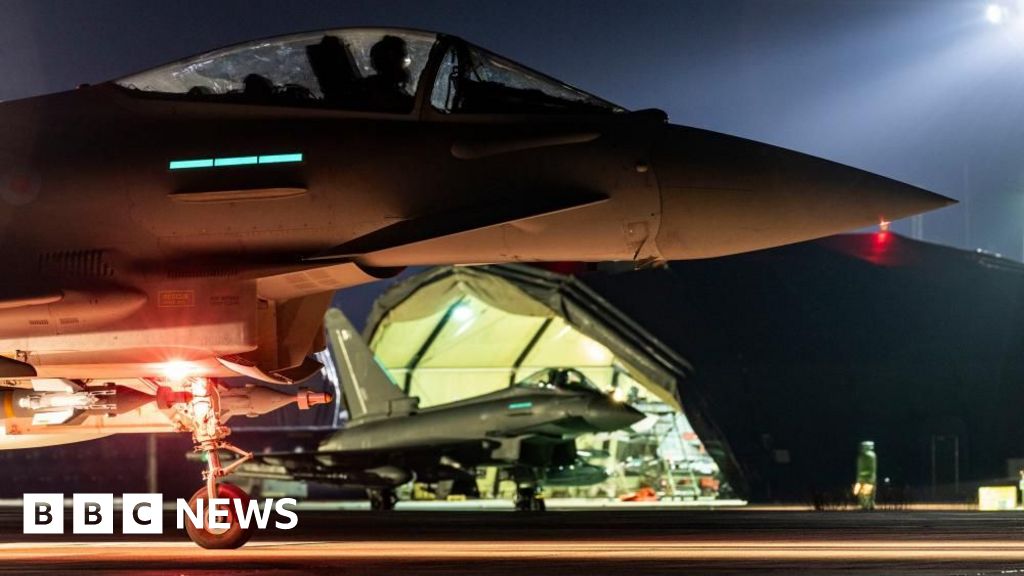
However, progress has been more elusive in some areas. Britain’s participation in the Security Action for Europe (SAFE) scheme, a massive EU-led programme facilitating borrowing for member states to purchase defence equipment, remains a sticking point. British companies currently face a limitation, able to supply only 35% of the total value of a finished defence product within the scheme. Talks aimed at securing an enhanced deal broke down in November of the previous year. Yet, Dombrovskis’s recent comments offer a glimmer of hope. Asked about a new agreement, he affirmed: "We are open for further discussions, we know the prime minister has expressed interest, actually, to come back to this issue, and there is certainly openness from the EU side for this." This renewed openness underscores a recognition of shared security interests, particularly in light of ongoing conflicts and heightened global tensions.
The Liberal Democrats, long-time advocates for Britain entering talks over a customs union with the EU, quickly seized on Dombrovskis’s comments. The party’s Treasury spokesperson, Daisy Cooper, hailed them as "a significant moment the government simply cannot afford to ignore." Cooper forcefully argued that "negotiating a new customs union with the EU is the fastest way to jump-start the UK economy," placing direct pressure on Labour leader Keir Starmer to "stop making excuses and finally start working on a proper new trade deal with our European partners." The Conservative Party was approached for comment, reflecting the ongoing political tightrope walk for all major parties on the issue of UK-EU relations.
The diplomatic climate surrounding these discussions is further illuminated by recent international events. The article referenced a tumultuous period for international relations, citing former US President Donald Trump’s threats to acquire Greenland from Denmark and impose fresh tariffs on NATO allies. In response to these aggressive postures, the European Commission had threatened to levy retaliatory tariffs on the US, a firm stance that ultimately saw Trump backtrack, agreeing to a deal that bolstered Greenland’s security without compromising its sovereignty. Dombrovskis highlighted this episode as an example of successful EU diplomacy, stating that Brussels’ decision to stand firm was "key to shift the discussion to a more productive place." He added, "That was clearly unacceptable, and we made it very clear from EU side, also indicating that we are ready to take counter measures if necessary." This demonstrated capacity for collective leverage and strategic resolve in the face of external pressure arguably strengthens the case for closer UK-EU cooperation in an increasingly unpredictable geopolitical landscape.
In conclusion, Valdis Dombrovskis’s remarks signify a pivotal moment in the evolving relationship between the UK and the EU. The unequivocal signal of an "open mind" towards a customs union, coupled with promising developments on food checks and defence cooperation, indicates a pragmatic shift in Brussels’ approach. This openness, driven by a shared recognition of global uncertainties, presents both opportunities and challenges for the UK. It places renewed pressure on the Labour Party to refine its position on post-Brexit trade arrangements and challenges the Conservative Party to reconsider the merits of deeper engagement with its closest trading partner. As the world navigates increasingly complex dynamics, the imperative for the UK and EU to find common ground and speak with a unified voice appears more urgent than ever.

 George Anjay
 Roy Suryo
 atisusanti
 Nakalama John