
 Ramos Leo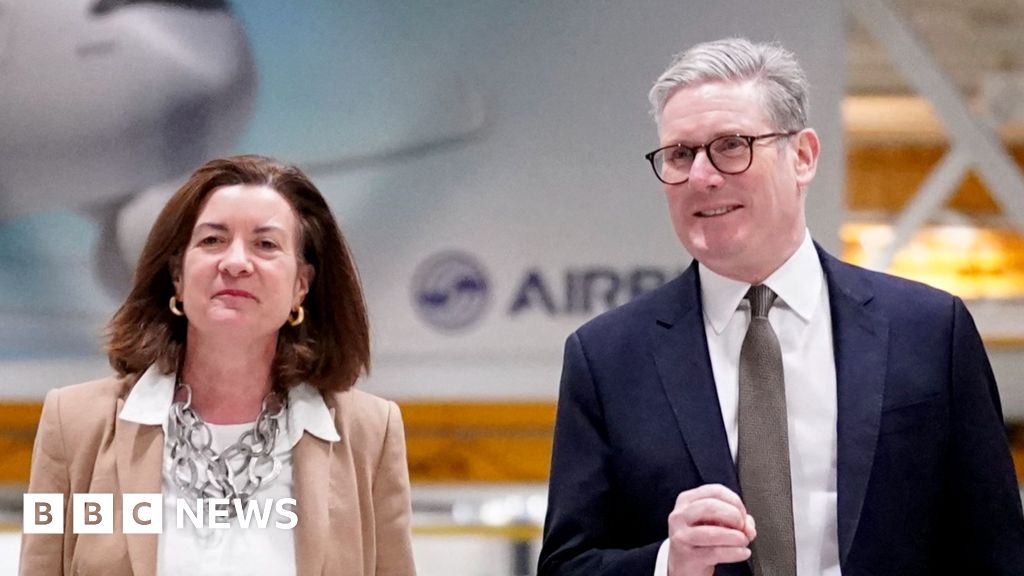
Welsh First Minister Eluned Morgan has declared her support for Sir Keir Starmer to remain as Prime Minister, asserting that "the country needs stability in an age of instability." However, her endorsement was significantly qualified by profound criticisms regarding the Lord Mandelson scandal, which she labelled "deeply troubling," lamenting that "once again, the voices of women and girls were ignored." This carefully calibrated statement, issued on Tuesday, arrived amidst intense political pressure on Sir Keir, particularly following Scottish Labour leader Anas Sarwar’s public call for the Prime Minister’s resignation just the day before.
The timing of Morgan’s intervention is crucial. For days, speculation had mounted over whether the Welsh First Minister would follow Sarwar’s lead, especially given her perceived reluctance to offer unequivocal backing to Starmer in previous interviews. While UK cabinet ministers, including Welsh Secretary Jo Stevens, swiftly rallied around the Prime Minister in the wake of Sarwar’s challenge, Morgan had maintained a conspicuous silence, drawing criticism for her apparent reticence as Starmer fought to shore up his beleaguered premiership. Her statement, therefore, was not just an expression of support but a strategic move, delivered ahead of her critical meeting with Labour politicians in Wales’s parliament, the Senedd, where her leadership and the party’s direction are under scrutiny.
Morgan affirmed her backing for the Prime Minister "in the job he was elected to do," a phrase that, while seemingly supportive, also subtly hinted at the boundaries of that support. The crux of her unease lay squarely with the resurfacing controversies surrounding Lord Peter Mandelson, a towering and often polarising figure in Labour politics, famously dubbed the "Prince of Darkness." Mandelson, a former Secretary of State for Northern Ireland, Trade and Industry, and Business, Enterprise and Regulatory Reform, has a history punctuated by resignations over financial matters and controversies surrounding his personal dealings. While the specific "scandal" referred to by Morgan remains somewhat ambiguous in its immediate details, it clearly relates to fresh revelations or renewed scrutiny of his past conduct, particularly concerning his suitability for public office and interactions that allegedly disregarded female perspectives.
"I had concerns that Peter Mandelson was incompatible with public office because of the company he kept," Morgan stated unequivocally, "What has since come to light has only reinforced those concerns." This pointed critique suggests a deeper, pre-existing apprehension about Mandelson’s character and associations, now exacerbated by recent disclosures. Her emphasis that "the failure of ignoring female voices regarding Lord Mandelson’s appointment must be acknowledged and confronted honestly" adds a significant dimension to the controversy. It implies not just a lapse in judgment on Mandelson’s part, but a systemic issue within the party or government that allowed such an appointment to proceed despite warnings or objections from women, highlighting concerns about safeguarding and due diligence in high-level appointments. This aspect resonates particularly strongly in a political climate increasingly sensitive to issues of gender equality and accountability.
Beyond the Mandelson controversy, the Welsh Labour leader also articulated clear demands for the Prime Minister concerning the needs of Wales. "I have been clear with Keir about what Wales needs. Action on the cost of living, investment in our economy and infrastructure, and a continued commitment to stronger devolution," she declared. This segment of her statement serves as a powerful reminder of the distinct priorities and challenges faced by Wales, and implicitly, the expectation that a Labour UK government must deliver tangible benefits to the devolved nations. Action on the cost of living crisis, which has disproportionately impacted vulnerable communities across Wales, is a pressing concern for the Welsh Government. Investment in the economy and infrastructure is vital for job creation and long-term prosperity, areas where Wales often feels underserved by Westminster. A "continued commitment to stronger devolution" underscores the ongoing desire for greater autonomy and control over Welsh affairs, pushing back against any potential centralising tendencies from a Labour government in London. These are not mere suggestions but conditions, positioning Morgan as a robust advocate for Welsh interests within the broader Labour family.
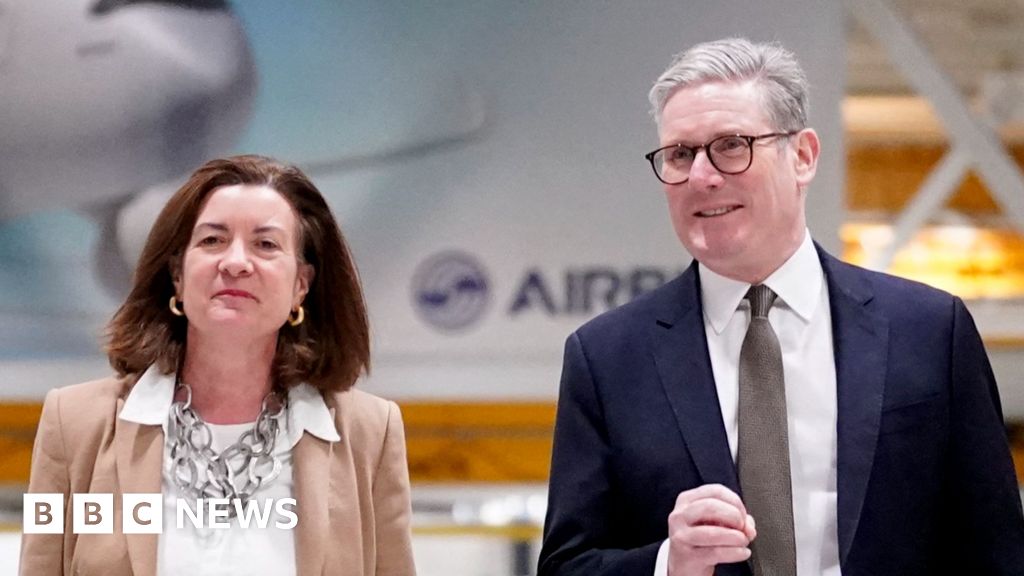
Anas Sarwar’s audacious call for Sir Keir to resign had indeed triggered widespread speculation across Westminster and Cardiff Bay that Morgan might follow suit, further destabilising Starmer’s leadership. However, sources close to BBC Wales on Monday had indicated that this would not be the case. This decision was reportedly influenced, in part, by the strong support Sir Keir enjoys among Welsh MPs, most of whom currently hold positions within the UK government, making a direct challenge from the Welsh First Minister a potentially isolating and damaging move for Welsh Labour’s standing in Westminster.
The political stakes for Eluned Morgan herself are extraordinarily high. Wales faces a Senedd election on May 7th, and recent opinion polls suggest a challenging landscape for Labour, with the very real possibility of losing control of the Welsh Parliament for the first time in its history. In this context, Morgan’s statement is a delicate balancing act: demonstrating loyalty to the party leader for the sake of unity and perceived stability, while simultaneously carving out a distinct, critical voice that champions Welsh interests and distances Welsh Labour from potentially damaging UK-level controversies.
Analysis by Gareth Lewis, BBC Wales Political Editor:
As the political temperature continues to soar, Eluned Morgan’s declaration of support for Sir Keir Starmer can, at best, be characterised as decidedly lukewarm. Far from a ringing endorsement, her statement is laden with serious caveats and pointed criticisms, suggesting a strategic distance rather than unwavering solidarity. The implication that failures in the appointment of Lord Mandelson have not been fully confronted, and the specific mention of "ignoring female voices," raises uncomfortable questions about internal party processes and accountability that could dog Starmer’s leadership.
Morgan’s statement presents a fascinating and potentially contradictory dynamic. While she backs Starmer, she explicitly links her "ultimate test" of his premiership to his delivery for Wales – "action on the cost of living, investment in our economy and infrastructure, and a continued commitment to stronger devolution." This immediately opens a pathway for opposition parties in the Senedd to challenge her during First Minister’s Questions. They are likely to seize on this potential contradiction, asking: Is the Mandelson scandal, with its profound ethical implications and concerns about female voices, less important than the Prime Minister’s performance on Welsh issues? And critically, does she genuinely believe he is currently delivering on these vital Welsh priorities?
This is not an isolated incident. This marks the third occasion in as many weeks that Eluned Morgan has refrained from offering Sir Keir Starmer her full-throated, unequivocal support. While previous instances might have involved more subtle disagreements over policy or funding allocations, the current situation is infinitely more serious, given the immediate aftermath of Anas Sarwar’s resignation call and the perceived fragility of Starmer’s position. With the Senedd election now less than three months away, Morgan is navigating a treacherous path. She needs to project stability and unity for Welsh Labour, but also demonstrate an independent voice that resonates with Welsh voters, many of whom may be disillusioned with Westminster politics or seeking a stronger advocate for Wales. Her careful wording suggests an attempt to appeal to both loyal party members and a broader electorate that values integrity and local representation, but it’s a tightrope walk with significant risks for both her leadership and the future of Welsh Labour. The coming days and weeks will reveal whether this nuanced stance can successfully weather the intensifying political storm.



 atisusanti
 Nakalama John
 George Anjay
 Roy Suryo