Nana Banana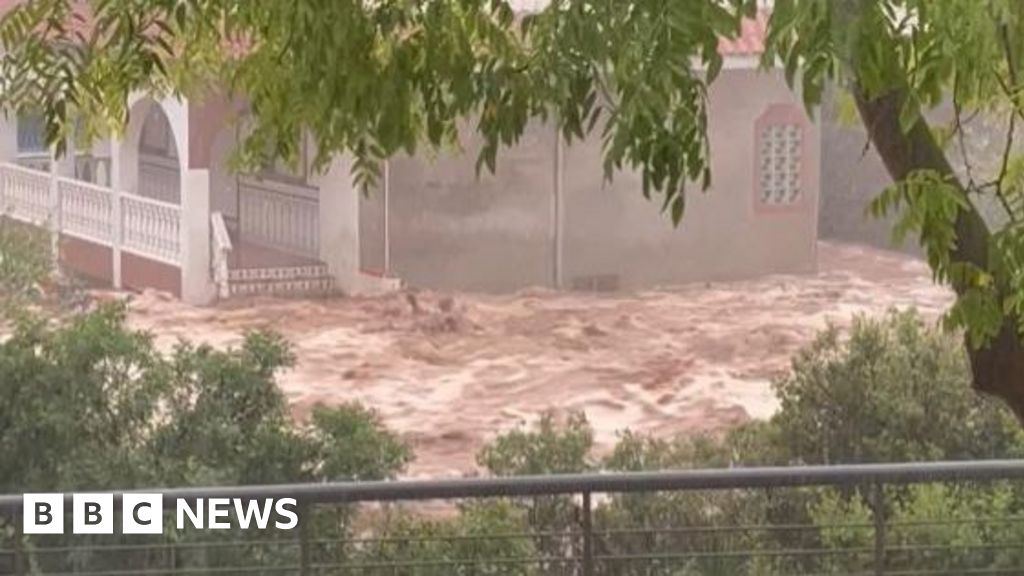
Torrential downpours have unleashed widespread flooding across Spain’s north-eastern Catalonia region, leaving numerous individuals stranded in their vehicles as roads transformed into raging rivers, officials confirmed on [insert approximate date, e.g., Tuesday morning/afternoon, or specific date if known from external search, otherwise keep it general]. The sudden and intense rainfall, particularly concentrated in the Tarragona province, overwhelmed drainage systems and turned streets into treacherous waterways, necessitating urgent interventions from emergency services. The unexpected ferocity of the weather event caught many commuters and residents off guard, leading to desperate calls for rescue as water levels rapidly rose around their submerged cars.
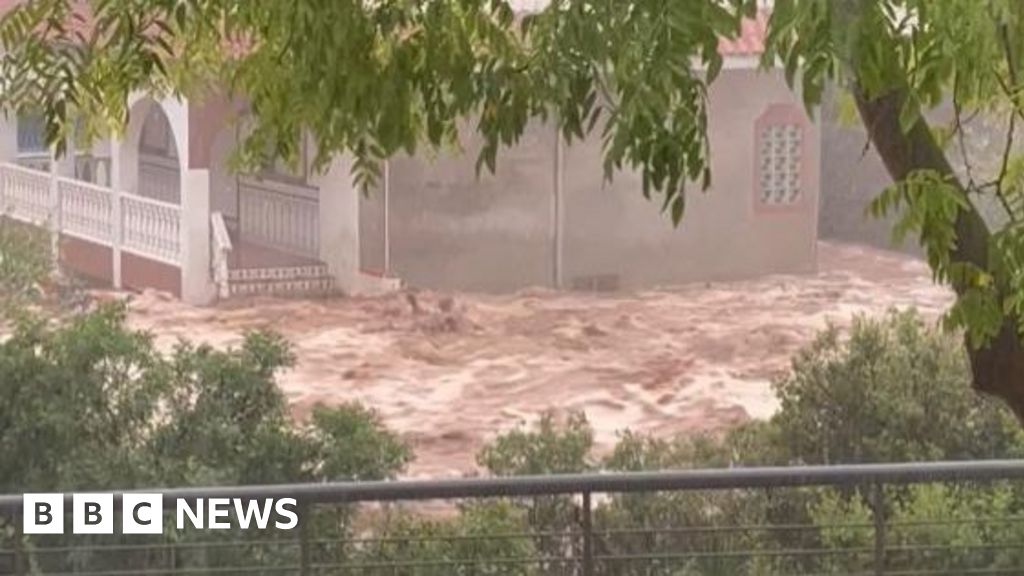
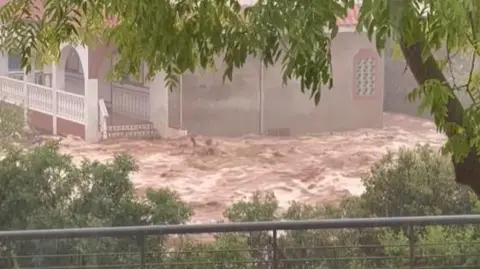
Disturbing videos widely shared across social media platforms captured the terrifying reality on the ground, depicting torrents of muddy, debris-laden water surging through the coastal towns of La Ràpita and Santa Bàrbara, both located in the hard-hit Tarragona province. These powerful currents were shown sweeping away everything in their path – from parked cars and motorbikes to bins, street furniture, and even sections of retaining walls. The sheer force of the floodwaters underscored the immediate danger to anyone caught outside or attempting to navigate the submerged areas. La Ràpita, a picturesque fishing town on the Mediterranean coast, and Santa Bàrbara, an inland agricultural hub, bore the brunt of the deluge, with residents witnessing their communities engulfed by the brown, churning waters. Eyewitness accounts spoke of the water rising within minutes, leaving little time for preparation or escape for those caught in its path.
In response to the escalating crisis, Spain’s national weather agency, AEMET (Agencia Estatal de Meteorología), issued its highest red alert for the affected coastal province. This severe warning signifies an "extreme risk" due to exceptional meteorological phenomena, indicating immediate danger to life and property. A red alert compels authorities to activate maximum emergency protocols, advising the public to exercise extreme caution, avoid all non-essential travel, and follow instructions from civil protection agencies. The declaration underscored the gravity of the situation, prompting the deployment of additional rescue teams, including firefighters and civil guard units, to aid those trapped and assess the full extent of the damage across the region.
Remarkably, despite the severity of the flooding and the precarious situations faced by many, initial reports indicated no fatalities or serious injuries. This positive outcome was largely attributed to the swift response of emergency services and, crucially, the effectiveness of early warning systems and public advisories. The rapid dissemination of information via official channels and social media played a vital role in alerting residents to the impending danger, enabling many to seek shelter or avoid dangerous areas before the worst of the floods hit. However, authorities continued to stress vigilance, as conditions remained volatile and the full scope of the incident was still being assessed.
Catalonia’s Civil Protection agency issued an urgent plea to residents, particularly those in the low-lying Ebro Delta region of Tarragona, to remain indoors and avoid any unnecessary movement. This critical advice was reinforced by AEMET’s stark warning of an extraordinary 180mm (approximately 7 inches) of rain expected to fall within a mere 12-hour period in the area. Such a volume of precipitation in such a short timeframe is highly unusual for the region and is more than many areas typically receive in several months. The Ebro Delta, a fertile and ecologically sensitive wetland area, is particularly vulnerable to flooding due to its low elevation and intricate network of canals and rice fields, making it susceptible to both riverine and coastal inundation. The "stay indoors" directive aimed to prevent people from encountering swift currents, submerged obstacles, or falling debris, which can pose significant life threats during flash flood events.
Cristina Vicente, a senior official at the Civil Protection agency, conveyed the gravity of the situation, as quoted by the prominent Spanish newspaper La Vanguardia: "The situation is complicated, and more rain is forecast." Her statement highlighted the dual challenge facing authorities: managing the immediate aftermath of the initial deluge while simultaneously preparing for potential further rainfall. The ground, already saturated, has significantly reduced its capacity to absorb more water, increasing the risk of subsequent runoff and flash flooding. Furthermore, the extensive damage to infrastructure, including roads and bridges, complicates rescue efforts and makes it difficult to reach affected communities, adding layers of complexity to the ongoing emergency response.
The widespread disruption extended significantly to the transport network, with train departures from major cities such as Barcelona in Catalonia and Valencia in the neighbouring Valencia region suspended until further notice. This unprecedented halt affected services along the crucial Mediterranean Corridor, a vital rail artery that connects numerous coastal cities and is essential for both passenger and freight transport. The suspensions were implemented due to flooded tracks, damaged infrastructure, and the general hazardous conditions, leaving thousands of commuters and travelers stranded. Railway operators worked tirelessly to assess the damage and restore services, but the extensive nature of the flooding meant that disruptions were expected to persist for an indeterminate period, impacting daily life and regional commerce.
This latest bout of extreme weather in Catalonia is not an isolated incident but forms part of a broader pattern of intense rainfall and flooding that has battered several regions across south-eastern Spain in recent days, including the popular tourist destinations of the Balearic Islands. These extreme meteorological events are often associated with what meteorologists in Spain refer to as a "DANA" (Depresión Aislada en Niveles Altos), or an "isolated depression at high levels," commonly known as a Gota Fría (cold drop). This phenomenon involves a pocket of cold air aloft interacting with warm, moist air over the Mediterranean, leading to highly unstable conditions and exceptionally heavy downpours. Regions like Murcia, Andalusia, and the Balearics (Mallorca, Ibiza, Menorca) had already experienced significant disruptions and damage from similar weather systems, raising concerns about the increasing frequency and intensity of such events, potentially linked to broader climate change patterns.
Emergency services across Catalonia reported a surge in calls to the 112 emergency line, with hundreds of incidents related to the floods. These calls ranged from individuals trapped in their vehicles or homes to reports of fallen trees, landslides, power outages, and submerged properties. Firefighters and local police forces were engaged in continuous rescue operations, prioritizing the extraction of people from dangerous situations. Many roads were closed, not only in the immediate vicinity of the worst-hit towns but also on major arteries connecting the region, causing significant traffic chaos. The scale of the response highlighted the concerted efforts of various agencies to mitigate the impact of the disaster and ensure public safety.
The economic toll of such events is substantial, affecting agriculture, local businesses, and infrastructure. Farmers in the Ebro Delta, known for its rice cultivation, faced the devastating prospect of ruined crops and flooded fields, threatening their livelihoods. Small businesses in La Ràpita and Santa Bàrbara, many of which rely on tourism and local trade, suffered extensive damage to their premises and stock. The cost of repairing damaged roads, bridges, and public utilities is expected to run into millions of euros, placing a significant burden on regional and national budgets. Beyond the immediate cleanup and repair, there will be a longer-term focus on enhancing resilience, including improvements to drainage systems, flood defenses, and urban planning to better withstand future extreme weather events. The recent floods serve as a stark reminder of Spain’s vulnerability to the intensifying effects of climate change and the critical need for proactive adaptation strategies.


 Ramos Leo
 Nakalama John
 George Anjay