
 Ramos Leo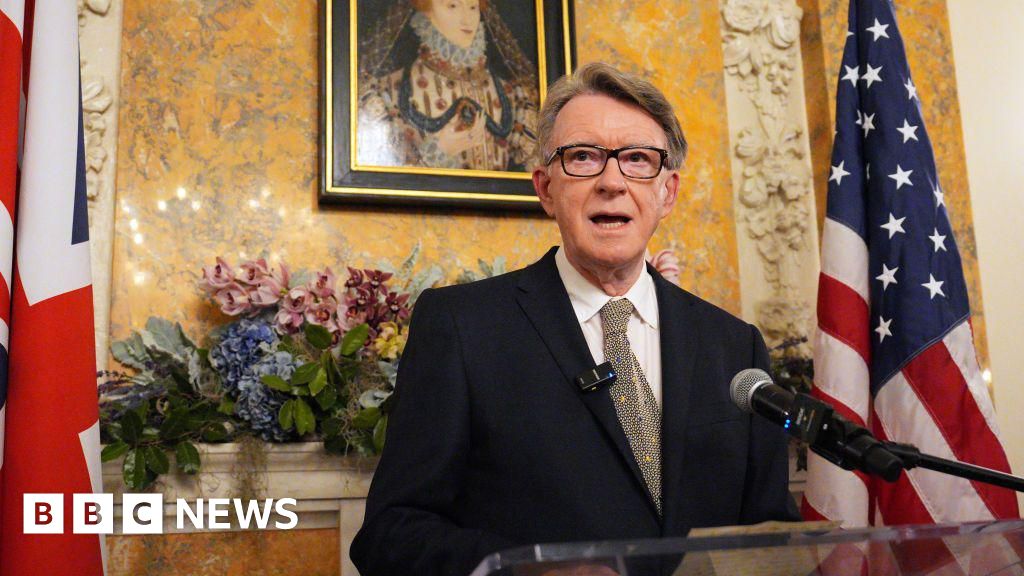
Lord Mandelson, a towering and often controversial figure in British politics, a prominent Labour peer often dubbed the "Prince of Darkness" for his strategic acumen and political manoeuvring during the New Labour era, is understood to have received a severance package estimated to be around £40,000. This payment was made after his tenure as the UK’s top diplomat in Washington concluded prematurely in September, amidst growing scrutiny over his continued association with Epstein, even after the financier’s initial conviction.
The gravity of the situation was underscored by immediate calls from within government ranks for Mandelson to relinquish the payment. Pat McFadden, the Work and Pensions Secretary, publicly urged the peer to "either return [the money] or give it to an appropriate charity," reflecting a strong sentiment that public funds should not be seen to benefit an individual embroiled in such a deeply troubling scandal. Similar sentiments emanated from Downing Street sources, who echoed the call for the money to be repaid or donated to charities dedicated to supporting victims of sexual abuse, highlighting the moral imperative behind the demands.
The Foreign Office’s decision to revisit the pay-off mechanism follows a dramatic escalation of events. On a recent Friday, police officers executed search warrants at two properties linked to Lord Mandelson. This action was prompted by the latest tranche of Epstein files released in the United States, which brought to light a series of previously undisclosed communications. Among these were email exchanges between Mandelson and Epstein concerning sensitive fiscal policy matters, raising serious questions about the nature and appropriateness of their contact. While Mandelson has not been arrested, the police activity signals the seriousness with which these new revelations are being treated.
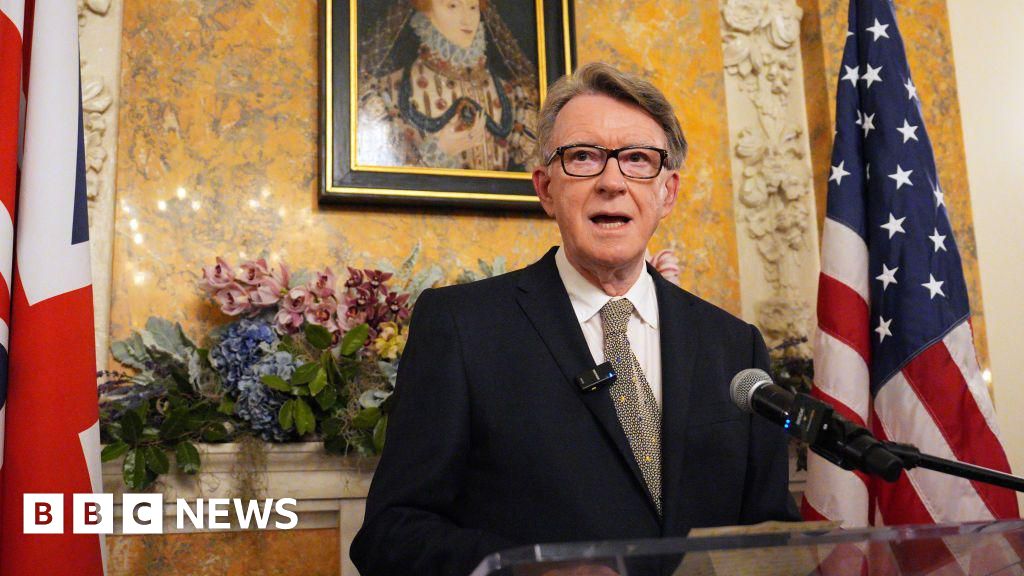
Government sources have confirmed that a financial settlement was indeed reached with Mandelson upon the termination of his civil service employment, though the precise figure was not officially disclosed at the time. However, informed reports, notably from The Times, suggested an exit payment equivalent to three months of his ambassadorial salary. Given that the role of US ambassador typically commands a salary ranging from £155,000 to £159,999, the estimated £40,000 pay-off aligns with this calculation. The Foreign Office spokesperson reiterated that "normal civil services HR processes were followed" and that the employment termination was in accordance with legal advice and his terms and conditions.
A critical turning point in this unfolding saga came last Wednesday when Parliament, responding to growing public and political pressure for transparency, passed a motion demanding that ministers release all government files and electronic communications pertaining to Mandelson both before and during his appointment as ambassador to Washington. This parliamentary directive ensures that the exact payment amount, as well as the underlying rationale for its disbursement, will be made public, subjecting the process to unprecedented scrutiny. The Foreign Office has confirmed that further information will be provided to Parliament as part of the government’s coordinated response to this motion.
Lord Mandelson’s connection to Jeffrey Epstein has been a long-standing point of contention. His association with the financier, and indeed the fact that he maintained contact with Epstein even after his 2008 conviction for soliciting prostitution from a minor, was known, at least in part, when he was appointed as the UK’s ambassador to the US. However, Downing Street’s decision to remove him from the prestigious diplomatic post in September was attributed to the emergence of "new information about the depth of this relationship." This new information included revelations of supportive messages Mandelson sent to Epstein in 2008, precisely as the financier faced sex offence charges.
The latest releases of US government files in January have only deepened the controversy. These documents reveal email exchanges that took place even while Mandelson served in Gordon Brown’s cabinet, holding significant governmental responsibilities. One particularly alarming communication suggests that Lord Mandelson may have provided Epstein with advance notice of a crucial €500 billion bailout package initiated by the European Union in 2010, intended to avert a collapse of the Eurozone. Another document cited is a 2009 memo from Nick Butler, then Brown’s policy adviser, discussing the UK’s struggling economy and proposing the sale of government-held assets to generate public funds – a memo that somehow found its way into Epstein’s possession.

These revelations have now triggered a formal criminal investigation by the Metropolitan Police. The peer is being investigated over allegations of misconduct in public office, a serious charge that could carry significant legal repercussions. Deputy Assistant Commissioner Hayley Sewart, providing an update on the ongoing inquiry, cautioned that this would be a "complex investigation requiring a significant amount of further evidence gathering and analysis." She indicated that the process would be lengthy and that the police would not offer a running commentary on its progress.
Lord Mandelson has, through intermediaries, conveyed his position that he has not acted criminally and that his actions were not motivated by financial gain. However, he has yet to issue a direct public statement in response to the escalating crisis. His lawyers have been approached for comment, but no immediate response has been forthcoming.
The entire episode casts a long shadow over the appointment processes for high-level diplomatic posts and raises profound questions about due diligence and the standards of conduct expected from public servants, particularly those representing the nation on the international stage. The principle of public trust in officeholders is at stake, as is the perception of accountability when powerful individuals are involved in controversies of this magnitude. The ongoing scrutiny of Lord Mandelson’s financial settlement and his historical links to Jeffrey Epstein represents a significant moment for the Foreign Office and the wider British political establishment, forcing a reckoning with past decisions and demanding full transparency for the future. The review serves as a stark reminder of the enduring and far-reaching consequences of the Epstein scandal, which continues to ripple through political and social spheres globally.




 atisusanti
 Nakalama John
 George Anjay
 Roy Suryo