George Anjay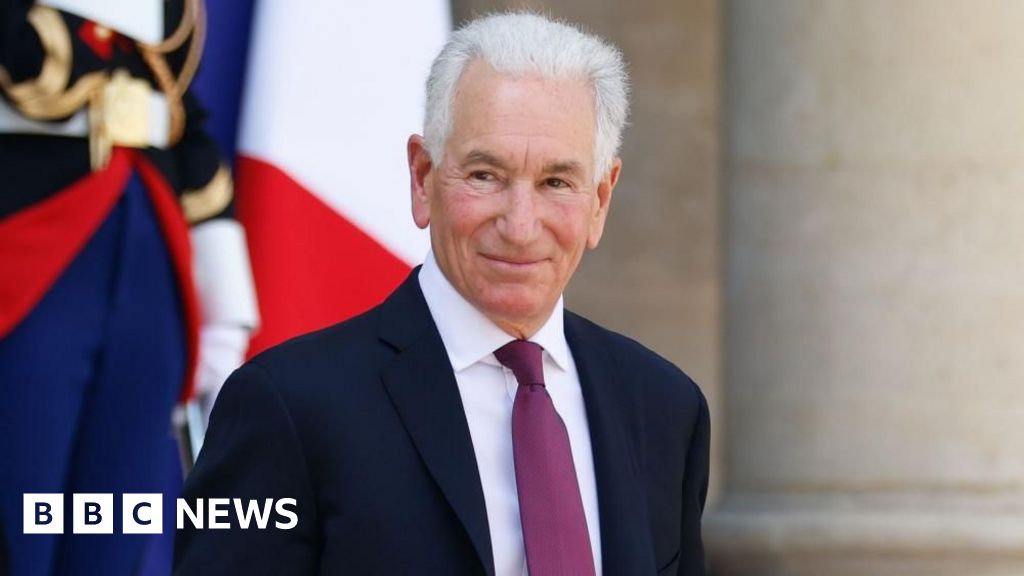
In a significant diplomatic rift, France’s Foreign Minister Jean-Noël Barrot has moved to effectively bar US Ambassador Charles Kushner from direct access to the French government, citing a "failure to grasp the basic requirements of the ambassadorial mission." The dramatic escalation follows an incendiary social media post from the US embassy in France concerning the murder of a far-right nationalist, Quentin Deranque, which the French government has deemed politically motivated and an unacceptable overreach. The controversy has laid bare deep divisions within France’s political landscape and has ignited a firestorm of diplomatic tension between Paris and Washington.
Charles Kushner, the father of former President Donald Trump’s son-in-law, Jared Kushner, was appointed US Ambassador to France last year. His tenure has been marked by a less conventional approach to diplomacy, often characterized by direct engagement and public pronouncements. However, this latest incident has pushed the boundaries of diplomatic protocol to a breaking point. Ambassador Kushner was summoned to a meeting with Minister Barrot on Monday evening to discuss the controversial social media statement. In a move that further inflamed the situation, Kushner did not attend the meeting personally, citing a prior engagement and sending a deputy from the US embassy in his stead.
This absence, interpreted by the French Foreign Ministry as a deliberate snub and a sign of disrespect, prompted an immediate and severe reaction. The ministry issued a statement accusing Kushner of an "apparent failure to grasp the basic requirements of the ambassadorial mission." Consequently, Minister Barrot has formally requested that Kushner "no longer be allowed direct access" to government ministers. This extraordinary measure signifies a profound breakdown in communication and trust, effectively isolating the US Ambassador from the highest levels of French political decision-making.
The diplomatic row was ignited by a post on social media by the US embassy to France, which commented on the tragic murder of Quentin Deranque. Deranque, a 23-year-old maths student and a prominent figure in far-right nationalist circles, died in hospital on February 14th, two days after he was brutally beaten by a gang of masked young men in Lyon. The attack occurred near an event attended by a leading radical left politician, leading to swift accusations from members of France’s center-right government that the perpetrators were "far-left" militants.
The US embassy’s social media post, however, took a different tack, issuing a stark warning that "violent left-wing extremism is on the rise" in France. This assertion, made in the context of Deranque’s murder, was perceived by the French government as an attempt to exploit a national tragedy for political gain and to attribute blame in a manner that circumvented French investigative processes and governmental authority. The statement was widely seen as an unwarranted and inflammatory intervention into French domestic affairs, particularly given the sensitive nature of political violence and its attribution.
Minister Barrot vehemently rejected the US embassy’s narrative over the weekend, stating, "We reject any use of this tragedy, which has plunged a French family into mourning, for political ends." He further emphasized France’s own commitment to combating all forms of violence and asserted that France did not require lectures on the issue, particularly from what he termed "the international reactionary movement." This response underscored France’s firm stance against external interference in its internal political discourse and its strong disapproval of what it viewed as a politically charged and potentially misleading interpretation of events.
The murder of Quentin Deranque has become a focal point for France’s deeply polarized political environment. Six men have been formally charged in connection with the fatal assault. Furthermore, a parliamentary assistant for a deputy from the radical left France Unbowed (LFI) party has also been charged with complicity in the attack. This development has further intensified the political sensitivities surrounding the case, with accusations and counter-accusations flying between different political factions.
The leader of the LFI party, Jean-Luc Mélenchon, a prominent figure and a likely contender in future presidential elections, has vehemently denied any involvement of his party in the incident. He has condemned "all forms of violence" and expressed his party’s "consternation, but also our empathy and compassion for [Deranque’s] family and friends." Mélenchon’s statement aimed to distance his party from the accusations and to steer the national conversation away from partisan blame and towards a broader condemnation of violence.
The US embassy in France has been approached by BBC News for comment on the escalating diplomatic crisis. The incident highlights the complex and often fraught relationship between diplomatic representation and national sovereignty, particularly when it comes to interpreting and commenting on sensitive domestic events. Ambassador Kushner’s public pronouncements, often seen as reflecting a more assertive and interventionist US foreign policy stance, have now evidently crossed a line in the eyes of the French government.
The decision by Minister Barrot to seek to block Kushner’s access is a severe diplomatic blow, signaling a deep level of dissatisfaction and a determination to protect the integrity of French governmental discourse. It also reflects a broader concern within France about the potential for foreign powers, particularly through their diplomatic representatives, to influence domestic political debates and sow division. The French government appears intent on sending a clear message that such interventions will not be tolerated, regardless of the source.
This diplomatic spat also raises questions about the effectiveness and appropriateness of the communication strategies employed by the US embassy under Ambassador Kushner’s leadership. While direct engagement can be a valuable tool, it carries inherent risks if not managed with a keen understanding of the host nation’s political sensitivities and established diplomatic norms. The embassy’s social media post, intended perhaps to highlight concerns about political extremism, appears to have backfired spectacularly, resulting in an unprecedented diplomatic rebuff.
The implications of this incident extend beyond the immediate bilateral relationship between France and the United States. It could embolden other European nations to adopt a firmer stance against perceived foreign interference in their internal affairs. The incident also underscores the challenges of navigating the digital age of diplomacy, where social media posts can have immediate and far-reaching consequences, often bypassing traditional diplomatic channels and protocols.
As France grapples with the aftermath of this political violence and the subsequent diplomatic fallout, the actions of Minister Barrot signal a commitment to safeguarding the nation’s political space from external manipulation. The coming days will likely see further developments as both sides assess the damage and attempt to manage the fallout from this significant diplomatic rupture. The exclusion of an ambassador from direct government access is a rare and serious measure, indicating the gravity with which France views Ambassador Kushner’s recent actions and the broader implications for its national security and political stability. The French government’s decisive action serves as a stark reminder that even within the framework of alliances, national interests and diplomatic red lines must be respected. The ongoing investigation into Quentin Deranque’s murder, coupled with this diplomatic standoff, ensures that the political landscape in France will remain charged and closely watched in the weeks and months ahead. The legacy of this incident will undoubtedly shape future diplomatic interactions between France and the United States, potentially ushering in a new era of more cautious and carefully calibrated engagement.

 Nakalama John
 Roy Suryo
 Nana Banana
 atisusanti