 Nana Banana
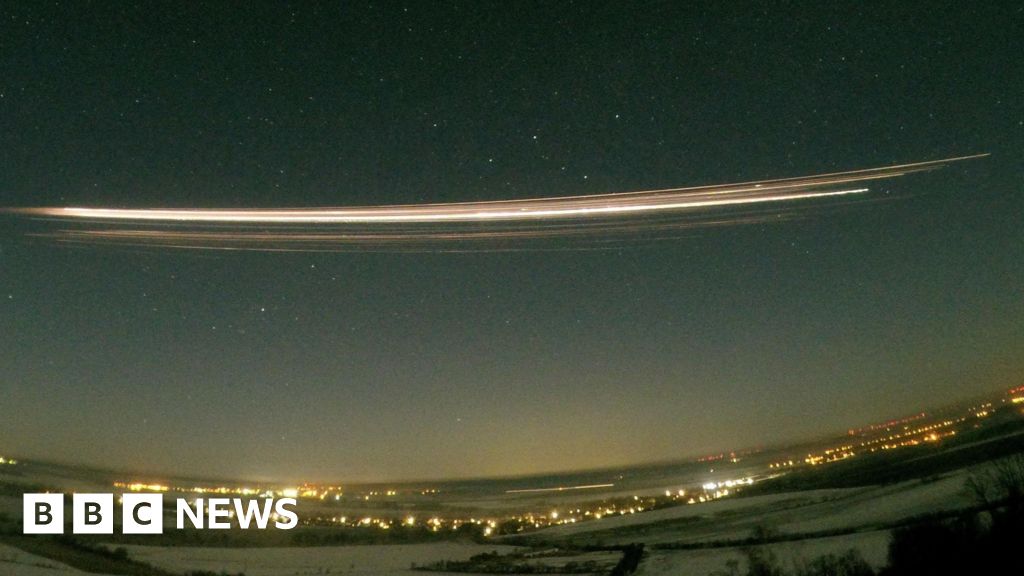
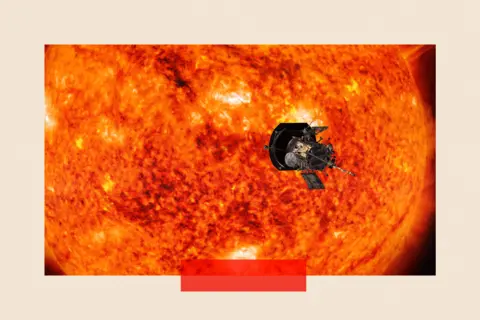
On Christmas Eve, a remarkable testament to autonomous space exploration unfolded as NASA’s Parker Solar Probe embarked on an unprecedented journey, flying closer to the Sun than any human-made object before it. This self-governing spacecraft, swooping through the solar atmosphere, was on a critical mission: to unlock secrets about our star, including its profound impact on space weather here on Earth. This landmark moment in humanity’s quest for knowledge was carried out without direct human intervention, the probe meticulously executing its pre-programmed tasks in isolation, far beyond the reach of real-time communication with Earth.
For over six decades, robotic probes have been humanity’s vanguard, venturing to destinations across our solar system that remain inhospitable or impossible for human explorers. The Parker Solar Probe’s daring 10-day flyby, enduring temperatures exceeding 1000°C (1832°F), starkly highlights the capabilities of uncrewed missions. This success, coupled with the rapid advancements in artificial intelligence, increasingly prompts a profound question: what role will human astronauts play in the future of space exploration, or indeed, will they be needed at all?
Some prominent scientists are already questioning the necessity of human presence in the cosmos. Lord Martin Rees, the UK’s Astronomer Royal, articulates a firm stance, stating, "Robots are developing fast, and the case for sending humans is getting weaker all the time." He contends that taxpayer money should not fund human spaceflight, citing the inherent risks to human life. Lord Rees suggests that the only remaining rationale for sending humans into space is for adventure, an experience that should be privately funded by wealthy individuals. This sentiment is echoed by Andrew Coates, a physicist from University College London, who asserts, "For serious space exploration, I much prefer robotics. [They] go much further and do more things."

The arguments against human spaceflight are compelling, primarily revolving around cost, safety, and efficiency. Launching and sustaining human life in space involves monumental expenses, requiring intricate life support systems, extensive training, and robust safety protocols. Astronauts face myriad physiological challenges, from bone density loss and muscle atrophy to the dangers of cosmic radiation and the psychological toll of prolonged isolation. Robots, by contrast, are immune to these biological and psychological stresses. They require no oxygen, food, or sleep, can operate in extreme temperatures and radiation environments without fear, and can withstand G-forces that would incapacitate a human.
Robotic explorers also offer unparalleled reach and endurance. While humans have only journeyed to Earth’s orbit and the Moon, robotic spacecraft have successfully visited every planet in our solar system, countless asteroids, and distant comets. They can conduct long-duration missions spanning decades, collecting invaluable data from remote corners of the universe, often at a fraction of the cost of a crewed mission. As AI continues its rapid progression, these robotic pioneers are becoming increasingly sophisticated, capable of more complex analysis and decision-making on their own, further strengthening the case for their continued primacy in deep space exploration.
However, the debate is far from settled, with many advocates passionately defending the irreplaceable value of human presence. Dr. Kelly Weinersmith, a biologist at Rice University, and co-author of A City on Mars, points to the enduring power of prestige. "Prestige will always be a reason that we have humans in space," she argues. "It seems to have been agreed upon as a great way to show that your political system is effective and your people are brilliant." Beyond geopolitical showmanship, there’s an innate human desire to explore, to witness the universe firsthand, which resonates deeply within us. Human astronauts also perform crucial research and experiments, particularly aboard platforms like the International Space Station, contributing significantly to scientific advancement in ways robots currently cannot replicate.
Humans offer a versatility and adaptability that even the most advanced robots struggle to match. As Dr. Weinersmith aptly summarizes, "Humans are more versatile and we get stuff done faster than a robot, but we’re really hard and expensive to keep alive in space." The intuitive problem-solving, real-time improvisation, and ability to react to unexpected situations are uniquely human traits. Author Samantha Harvey, in her Booker Prize-winning novel Orbital, eloquently captures the robotic advantage: "A robot has no need for hydration, nutrients, excretion, sleep… It wants and asks for nothing." Yet, this very lack of "want" or "need" also limits a robot’s ability to interpret nuanced scientific findings or to shift mission priorities based on unforeseen environmental cues.
Current robotic explorers, particularly those on distant planetary surfaces, often operate at a painstakingly slow pace. Mars rovers, for example, trundle along at a mere 0.1 mph, their movements carefully choreographed by human controllers on Earth due to communication delays. Dr. Ian Crawford, a planetary scientist at the University of London, questions whether AI, despite its chess-beating prowess, can truly outperform humans in complex, unstructured exploration. While he acknowledges AI could make rovers "more efficient," the nuanced understanding of a geologist picking up a specific rock or an astrobiologist identifying a critical biosignature remains a challenge for purely autonomous systems.
The future, however, likely involves a symbiotic relationship rather than outright replacement. Technology can serve as a powerful complement to human space travel, freeing astronauts from mundane or hazardous tasks to focus on higher-level research. Dr. Kiri Wagstaff, a computer and planetary scientist who formerly worked at NASA’s Jet Propulsion Laboratory, envisions AI automating "tedious tasks." "On the surface of a planet, humans get tired and lose focus, but machines won’t," she notes. The challenge lies in the immense computational power required for advanced AI systems like Large Language Models (LLMs). "We are not at the point of being able to run an LLM on a Mars rover," Dr. Wagstaff explains, highlighting that rover processors are significantly less powerful than a modern smartphone, unable to handle the intense demands of complex AI.

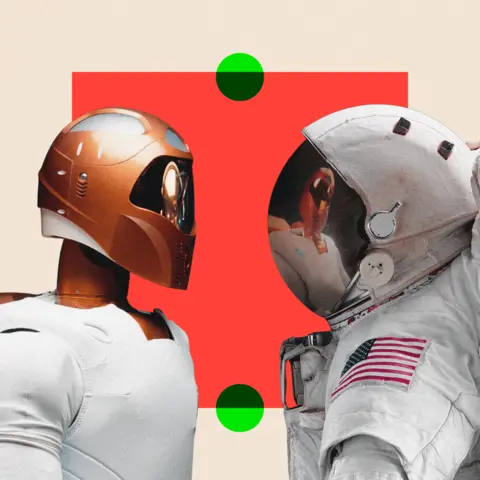
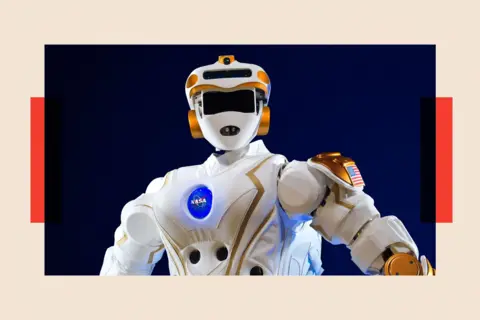
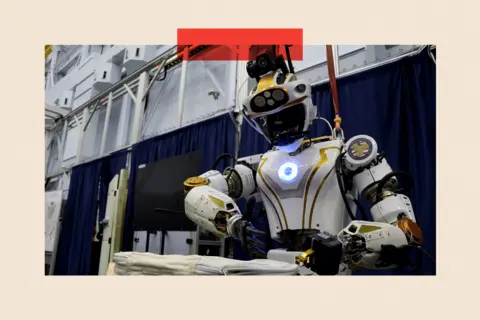
This is where sophisticated humanoid robots could bridge the gap. Machines with robotic arms and limbs, designed to mimic human dexterity, could take on basic tasks, maintenance, and even construction in space. NASA’s Valkyrie robot, a 300lb, 6ft2in machine, was developed for robotics challenges and resembles a science fiction trooper. Before Valkyrie, NASA’s Robonaut was the first humanoid robot deployed in space, designed to assist astronauts with intricate tasks on the International Space Station, using tools meant for human hands. Dr. Shaun Azimi, lead of the dexterous robotics team at NASA’s Johnson Space Center, sees robots not as replacements but as essential partners. "If we need to change a component or clean a solar panel, we could do that robotically," he states, emphasizing their role in "secur[ing] these habitats when humans aren’t around."
Some robots already make autonomous decisions. NASA’s Curiosity rover, exploring Mars’s Gale Crater, can autonomously identify targets of scientific interest, fire its laser to analyze rock composition, and transmit data back to Earth while human teams are still sleeping. This capability dramatically increases mission efficiency. Yet, the slow pace of current rovers and the vast distances requiring precise human control underscore their current limitations compared to an astronaut’s ability to quickly traverse terrain and make on-the-spot, complex judgments.
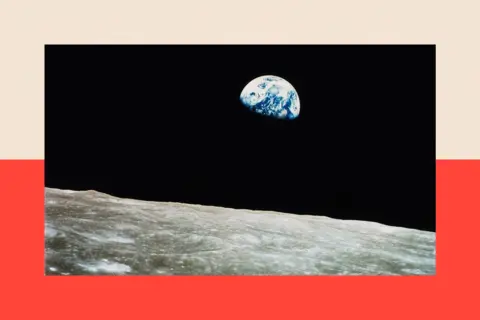
Beyond the scientific and logistical arguments, there is an intangible, yet profound, element that robots cannot replicate: inspiration. Professor Coates points out that "Inspiration is something that is intangible." Leroy Chiao, a retired NASA astronaut, concurs, stating, "Humans relate when humans are doing something." The public is undoubtedly excited by robotic missions, but the prospect of a human footprint on another world captures the imagination in a unique way. "I would expect the first human on Mars to be even bigger than the first Moon landing," Chiao predicts, evoking the powerful societal impact of the Apollo missions.
The ambition for human spaceflight is far from waning. Humans have not ventured beyond Earth’s orbit since December 1972, when the Apollo 17 mission last visited the Moon. NASA’s Artemis program aims to return humans to the lunar surface this decade, with the next crewed mission orbiting the Moon in 2026, followed by a landing in 2027. China’s space agency also has ambitious plans for lunar exploration.
Looking further afield, Elon Musk, CEO of SpaceX, harbors a grand vision: the colonization of Mars. His long-term plan involves using Starship, SpaceX’s colossal new vehicle, to transport up to 100 people at a time, with the audacious goal of establishing a self-sustaining Martian colony of a million people within 20 years. Dr. Weinersmith explains Musk’s rationale: "Musk is arguing we need to move to Mars because that could be a backup for humanity if something catastrophic happens on Earth." If one subscribes to this ultimate survival argument, human expansion into space becomes a necessity.
However, the challenges of Martian colonization are immense and currently fraught with unknowns. Establishing viable habitats, generating breathable air, sourcing water, and developing sustainable food systems are monumental technical hurdles. Beyond engineering, there are profound ethical questions, as Dr. Weinersmith highlights: "Maybe babies can’t develop in that environment… There [are] ethical questions [like this] that we don’t have the answers to." She advocates for a more cautious approach, suggesting, "I think we should be slowing down."
Lord Rees offers a compelling, albeit futuristic, vision where human and robotic exploration converge in a way that transcends current biological limitations. He imagines a future where humans themselves might undergo significant modifications to thrive in extreme environments. "I can imagine they will use all of the techniques of genetic modification, cyborg add-ons, and so on, to cope with very hostile environments," he muses. This could potentially lead to the emergence of "a new species that will be happy to live on Mars," blurring the lines between biological and artificial life. Until such a radical transformation occurs, humanity’s small, brave steps into the cosmos will continue, forever intertwined with the tireless, unyielding journey of their robotic predecessors and companions.


 atisusanti
 Nakalama John
 George Anjay
 Ramos Leo
 Roy Suryo