
 atisusanti
In a significant and deeply regrettable incident, Google has issued a public apology following the dissemination of a news alert related to the recent Bafta awards ceremony. The alert, intended to inform users about the fallout from the event, inadvertently prompted readers to "see more" on a story that contained a racial slur. This occurred during a segment of the ceremony where an audience member, experiencing Tourette’s syndrome, involuntarily vocalized the slur due to a tic as actors Michael B. Jordan and Delroy Lindo appeared on stage.
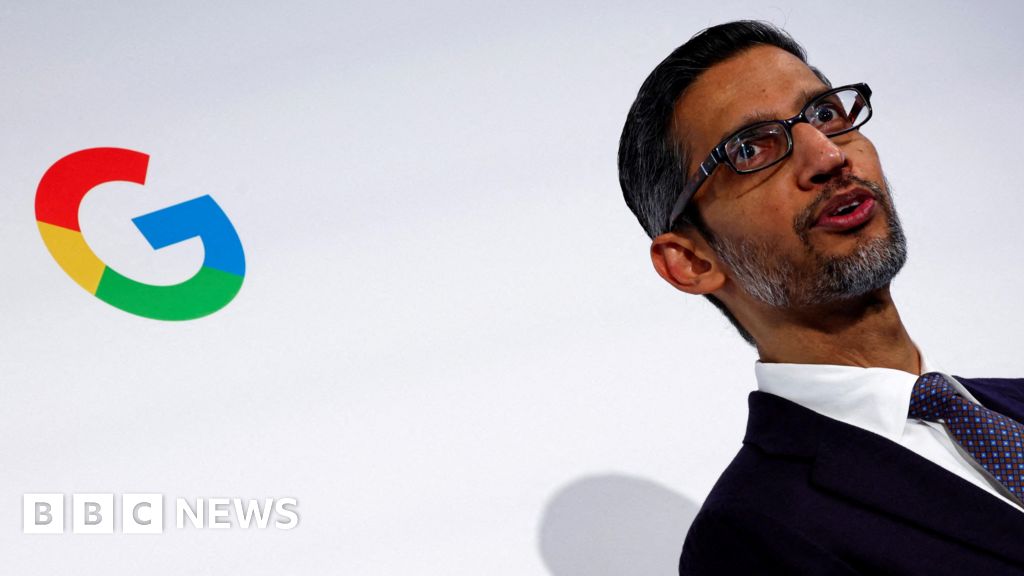
A spokesperson for Google conveyed the company’s profound remorse, stating, "We’re deeply sorry for this mistake. We’ve removed the offensive notification and are working to prevent this from happening again." The incident quickly ignited a firestorm on social media, with many users speculating that the offensive language in the alert was a consequence of Google’s integration of generative artificial intelligence. However, the tech giant has explicitly refuted this claim, asserting that generative AI was not the cause of the error.
Instead, Google has clarified that the problematic "see more" suggestion, which incorporated the racial slur, stemmed from a failure within its sophisticated safety features designed for push notifications. These alerts, delivered as text messages to users’ phones and devices, are typically governed by stringent content moderation protocols. The company’s content system, in this instance, had identified the racial slur being used across a multitude of online articles. In its attempt to categorize and summarize the content for users, it unfortunately repurposed the offensive term within the alert itself, creating a deeply inappropriate and harmful notification.
Google has candidly admitted that this incident "shouldn’t have happened" and has assured the public that immediate remedial actions are underway. The company is actively enhancing its safety triggers and guardrails, which are designed to prevent precisely this kind of linguistic misstep in news alerts. These systems are crucial for maintaining the integrity and sensitivity of the information disseminated through Google News, one of the most widely downloaded news applications in the United States.
While the offensive notification was unfortunately seen by a subset of users, Google emphasized that it was swiftly removed. The company stated on Tuesday that the offending alert had only been seen by a "small number of users" and that its retrieval was executed with promptness.
The initial exposure of this egregious error was brought to light on Instagram by online creator Danny Price. On Monday, Price publicly expressed his profound outrage, commenting, "What an interesting Black History month this has turned out to be," a pointed remark given that February marks Black History Month in the United States. This timing underscored the insensitivity and harmful nature of the alert.
The Bafta awards ceremony itself has been the subject of considerable scrutiny and apology following the incident. Both the leadership of the awards and the BBC, which broadcast the event, have issued apologies for the use of racist language during the ceremony. The voluntary vocalization of the slur by an audience member with Tourette’s syndrome, while a recognized symptom of the condition, led to significant distress and a broader conversation about the impact of such language, even when involuntary.
The failure of Google’s safety mechanisms in this instance raises critical questions about the robustness of AI-driven content moderation and the inherent challenges in filtering out offensive language, particularly when it is present in a high volume of source material. While generative AI was not the direct culprit, the incident highlights the complex interplay between AI, content analysis, and human oversight in news distribution. Google’s commitment to improving its safety triggers suggests a recognition of the need for more nuanced and context-aware systems that can differentiate between the reporting of a slur and its inappropriate re-publication.
The incident serves as a stark reminder of the power and responsibility that major technology platforms wield in shaping public discourse and disseminating information. The speed at which news travels in the digital age, coupled with the potential for algorithmic misinterpretations, necessitates continuous vigilance and a proactive approach to ensuring accuracy, sensitivity, and ethical conduct. Google’s apology and subsequent pledge to enhance its safety features are crucial steps in rebuilding trust and demonstrating a commitment to preventing such offensive occurrences in the future. The company’s substantial user base means that even a small percentage of affected individuals represents a significant number of people exposed to harmful content, underscoring the gravity of the situation.
The context of Black History Month further amplifies the impact of this error, as it occurred during a period dedicated to celebrating Black culture and heritage. The inadvertent inclusion of a racial slur in a news alert meant to inform about an entertainment event thus carries an added layer of insensitivity. It underscores the ongoing struggle for media platforms to navigate the complexities of race, language, and representation in a way that is both informative and respectful.
The incident also brings into focus the broader challenges faced by news aggregators and content platforms in managing the vast and often sensitive landscape of online information. The sheer volume of content processed daily makes it an arduous task to ensure that every piece of information presented to users is free from error or offense. Google’s failure, while apologized for, serves as a case study for the entire industry on the critical need for continuous refinement of AI systems and human moderation processes. The goal is to create a digital environment that is not only informative but also safe and inclusive for all users. The commitment to improving safety triggers and guardrails at Google is a necessary and welcome development, aiming to prevent such regrettable instances from recurring and to uphold the integrity of news dissemination.



 Roy Suryo
 Nana Banana
 Nakalama John
 George Anjay