Ramos Leo
Concurrently, a different assisted dying bill for England and Wales, championed by Labour MP Kim Leadbeater, gained considerable backing from Members of Parliament in November 2024. However, its journey through the House of Lords has been fraught with challenges, progressing at a glacial pace. Supporters of the bill fear it may ultimately run out of parliamentary time before it can be enacted into law, a common fate for Private Members’ Bills without strong government support. Meanwhile, in Scotland, Members of the Scottish Parliament (MSPs) are preparing for a crucial vote on a separate assisted dying bill in March, reflecting the nation’s devolved powers in health matters. These various proposals have ignited widespread controversy, generating passionate arguments both for and against the proposed changes from medical professionals, disability advocates, faith groups, and the general public.
In Jersey, one of the self-governing Channel Islands and part of the British Isles, the legislative process for assisted dying has reached a critical juncture. After several days of intense debate and deliberation, members of the States Assembly are due to cast their final votes on the legislation later on Thursday. Should it pass, Jersey would become one of the first jurisdictions within the British Isles to legalise assisted dying, marking a profound shift in end-of-life care policy. This development closely follows similar legislative efforts in the Isle of Man, another self-governing Crown Dependency. In March 2025, the Isle of Man’s parliament successfully passed its own assisted dying bill. However, this legislation has not yet received royal assent to become law, primarily due to the UK Ministry of Justice raising significant concerns regarding the safeguards included in the bill. These concerns highlight the intricate balance required to protect vulnerable individuals while upholding principles of autonomy.
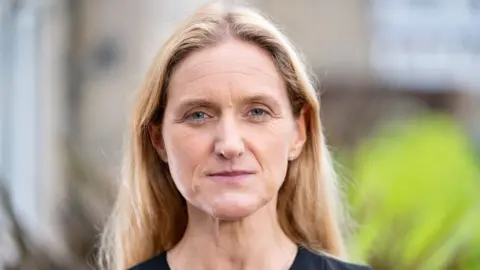
The proposed law on assisted dying in England and Wales, spearheaded by Labour MP Kim Leadbeater, aims to address what she describes as the "horrible, harrowing death[s]" that too many people currently experience under the existing system. Her Private Members’ Bill seeks to provide a carefully regulated pathway for terminally ill individuals to end their lives. Under her bill, eligible patients would need to meet stringent criteria: they must be terminally ill with a prognosis of six months or less to live (or 12 months for neurodegenerative conditions), possess the mental capacity to make an informed decision, and express a clear and unwavering wish to end their life. The process would involve assessments by two independent doctors, who would confirm the diagnosis, prognosis, and mental capacity of the patient, ensuring the decision is voluntary and well-considered.
Once an application has been approved, a mandatory 14-day waiting period would commence, allowing the patient time for reflection and to potentially reconsider their decision. Crucially, the bill stipulates that a doctor would prepare the substance used to end the patient’s life, but the individual themselves would be required to self-administer it. This distinction is central to the definition of assisted dying versus euthanasia. The bill defines the "coordinating doctor" as a registered medical practitioner with "training, qualifications and experience" at a level to be specified by the health secretary, ensuring specialized expertise in these sensitive cases. While the specific drug would not be named in the legislation, its administration would be closely regulated. To prevent abuse, the bill includes severe penalties, making it illegal to coerce someone into declaring they wish to end their life, with a possible 14-year prison sentence for offenders.
The UK assisted dying bill has undergone significant evolution since its initial introduction. A parliamentary committee scrutinised the original proposals and suggested a number of amendments aimed at strengthening safeguards and clarifying definitions. These changes likely included stricter criteria for assessing mental capacity, enhanced requirements for independent medical opinions, and clearer guidelines for the process of application and approval. During its passage through the House of Commons, MPs were afforded a free vote, meaning they were not bound by party lines, allowing them to vote according to their conscience on the bill as a whole and on individual amendments. Following its success in the Commons, the bill moved to the House of Lords for further scrutiny.
In a significant development reflecting broader political will, Welsh politicians in the Senedd (Welsh Parliament) also backed the Leadbeater bill on 24 February 2026, with 28 members voting for it, 23 against, and two abstentions. This vote was crucial because, while the bill would automatically become law in Wales if it receives final approval in the UK Parliament, the Welsh government retains the power to set specific rules and guidelines for assisted dying services within Wales. Had the Senedd rejected the vote, it could have potentially restricted assisted dying services in Wales to private providers, rather than integrating them within the National Health Service, thereby creating a two-tier system.
Despite the cross-party support from MPs in Westminster and the endorsement from the Welsh Senedd, the bill’s future as law remains highly uncertain. As a Private Members’ Bill from a backbench MP, it typically needs to be passed by both the House of Commons and the House of Lords within a single parliamentary session to become law. With the current parliamentary session expected to conclude in May, there is a real risk that the Leadbeater bill will not clear both Houses in time, leading to its collapse. Supporters are increasingly concerned that the bill has stalled significantly in the House of Lords, where peers have tabled an overwhelming number of amendments – more than 1,000. Unlike the House of Commons, where debate can be curtailed, peers generally debate every amendment tabled, a procedural mechanism that allows for extensive scrutiny but can also be used to intentionally delay or obstruct legislation.
In January, former justice secretary Lord Falconer, who collaborated with Leadbeater on the bill, expressed profound pessimism, stating it was "very, very difficult" to foresee the bill’s passage without a "fundamental change" in the House of Lords’ approach. He accused a minority of peers of deliberate time-wasting, urging them to "stop all this smoke and mirrors and focus on making the bill better." Lord Falconer controversially suggested the government could invoke the rarely-used Parliament Act to override peers’ objections, given that elected MPs have already backed the legislation. However, Nikki Da Costa, a former Downing Street adviser and staunch opponent of the bill, countered this view, asserting that peers were "doing their best to patch the holes" in an "unsafe, deficient bill which has no electoral mandate." She argued that Lord Falconer sought for the Lords "to stop doing work and just wave it through." Leadbeater herself has stated that the government has a "duty" to facilitate the bill’s passage, arguing it should "respect the will of the democratically-elected members of Parliament." The government could potentially allocate more time for the bill’s debate in the current session or allow another backbench MP to re-introduce it in a subsequent session.
In Scotland, the legislative landscape for assisted dying operates independently from Westminster. The Leadbeater bill would not apply there, as Scotland has devolved powers to make its own laws in this area. Liberal Democrat MSP Liam McArthur introduced his Assisted Dying for Terminally Ill Adults (Scotland) Bill on 27 March 2024. Similar to the England and Wales proposals, it outlines specific criteria for applicants: they must be terminally ill with a prognosis of six months or less (or 12 months for specific conditions), possess mental capacity, and make an informed and voluntary decision. Two independent medical professionals would need to confirm these conditions. The Scottish bill has also undergone rigorous scrutiny and debate, leading to dozens of amendments to its original proposals. It is anticipated that the bill will be put to a final vote at some stage in March 2026, determining Scotland’s stance on this contentious issue.
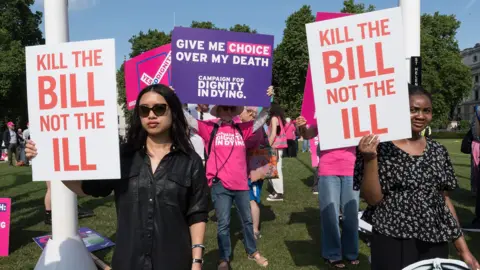
Supporters of legalising assisted dying argue passionately for reform, citing patient autonomy and the prevention of unnecessary suffering. The Dignity in Dying campaign group, for instance, hailed the Leadbeater bill as presenting the "most detailed, robust proposals" on the issue "Westminster has ever considered." Chief executive Sarah Wootton highlighted the tragic statistic that "up to 650 terminally ill people end their own lives every year, often in lonely and traumatic ways," as compelling evidence for the urgent need for legal reform. Personal testimonies further underscore this call for change. Cancer patient Nathaniel Dye, who collaborated with Leadbeater on the bill, emphasized that it would enable individuals to have a death that is "as kind and compassionate as possible." Broadcaster Dame Esther Rantzen, living with stage-four lung cancer, is another prominent long-standing campaigner for change, articulating her desire with the simple plea: "All I’m asking for is that we be given the dignity of choice." Public opinion among healthcare professionals is divided, as BBC research indicated that family doctors in England are deeply split on the issue. A survey of over 5,000 GPs, with more than 1,000 responding, revealed approximately 400 in favour and 500 opposed, reflecting the profound ethical dilemmas faced by medical practitioners.
Opponents of assisted dying voice equally strong concerns, primarily focusing on the protection of vulnerable individuals and the potential for a "slippery slope." Independent crossbench peer and former Paralympian Baroness Grey-Thompson is one of the bill’s most vocal critics. She expresses deep worry that disabled and other vulnerable people could face subtle or overt pressure to end their lives, fearing that safeguards might prove insufficient. She also questions the ability of doctors to make accurate six-month diagnoses reliably. On X, she articulated her concerns: "Some of us have very real fears based on our lived experience and based on what has happened in other countries where it’s legal." Dr Gordon Macdonald, from the campaign group Care Not Killing, argues that the bill fails to address the wider "deep-seated problems in the UK’s broken and patchy palliative care system," suggesting that resources should instead be directed towards improving end-of-life care rather than facilitating hastened death. Other opponents often raise ethical objections rooted in the sanctity of life, concerns about the role of doctors in ending lives, and the potential for an expansion of criteria over time, as seen in some other jurisdictions.
To clarify the terminology often used interchangeably in these debates, it’s important to distinguish between assisted dying, assisted suicide, and euthanasia. However, assisted dying generally refers to a person who is terminally ill receiving lethal drugs from a medical practitioner, which they administer themselves, maintaining their agency in the final act. Assisted suicide is the act of intentionally helping another person to end their life, including someone who is not terminally ill. This could involve providing lethal medication or facilitating their travel to another jurisdiction where such practices are legal. Euthanasia is the deliberate act of ending a person’s life to relieve suffering, in which a lethal drug is administered by a physician. Patients undergoing euthanasia may not necessarily be terminally ill. There are two main types: voluntary euthanasia, where the patient provides explicit consent, and non-voluntary, where the patient cannot consent (e.g., due to a coma or severe cognitive impairment).
Globally, the legal status of euthanasia and assisted dying varies significantly. Switzerland has permitted assisted suicide since 1942, with facilities like Dignitas accepting foreign patients. Between 1998 and 2024, Dignitas reported assisting 608 Britons to die. In the US, ten states (Oregon, Washington, Vermont, California, Colorado, Hawaii, New Jersey, Maine, New Mexico, Montana) and the Washington D.C. federal district allow "physician-assisted dying," where doctors can prescribe lethal drugs for self-administration for terminally ill patients. Canada introduced "medical aid in dying" (MAID) in 2016, allowing voluntary euthanasia provided by a doctor or nurse practitioner, either through direct administration or by prescribing drugs for self-administration. Canada’s MAID laws have seen expansions, notably to include individuals whose sole underlying medical condition is a mental illness, although this implementation has faced delays. Assisted dying for terminally ill people is also legal in Australia (all states have passed legislation) and New Zealand (via a public referendum). A number of other European countries have legalised forms of assisted dying or euthanasia, including Belgium (since 2002, for individuals suffering from an incurable medical condition causing constant and unbearable physical or psychological suffering), the Netherlands (since 2002, under similar strict conditions, including for minors in specific circumstances), Portugal (which legalised it in 2023), and Spain (since 2021). These international examples demonstrate a growing, albeit cautiously regulated, trend towards offering end-of-life choices, highlighting the diverse approaches and safeguards being implemented worldwide.


 atisusanti
 Nakalama John
 George Anjay