Nana Banana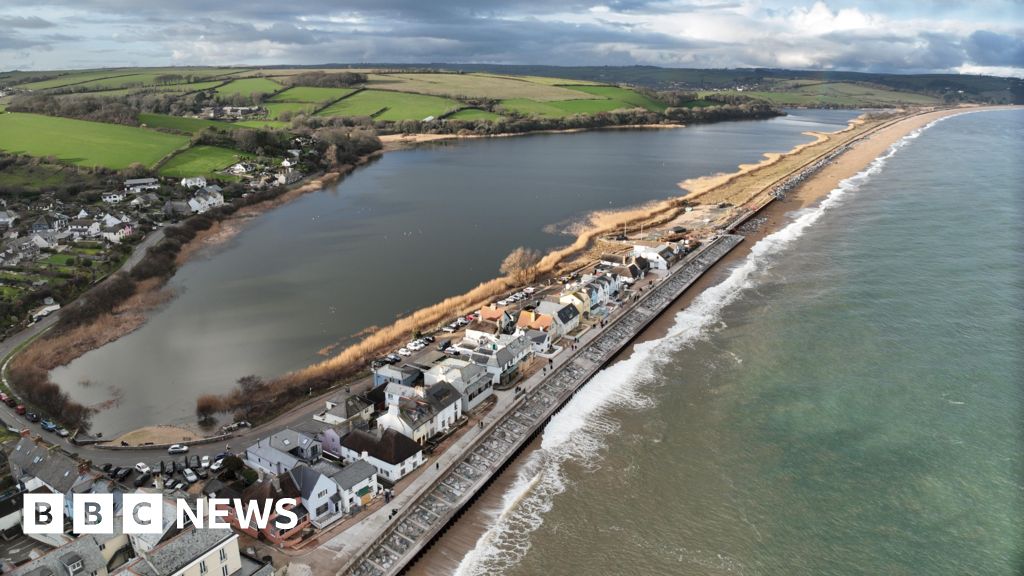
The destructive force of recent winter storms, notably Storm Ingrid, has laid bare the vulnerability of the region’s dynamic coastline. While the South West has always been exposed to Atlantic weather systems, the recent succession of severe low-pressure cells, often coinciding with high tides and significant wave heights, has exacerbated erosion rates. These storms are characterised by sustained periods of strong south-westerly winds, which generate immense wave energy that pounds exposed coastlines with relentless force. This energy mobilises vast quantities of sediment, transporting it offshore or along the coast, leaving behind a depleted and more exposed shoreline. The impact is not merely aesthetic; it undermines natural sea defences and threatens the structural integrity of built environments.
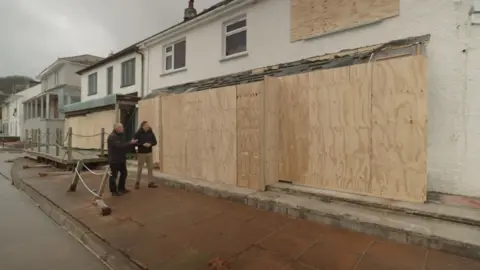
Nowhere is this more evident than in the picturesque village of Torcross and the adjacent Slapton Sands in Devon. Here, the immediate aftermath of Storm Ingrid revealed a devastating scene. Seafront properties, once seemingly secure, bore the scars of the storm’s fury, with windows smashed and doors breached by enormous waves. One resident recounted the shock of finding their front windows gone and protective shutters lying on the lounge floor. "When we bought the place, we knew we were vulnerable, but we didn’t realise just how vulnerable," they explained, highlighting the deceptive nature of the coastline’s gradual changes. Despite robust sea defences, the sheer power of the ocean proved overwhelming in places.
Gail Stubbs, who has lived in Torcross for most of her life and runs the local Start Bay Inn pub, articulates a widespread fear among residents. "We’re on the front line here," she stated, her voice tinged with concern. Her worry is palpable: that eventually, the entire village will "crumble into the sea." Stubbs’s personal observations underscore the long-term trend of coastal retreat. She recalls a time when the beach was "enormous" during her childhood, a stark contrast to its present state where it has "almost disappeared." While coastal change is inherent to this dynamic environment, she noted, "This time, this feels different," suggesting an acceleration and intensity that surpasses previous experiences. The economic implications for local businesses, heavily reliant on tourism drawn to the very beaches now eroding, are severe, compounding the residential worries.
Understanding and quantifying these changes is crucial, and scientists from the University of Plymouth are at the forefront of this effort. Joseff Saunders, a researcher with the university, is part of a team meticulously documenting the coastline’s evolution. Armed with digital GPS-connected equipment, Saunders takes precise measurements of beach elevation at regular intervals – typically five points every 200 metres. "We’re measuring the elevation of the beach to see how it’s shifted after the storm," he explained, outlining the immediate goal. However, the project’s broader ambition is to gather long-term data to "get an indication over the longer term of how this beach is changing." This extensive dataset will then enable researchers to "start to model how the beach will look in the future, looking at different conditions, particularly sea-level rise." It was this diligent monitoring that confirmed the alarming fact: following Storm Ingrid, the beaches at Torcross and Slapton had experienced a reduction in height of two metres.
Professor Gerd Masselink, a distinguished professor of coastal geomorphology at the University of Plymouth, provides critical context for these observations. Specialising in how coastlines evolve, Professor Masselink describes the recent two-metre drop as "the biggest change that’s happened here in the last 10 years." He places this within a broader, ongoing trend affecting beaches along the south coast of Devon and Cornwall. This trend involves the persistent movement of gravel and sand from the western end of these beaches to their eastern counterparts. The primary driver for this sediment transport, he elaborates, is an increased frequency of "south-westerly wave events" compared to easterly wave events. This directional dominance of wave action systematically redistributes the protective beach material, leaving certain areas increasingly denuded and vulnerable. Over the past two decades, Professor Masselink’s research indicates an even more significant decline, with the beach height falling by approximately six metres in total. This cumulative loss represents a substantial reduction in the natural buffer protecting the land, accelerating the exposure of the fragile shingle bar and the infrastructure it supports.
The implications of these changes are not confined to isolated pockets but are a harbinger of wider coastal shifts driven by climate change. Professor Masselink unequivocally states, "This is going to become increasingly common." The dual threats of rising sea levels and a projected increase in the intensity and frequency of severe storms are combining to make the impact of these weather events "more pronounced." The consequences are dire: "We’re going to see increased flooding, we’re going to see erosion on beaches that used to be stable. We’re going to see increased erosion at beaches that are already eroding." The historical stability of many coastal areas is being irrevocably challenged, leading to a critical re-evaluation of long-standing coastal management strategies.
The traditional approach of "holding the line" – constructing and maintaining hard engineering defences to protect every inch of the coastline – is becoming increasingly untenable. Professor Masselink starkly warns, "We can’t keep defending coastlines for the next 20, 30, 40 years." He underscores the monumental and impractical scale of such an endeavour: "Unless we start casting the whole coast in concrete, we have to start retreating." This concept of "managed retreat" or "realignment" involves strategically withdrawing from vulnerable areas, allowing natural processes to take their course, and investing in new infrastructure further inland. While economically and ecologically sensible in the long term, it presents immense social and political challenges, requiring difficult decisions about property, communities, and heritage.
The broader canvas of Devon and Cornwall’s coastline reveals other areas grappling with similar, or even more acute, challenges. The resilience of the Dawlish railway line, famously battered by storms in 2014, remains a symbol of the continuous struggle against the sea. Parts of the North Cornwall coast, exposed to the full force of the Atlantic, and numerous estuarial communities are also facing escalating risks. The erosion impacts not only residential and commercial properties but also vital tourism infrastructure, natural habitats designated as Sites of Special Scientific Interest (SSSI) or Areas of Outstanding Natural Beauty (AONB), and agricultural land. The regional economy, heavily reliant on a pristine and accessible coastline, faces significant disruption.
In response to these escalating threats, a spokesperson for the Department for Environment, Food & Rural Affairs (DEFRA) affirmed the government’s commitment to supporting coastal communities, including those in the South West. They highlighted a "record investment of £10.5bn in protecting against flooding and coastal erosion by 2036," a program projected to benefit nearly 900,000 properties. Furthermore, the spokesperson noted that having "inherited flood defences in the worst condition on record," the department had "reprioritised more than £100m into urgent maintenance works to make sure defences are properly maintained." While this investment is substantial, critics question whether it fully addresses the scale of the challenge posed by accelerating climate change, particularly the long-term implications of managed retreat and the need for more adaptable, nature-based solutions. The debate continues over the most effective and sustainable strategies to safeguard these cherished, yet increasingly fragile, coastlines for future generations.




 Roy Suryo
 atisusanti
 Nakalama John
 George Anjay