
 Nana Banana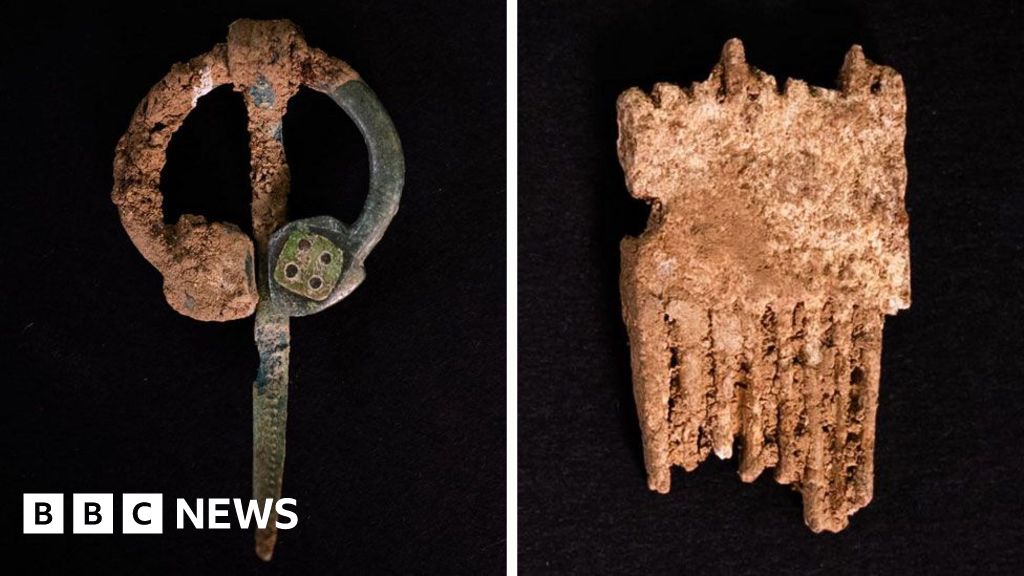
The site has yielded what appears to be the foundational outline of a small building, a discovery that fundamentally shifts previous interpretations of the burial ground. Alongside this structural evidence, archaeologists have unearthed a captivating array of domestic and decorative artifacts, including exquisite, vibrantly colored glass beads. These objects, each a tiny window into a distant past, suggest a community that was both industrious and connected to wider networks of trade and craftsmanship.
To date, a remarkable 58 human skeletons, dating back to the 6th or 7th Century, have been carefully excavated from the site. What makes this particular burial ground so unusual and compelling is the stark demographic imbalance: nearly all of the interred individuals have been identified as women. This overwhelming female presence has long puzzled archaeologists, challenging conventional understandings of early medieval communities and burial practices in the region.
The accumulation of these new finds—the potential building, the luxurious decorative items, and the everyday domestic tools—adds substantial weight to the burgeoning evidence suggesting that the burial ground was not merely a place of interment, but an integral part of an early female religious community. Such communities, often cloistered and self-sufficient, played a significant but often overlooked role in the social and spiritual landscape of post-Roman Britain.
For the past four years, a dedicated team of archaeologists from Cardiff University has meticulously excavated the site. The skeletons themselves are remarkably well-preserved, laid to rest in shallow graves carefully cut into the underlying limestone bedrock. While forensic analysis of their bones and teeth reveals that these women lived challenging lives, often marked by physical hardship, nutritional deficiencies, and the rigors of daily labor typical of the era, the accompanying grave goods tell a contrasting story of surprising wealth and even luxury. This paradox has been a central enigma for the research team.
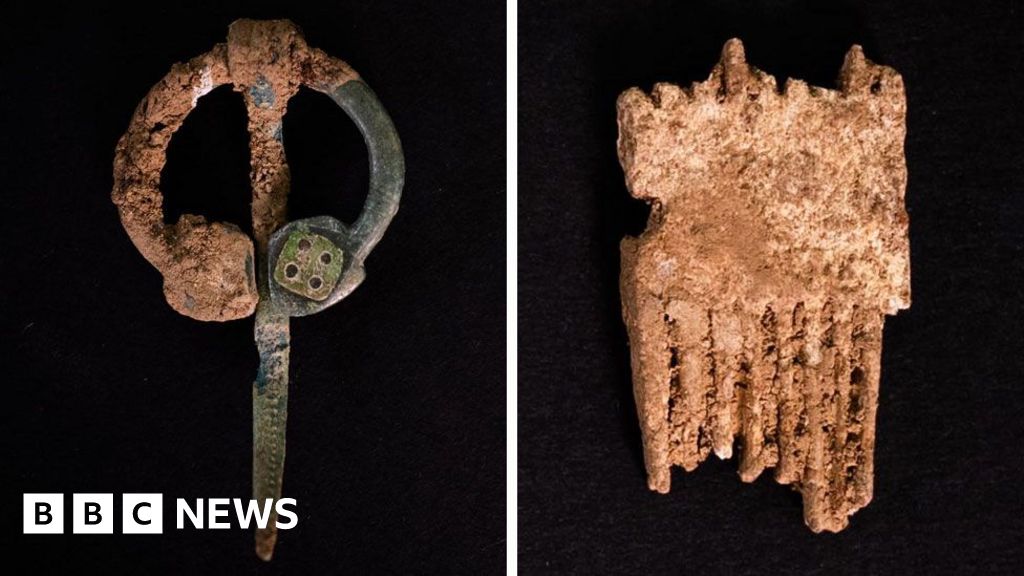
The latest dig has now provided what Dr. Andy Seaman, from Cardiff University and lead archaeologist of the excavation, describes as a "major clue": the distinct outline of what could possibly be a small, purposeful building. "It’s producing fragments of building stone, so it might be structural. We might be thinking of a small shrine or a chapel," Dr. Seaman explains, his voice betraying the excitement of a researcher on the cusp of a breakthrough. He continues, "I do think that we have a site which may be an early religious community." This hypothesis, if confirmed, would represent a significant contribution to the understanding of early Christian monasticism in Wales.

Crucially, the potential building is situated at the very heart of the cemetery, with graves clustered intimately around it. This spatial arrangement strongly suggests that the structure held profound significance for the community, acting as a focal point for their spiritual lives and their desire for eternal rest. People, it seems, actively sought burial as close to this revered feature as humanly possible, indicating its central role in their beliefs and practices.
Cardiff University archaeologist Tudur Davies notes the intensity of this desire for proximity. "It’s a highly desired location for people to be buried in," he observes. This reverence led to an unusual practice: "Sometimes two, three, four individuals have been buried on the same spot, again and again. There doesn’t appear to be as much of a taboo over putting bodies in the same place and just moving those still there to one side." This multiple-burial phenomenon underscores the sanctity attributed to the central structure and the sacred ground immediately surrounding it.
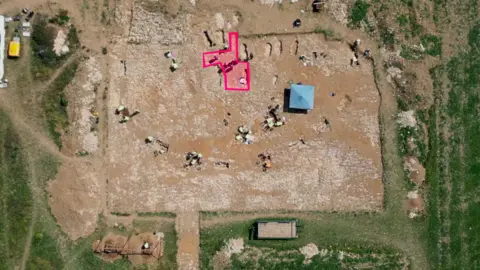
The artifacts recovered from the site offer invaluable insights into the daily lives, social status, and cultural connections of the people buried here. These items have been carefully transported to Cardiff University’s state-of-the-art conservation lab for detailed analysis and preservation. Conservator Nicola Emmerson is currently engaged in the painstaking process of removing centuries of accumulated dirt and corrosion from an ornate copper brooch, revealing its original splendor.

"We’d have to do some more analysis, but it’s probably bronze," Emmerson speculates, carefully examining the object under magnification. "Also, we think it was possibly gilded, which would be a coating of gold over the top." The terminals of the brooch, she explains, were adorned with vibrant green enamel, a testament to the skill of its maker and the aesthetic preferences of its owner. "This would have been a very decorative brooch. I think it’s a very special find for the site," she concludes, highlighting its significance as a piece of "medieval bling" that speaks volumes about the community’s access to valuable materials and skilled artisans.
Beyond this impressive piece of adornment, the team has also unearthed a finely crafted pin made from bone, intricately decorated with a detailed pattern, suggesting both practical use in securing clothing and an aesthetic appreciation for embellishment. A comb, carved with remarkable precision from antler, further illustrates the domestic arts and personal grooming habits of the period.
Among the most captivating finds are the exquisite, multicoloured glass beads. Measuring a mere 3mm across, each tiny bead is a miniature work of art, displaying a range of hues from deep reds and oranges to delicate blues, yellows, and greens. These precious items were likely not merely decorative but also indicative of status or perhaps even votive offerings. They could have been carefully stitched onto garments, adding a touch of vibrant color and luxury to clothing, or incorporated into elaborate pieces of jewelry. Their presence points to external trade links, as glass production in early medieval Wales was limited, suggesting these were either imported finished goods or raw materials for local craftspeople. Fragments of glassware found alongside the burials further corroborate the community’s engagement with a wider material culture.
However, the story is not solely one of luxury. The abundance of domestic items found at the site paints a vivid picture of a self-sustaining, active community. "We have a quern stone for grinding flour for bread. We’ve got pottery and glass for eating and drinking," Dr. Andy Seaman notes, emphasizing the practicalities of everyday existence. These tools are irrefutable evidence that the site was "clearly not just a place for the dead. There’s a living community here as well."
Dr. Seaman postulates that this was likely an enclosed community, living in close proximity to, or even directly alongside, the cemetery. This separation from mainstream society, a hallmark of early monastic settlements, would have allowed them to pursue a dedicated religious life, cultivating spiritual discipline and communal living. The overwhelming predominance of female burials fits perfectly with the model of an early female religious house, where women would dedicate their lives to God, often seeking refuge, education, or social purpose outside the confines of traditional family structures.
While many pieces of this compelling medieval puzzle are now starting to fall into place, some profound questions persist, adding layers of intrigue to the narrative. The remains of a few men have been discovered alongside the women – who were they? Were they spiritual leaders, benefactors, family members, or perhaps later burials? Similarly, the presence of some children raises questions about their relationship to the adult women. Were they children of converts, orphans taken in by the community, or perhaps individuals who died young within the enclosed settlement?
Perhaps the most unsettling mystery concerns two women whose burials starkly contrast with the careful interments of the others. These two individuals were found unceremoniously "tossed in a ditch," with one woman’s hands and feet reportedly tied. This grim discovery challenges the prevailing image of a peaceful, religious community. What circumstances could have led to such a dishonorable burial? Were they victims of violence, executed criminals, individuals excommunicated from the community, or perhaps those considered outcasts for reasons we can only speculate upon? This anomaly highlights the complex social dynamics and judicial practices that must have existed even within seemingly devout communities of the era.
The team’s ongoing research will delve deeper into whether this site represents an example of very early Christianity in Wales. "It’s a period where the history is not yet written," Dr. Seaman asserts, underscoring the scarcity of contemporary records from this formative epoch. "We don’t really understand early church sites… how they functioned, what they looked like, how they were organised." He points out that while later periods of monastic history are well-documented, the 6th and 7th centuries remain shrouded in mystery, particularly in peripheral regions like Wales.
"So it’s a really exciting opportunity," Dr. Seaman concludes, emphasizing the unique potential of the Fonmon Castle site to illuminate the origins and development of Christianity in Wales, the architectural forms of its earliest religious establishments, and, critically, the hitherto underappreciated role of women in shaping its early spiritual landscape. The archaeologists are poised to continue their illuminating excavations later this year, hopeful that future discoveries will further enrich our understanding of these enigmatic medieval women and their remarkable community.

 Ramos Leo
 atisusanti
 Nakalama John
 George Anjay
 Roy Suryo