George Anjay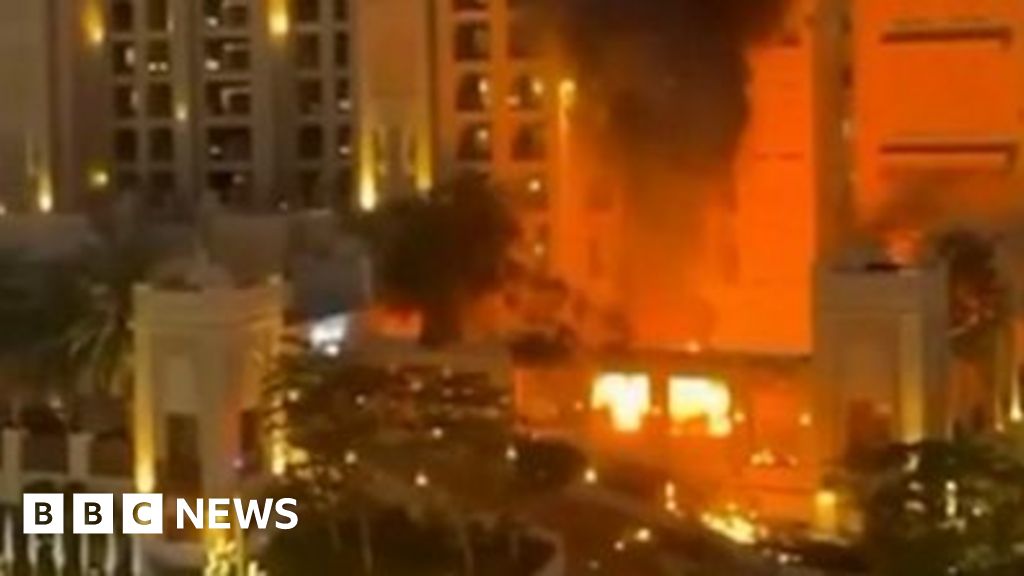
A luxury hotel in Dubai was engulfed in flames as Iran unleashed a barrage of retaliatory strikes across the Middle East, targeting sites in several countries in what Tehran claims is a response to a "massive" and ongoing assault by the United States and Israel. Verified footage shared by the BBC vividly captured the inferno raging at the Fairmont The Palm Hotel, with thick plumes of black smoke billowing into the sky, a stark visual testament to the escalating regional tensions. Dubai authorities confirmed that four individuals sustained injuries in the blaze at the prominent Palm Jumeirah establishment, and that the fire was subsequently brought under control. However, the official statement offered no further details regarding the specifics of the incident, leaving many questions unanswered.
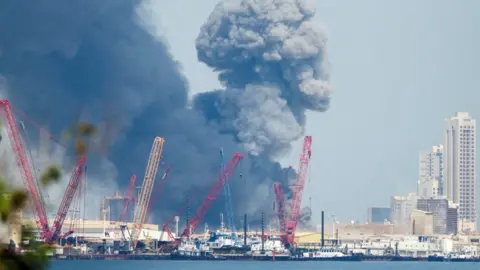
Beyond the incident in Dubai, a wave of missile interceptions was reported across the region, with the United Arab Emirates, Qatar, Bahrain, Jordan, and Kuwait – all hosting significant US military installations – announcing that they had successfully intercepted incoming missiles fired from Iran. In Bahrain’s capital, Manama, colossal plumes of black smoke were observed rising from an area adjacent to the headquarters of the US Navy’s Fifth Fleet, raising concerns about the extent of any damage. The US has remained conspicuously silent on the matter, offering no immediate comment on the situation.
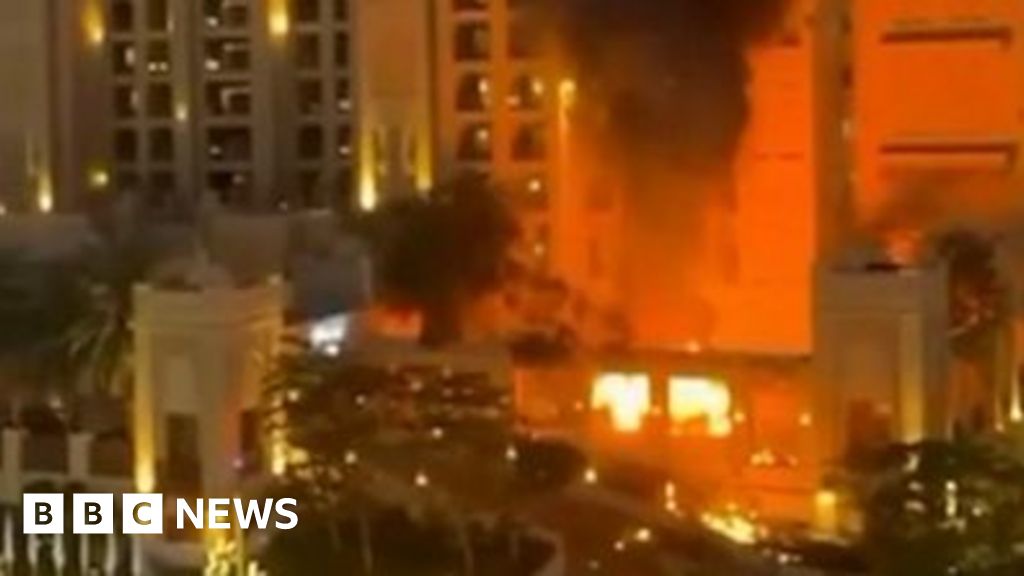
In Doha, Qatar’s Ministry of Defence disclosed that it had intercepted several missiles that appeared to be aimed at the al-Udeid air base, a critical and expansive US facility in the region. Further visual evidence, captured from a building opposite the Dubai hotel, documented the precise moment of impact followed by a dramatic explosion. The footage shows a large orange fireball erupting, prompting the individual filming to fall to the ground in apparent shock. The sheer scale of the emergency response was evident as large smoke plumes ascended above the opulent five-star hotel, with emergency services scrambling to the scene. Earlier reports from Iranian media indicated that an attack on Dubai had been launched, although the specific targets remained unclear.
The UAE Ministry of Defence issued a firm statement on X, formerly Twitter, confirming the interception of a number of drones and missiles. The ministry vehemently condemned the Iranian strikes as a "blatant violation of national sovereignty and international law." The United States maintains a substantial military presence across the Middle East, operating approximately 13 bases with an estimated 30,000 to 40,000 troops typically stationed across them. Authorities in Bahrain officially confirmed the attack on the US naval base, known as Naval Support Activity Bahrain. This facility serves as the home port for various vessels, including anti-mine and logistical support ships, though it is not confirmed if any were present during the incident.
The Islamic Revolutionary Guard Corps (IRGC) of Iran released a statement asserting that its forces were targeting US bases and assets as part of an operation codenamed "Truthful Promise 4." This operation, the IRGC declared, was a direct retaliation for the attack on Iran that commenced on Saturday morning, allegedly carried out by the US and Israel. The initial attack, which began at approximately 09:30 Tehran time (06:00 GMT), reportedly targeted areas associated with the Iranian leadership. In a noteworthy development, US President Donald Trump issued a statement encouraging the Iranian people to rise up against their current regime, a move that has further inflamed regional tensions.
Meanwhile, in Israel, air raid sirens wailed across the nation throughout Saturday, signaling the launch of multiple volleys of missiles from Iran. The Israeli military confirmed the missile launches and stated that its air force was actively engaged in intercepting them. In neighboring Jordan, the armed forces announced the successful downing of two ballistic missiles that were targeting Jordanian territory. Official reports from Jordan indicated that there were no casualties resulting from these intercepts.
The Ministry of Defence of the United Arab Emirates (UAE) released a statement detailing that the nation had been subjected to "a blatant attack involving Iranian ballistic missiles." The statement further elaborated that "UAE air defence systems dealt with the missiles with high efficiency and successfully intercepted a number of missiles." It also regrettably confirmed that debris from an intercepted missile fell on a residential area in Abu Dhabi, resulting in some material damage and the tragic death of a civilian.
In response to the escalating situation, Iran’s Foreign Minister, Abbas Araghchi, vehemently condemned the attacks by the US and Israel, characterizing them as "wholly unprovoked, illegal, and illegitimate." He asserted that Iran’s armed forces "are prepared for this day and will teach the aggressors the lesson they deserve," signaling Iran’s resolute stance and its commitment to retaliatory action. The unfolding events underscore the precarious state of geopolitical stability in the Middle East, with the potential for further escalation and wider regional conflict looming large. The targeting of civilian infrastructure, such as the luxury hotel in Dubai, raises significant concerns about the humanitarian impact of this escalating conflict and the deliberate disregard for civilian safety by the involved parties. The international community is watching with bated breath as the situation develops, urging de-escalation and a return to diplomatic channels to prevent a wider conflagration. The intricate web of alliances and rivalries in the region means that any miscalculation or further aggressive action could have profound and far-reaching consequences, impacting global energy markets, international trade, and regional security for years to come. The narrative of retaliation and counter-retaliation has created a dangerous cycle, and breaking this pattern will require concerted diplomatic efforts and a genuine commitment to peace from all parties involved. The economic implications are also significant, with potential disruptions to shipping lanes and a chilling effect on tourism and investment in an already volatile region. The world is holding its breath, hoping for a swift resolution that avoids further bloodshed and devastation.


 atisusanti
 Nakalama John