George Anjay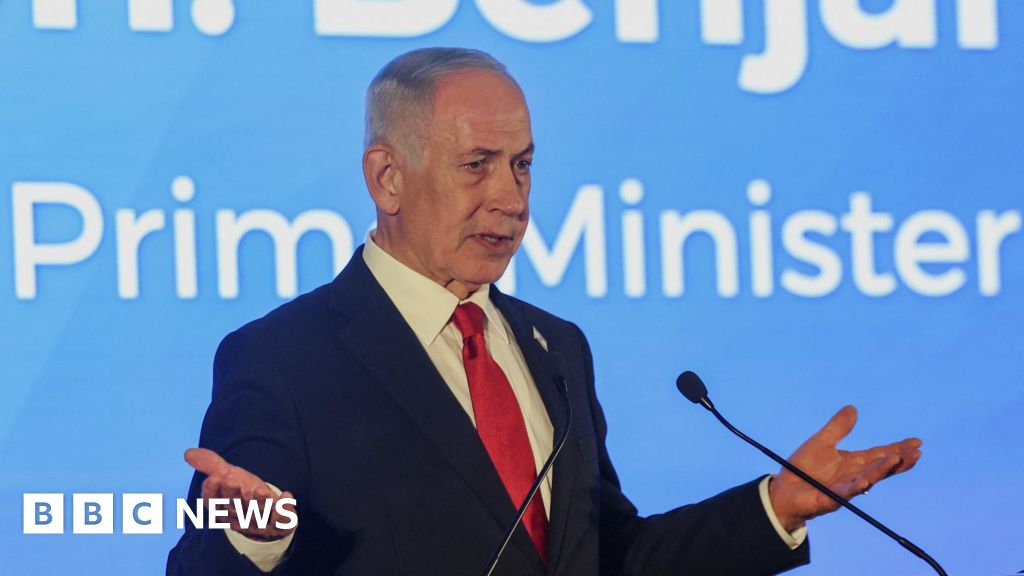
Israeli Prime Minister Benjamin Netanyahu has issued a stern warning regarding Iran’s nuclear program, asserting that any potential deal with Tehran must necessitate the complete relinquishment of all enriched uranium and the cessation of any further enrichment activities. Speaking in Jerusalem on Sunday, Netanyahu articulated several non-negotiable conditions he believes are crucial for global security, emphasizing that "all enriched material has to leave Iran" and that "there should be no enrichment capability." These pronouncements come on the eve of a second round of crucial talks between Iranian and US officials, scheduled to commence in Switzerland on Tuesday.
Meanwhile, Iranian Deputy Foreign Minister Majid Takht-Ravanchi conveyed to the BBC in Tehran that Iran is prepared to engage in compromises to achieve a nuclear agreement, provided that the United States demonstrates a willingness to discuss the lifting of sanctions. However, Iran has consistently maintained that zero enrichment is a fundamental "red line," viewing any such demand as a direct infringement upon its rights as a signatory to the Nuclear Non-Proliferation Treaty.
The United States has intensified its diplomatic pressure on Iran to reach a resolution, concurrently bolstering its military presence in the Middle East. This strategic deployment includes the positioning of two aircraft carriers, notably including the nation’s largest-ever warship, in the region. US Secretary of State Marco Rubio, speaking at a news conference in Slovakia, indicated that these additional American naval forces are intended to safeguard against any potential threats emanating from the region. He further clarified that President Donald Trump "prefers diplomacy and an outcome of negotiated settlement" over any direct military action against Iran.
The high-stakes diplomatic engagement is set to feature a meeting between Trump’s top envoy, Steve Witkoff, and his son-in-law, Jared Kushner, with Iranian negotiators, including Foreign Minister Abbas Araghchi, who is en route to Geneva. "No-one’s ever been able to do a successful deal with Iran, but we’re going to try," Rubio remarked, acknowledging the historical complexities surrounding such negotiations.
The current diplomatic push is framed against the backdrop of the 2015 nuclear deal, from which President Trump controversially withdrew the United States. Under that accord, Iran had committed to curtailing its nuclear activities and permitting international inspections in exchange for the alleviation of crippling economic sanctions.
In a bid to demonstrate its commitment to de-escalation and compromise ahead of the latest round of talks, Takht-Ravanchi informed the BBC that Tehran has offered to dilute its 60%-enriched uranium stockpile. The presence of highly enriched uranium, particularly at levels approaching weapons-grade, has historically fueled suspicions that the Islamic Republic might be pursuing the development of a nuclear weapon, a claim Iran has consistently and vehemently denied.
"We are ready to discuss this and other issues related to our programme if they are ready to talk about sanctions," Takht-Ravanchi stated to the BBC, without explicitly confirming whether this would entail the complete or partial lifting of sanctions. He also remained non-committal on whether Iran would consider agreeing to export more than 400 kilograms of its highly enriched uranium.
While Washington has been actively pursuing a deal with Tehran, Prime Minister Netanyahu revealed that he had conveyed his "scepticism" to President Trump during a recent meeting at the White House. "I said that if a deal is to be reached, it should have several components… that we believe are important not only for the security of Israel, but for the security of the world," Netanyahu declared, underscoring the gravity of the implications for regional and global stability.
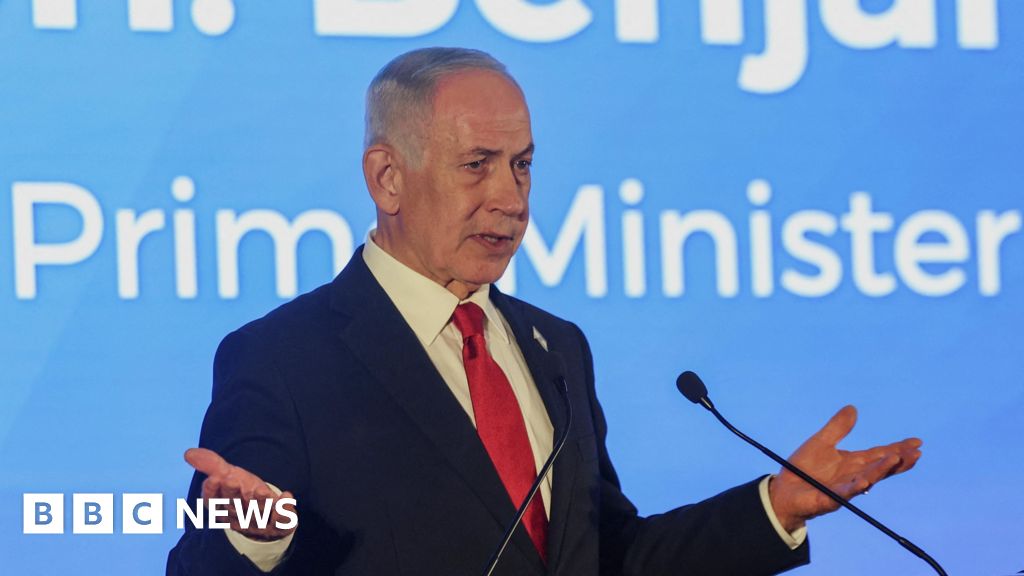
A paramount concern for Israel, and a key demand in any potential agreement, is the curbing of Iran’s ballistic missile development program. These missiles have been a source of significant threat and have been used in attacks targeting Israel. To date, Tehran has steadfastly refused to engage in discussions with US officials regarding its ballistic missile program. Furthermore, Israel has consistently advocated for Iran to cease its support for proxy groups operating throughout the Middle East, including significant entities like Hamas and Hezbollah, which are viewed as destabilizing forces in the region.
The ongoing nuclear negotiations are fraught with deep-seated mistrust and competing interests. Israel, under Netanyahu’s leadership, has maintained a consistent stance that Iran’s nuclear ambitions pose an existential threat, demanding stringent verifiable measures to prevent Tehran from acquiring nuclear weapons capability. Netanyahu’s pronouncements reflect a hardening of this position, emphasizing that any deal must go beyond limiting enrichment and actively dismantle Iran’s existing enriched uranium stockpile and its infrastructure for future enrichment.
The international community has been closely observing these developments, with many nations echoing Israel’s concerns about Iran’s nuclear trajectory. The United States, while pursuing a diplomatic resolution, is also under pressure from allies to ensure that any agreement is robust and effectively prevents Iran from developing nuclear weapons. The complexities of the situation are compounded by Iran’s broader regional activities, including its support for various militant groups, which further fuels the apprehension of countries like Israel and its regional partners.
The discussions in Geneva are expected to be intensely focused on the specifics of Iran’s uranium enrichment levels, the duration of any restrictions, and the mechanisms for verification and enforcement. The Iranian delegation has indicated a willingness to negotiate on certain aspects of their nuclear program, but the insistence on the lifting of sanctions remains a central tenet of their negotiating position. The US, meanwhile, is seeking verifiable assurances that Iran’s nuclear program will be exclusively for peaceful purposes and will not pose a threat to international security.
The historical context of the 2015 Joint Comprehensive Plan of Action (JCPOA) looms large over these negotiations. The Trump administration’s withdrawal from the JCPOA and the subsequent re-imposition of sanctions significantly altered the diplomatic landscape and Iran’s calculus. The current efforts are aimed at potentially reviving a framework for dialogue and agreement, but the deep divisions and mutual distrust that characterized the period leading up to and following the JCPOA’s demise present substantial obstacles.
Netanyahu’s insistence on the complete removal of enriched uranium and the prohibition of future enrichment reflects a maximalist approach, driven by Israel’s perceived security imperatives. He has consistently argued that any compromise that allows Iran to retain even a limited enrichment capacity would ultimately pave the way for Iran to develop nuclear weapons in the future. His public pronouncements are designed to exert maximum pressure on the US and the international community to adopt a similarly uncompromising stance in their dealings with Iran.
The US, while acknowledging Israel’s security concerns, has also expressed a desire to avoid further escalation in the region. Secretary Rubio’s comments suggest a preference for a negotiated settlement, indicating a strategic balancing act between addressing Iran’s nuclear program and preventing a wider conflict. The involvement of senior White House officials like Kushner underscores the high-level attention being paid to these negotiations and the administration’s commitment to finding a diplomatic solution.
The outcome of these talks remains uncertain, with both sides entrenched in their positions on critical issues. The coming days in Geneva will be pivotal in determining whether a breakthrough is possible or if the stalemate will persist, further increasing regional tensions and concerns about Iran’s nuclear ambitions. The international community will be anxiously awaiting the developments, keenly aware of the profound implications for global security and stability.

 Ramos Leo
 Nakalama John

 atisusanti