
 Nakalama John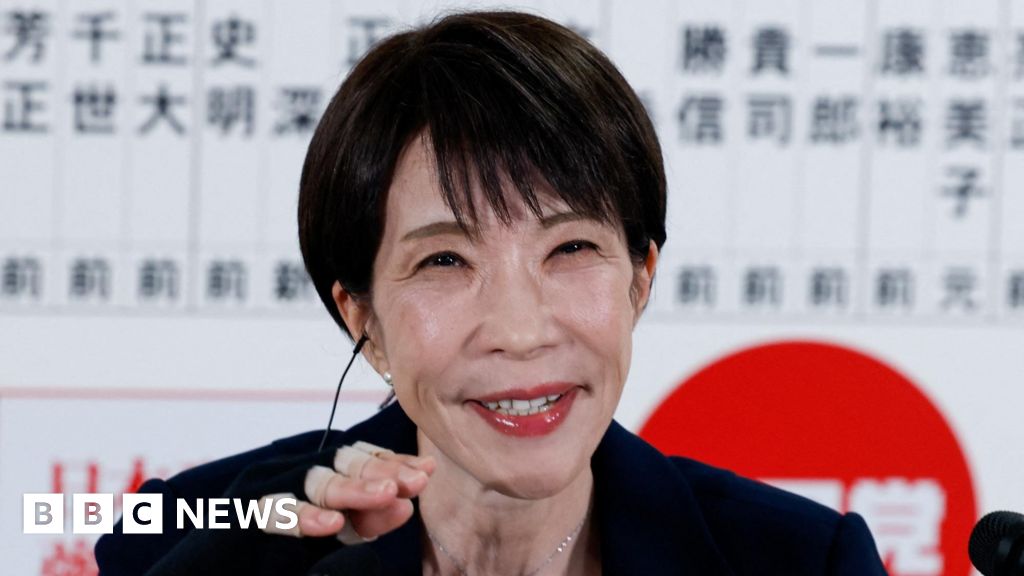
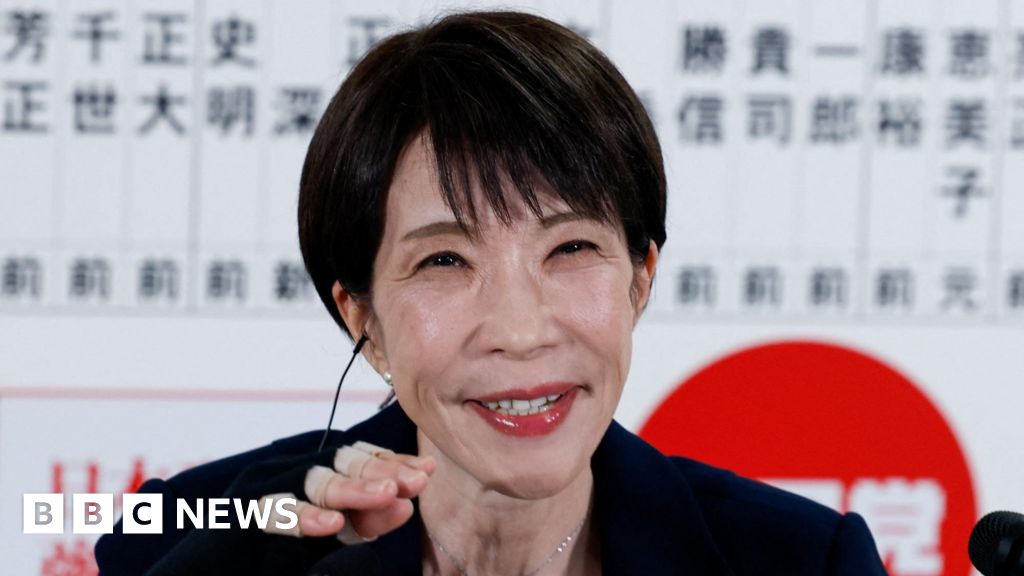
Japanese stocks surged to a record high on Monday, propelled by the Liberal Democratic Party’s (LDP) historic and decisive victory in Sunday’s snap election, which saw Prime Minister Sanae Takaichi secure an unprecedented mandate. The LDP, under Takaichi’s leadership, captured an astonishing 316 out of 465 seats in the lower house, marking the first time a single party has commanded a two-thirds majority since Japan’s parliament was established in its current post-war form in 1947. This overwhelming triumph not only solidifies Takaichi’s grip on power but also signals a new era of political stability and ambitious policy initiatives for the world’s third-largest economy.
The LDP’s coalition partner, the Japan Innovation Party, further bolstered the ruling bloc’s strength by winning an additional 36 constituencies. This brought their combined total to an formidable 352 seats, a supermajority that grants the government unparalleled legislative power. This sweeping victory is a significant gamble that paid off for Takaichi, who, just months into her premiership, called for an early election to seek a fresh public mandate. The resounding success stands in stark contrast to the political instability and declining public trust that plagued her immediate predecessors.
The immediate market reaction was euphoric. The benchmark Nikkei 225 index rallied by more than 5% in early trade on Monday, briefly crossing the significant 57,000 mark for the first time in history. While it subsequently relinquished some of those gains, the index still closed up a robust 3.9% at a record high of 56,363.94. This surge reflects investor confidence in the newfound political stability and the expectation that Takaichi’s pro-business agenda can now be advanced with minimal legislative hurdles.
A two-thirds majority is particularly potent in Japanese politics, enabling the ruling coalition to override vetoes from the upper house and push through contentious legislation, including potentially amendments to the nation’s pacifist constitution. This level of control empowers Takaichi to implement her vision without extensive negotiations or concessions to opposition parties, promising a period of accelerated policymaking.
Prime Minister Takaichi, Japan’s first female prime minister, now faces the monumental challenge of revitalizing a long-stagnant economy and addressing persistent cost-of-living concerns that have plagued Japanese households for years. Speaking to reporters on Sunday, she affirmed her commitment to a "responsible yet aggressive" fiscal policy and indicated that she would not reshuffle her Cabinet, which was formed less than four months ago. This decision underscores her desire for continuity and stability as she embarks on her ambitious agenda.
Japan’s economy has grappled with decades of deflation, low growth, and the demographic pressures of a rapidly aging and shrinking population. These structural challenges have created a "moribund economy" where businesses struggle with demand and consumers face stagnant wages. In recent years, global inflationary pressures have exacerbated these issues, leading to rising costs for essential goods like groceries and rent, a major concern voiced by voters at polling stations. The country’s historically low inflation rates have made its population particularly sensitive to any upward price movements, eroding purchasing power and contributing to widespread anxiety.
Market commentators widely believe that Takaichi’s policies could provide a significant boost to the Japanese economy. Investment analyst Yuka Marosek told the BBC that the election outcome, coupled with anticipated moves like "stimulus, tax tweaks, and deregulation," would provide "additional fuel for an existing bull trend." This sentiment is echoed by Chris Scicluna, head of research at Daiwa Capital Markets Europe, who noted that Japanese stock investors had "long been believers in Takaichi."
Scicluna elaborated on the reasons behind this optimism, stating, "They’re confident that Japanese firms will benefit from her pledge to end austerity, they love her promises of more investment to boost growth, [and] they like the fact she’s identified several strategic sectors such as defence and AI to benefit from extra policy support." Takaichi’s platform emphasizes boosting domestic demand, fostering innovation, and strengthening Japan’s industrial base through targeted investments and supportive regulations. Her focus on strategic sectors like defence and artificial intelligence aligns with global trends and aims to enhance Japan’s competitiveness and security posture.
However, not all investors share the same enthusiasm. Scicluna highlighted a distinct divergence in sentiment, noting that investors in Japanese government bonds and the yen were "a lot more agnostic if not downright sceptical" about Takaichi’s intentions. The primary concern revolves around how Takaichi plans to finance her ambitious spending plans. "Japanese government debt’s extremely high and investors in bonds and the yen want to know how she intends to finance her plans," he explained. Japan’s national debt-to-GDP ratio is among the highest in the developed world, making any significant increase in spending without clear revenue streams a cause for apprehension among those holding government bonds. Concerns about potential yen weakness, driven by expansive fiscal policy, also weigh on currency markets. Critics warn that such policies could deepen instability in Japan’s already fragile economy if not carefully managed.
Takaichi’s political journey to this historic victory has been remarkable. She called the snap election just a few months after taking office in October, a bold move aimed at consolidating power and securing a clear mandate. Her success stands in stark contrast to her two predecessors, under whom the LDP lost its parliamentary majority, battled corruption scandals, and struggled to curb rising costs. Former Prime Minister Shigeru Ishiba, for instance, saw the party’s fortunes wane, creating an opening for Takaichi to re-energize the LDP.
Takaichi strategically banked on her personal appeal to turn the LDP’s lost fortunes around. She has skillfully consolidated support among the LDP’s conservative base by reviving long-dormant goals, most notably a revision to Japan’s pacifist constitution. Article 9 of Japan’s post-war constitution famously renounces war and prohibits the maintenance of military forces. Revising this clause, even partially, is a highly sensitive and historically significant objective that resonates strongly with nationalistic elements within the LDP. She has also emphasized traditional values, appealing to a segment of the electorate seeking a return to perceived Japanese cultural norms.
Beyond her conservative base, Takaichi has also demonstrated an unexpected ability to connect with younger voters. Her distinctive style, including her choice of handbags and pink pens, has become an unlikely zeitgeist, portraying her as a modern and relatable figure in a political landscape often seen as staid and traditional. This blend of traditional appeal and modern charisma has proven a potent combination.
Internationally, the victory was quickly acknowledged. US President Donald Trump congratulated Takaichi on her victory, writing on Truth Social that it was an "Honor" to endorse her ahead of the election. "The wonderful people of Japan, who voted with such enthusiasm, will always have my strong support," Trump said. The close relationship between Takaichi and Trump was evident early in her tenure. Just one week after Takaichi took office last October, Tokyo rolled out the red carpet for Trump during his visit to Japan. This diplomatic debut, marked by striking optics of fists pumping as the US president praised her in front of thousands of US soldiers, underscored the strong alliance between the two nations. Takaichi is scheduled to travel to Washington in March for a second meeting with Trump, where discussions are expected to further solidify the US-Japan alliance, particularly concerning regional security challenges posed by China and North Korea in the Indo-Pacific.
As Takaichi declared on Sunday, "We bear an extremely heavy responsibility to focus on steadily delivering on the campaign pledges we have made," as reported by Kyodo. Her historic mandate provides her with the political capital to tackle Japan’s multifaceted challenges head-on, from economic revitalization and demographic shifts to constitutional reform and strengthening international alliances. The world will now watch closely to see how Japan’s first female prime minister leverages this unprecedented power to reshape the nation’s future.
Additional reporting by Peter Hoskins and Adam Hancock




 Ramos Leo
 atisusanti
 George Anjay

 Roy Suryo