
 Ramos Leo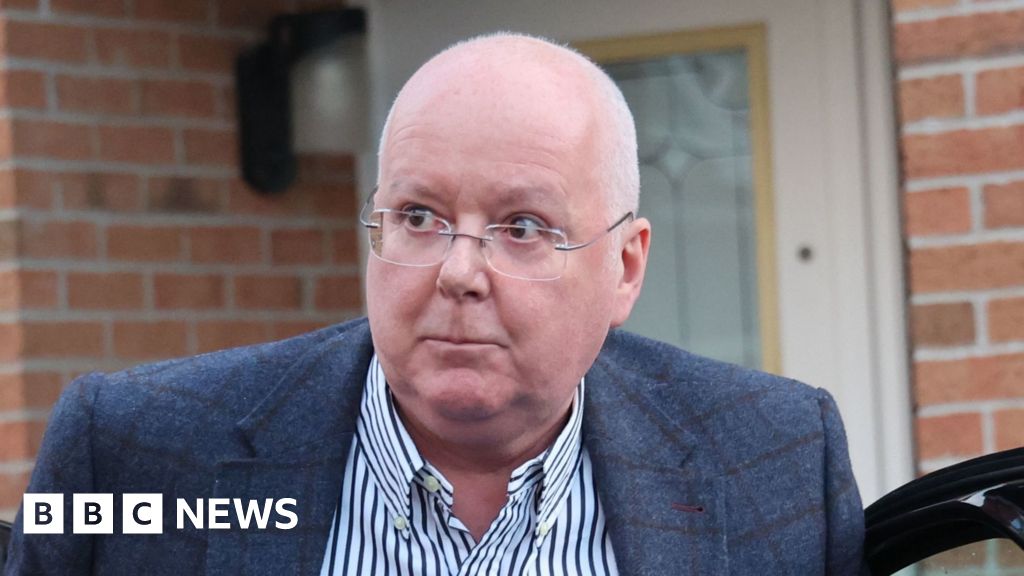
Scotland’s First Minister, John Swinney, received advance notice of criminal charges against Peter Murrell, the former chief executive of the Scottish National Party (SNP) and husband of ex-First Minister Nicola Sturgeon, a full three weeks before the information was made public. This revelation has ignited a fresh political storm, raising serious questions about transparency, the timing of legal proceedings, and the unique dual role of Scotland’s top law officer. The Lord Advocate, Dorothy Bain KC, informed Swinney on January 19 that Murrell had been formally accused of embezzling a substantial sum, nearly £460,000, from the SNP. It was not until February 13 that the details of this significant indictment first emerged in the media, prompting opposition leaders to demand explanations and greater accountability from both the Scottish government and the Crown Office.
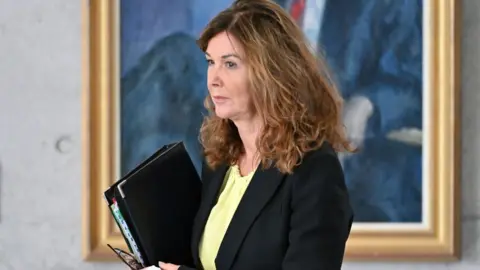
The notification from Lord Advocate Dorothy Bain to John Swinney on January 19 detailed that Peter Murrell had been indicted on charges of embezzlement. Bain, who holds the distinct and often scrutinised dual role as both Scotland’s most senior law officer and a minister within the Scottish government, communicated this sensitive information via email. This memo, initially brought to light by The Scottish Sun and subsequently verified by BBC Scotland News, explicitly reiterated a "longstanding tradition" within the Scottish legal system: the Lord Advocate would maintain a strict distance and not be directly involved in decisions concerning cases that involve politicians. The email’s content, therefore, aimed to inform the First Minister while simultaneously reaffirming the independence of the prosecution process from political influence. Following its receipt, the memo was reportedly disseminated to key personnel, including senior civil servants and special advisers, suggesting a controlled internal communication of the impending legal development.
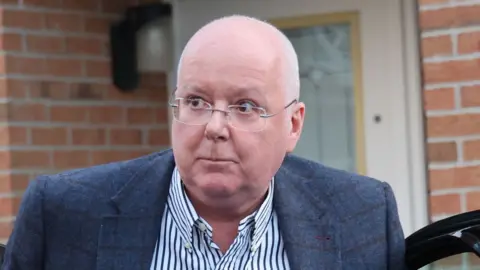
The Crown Office and Procurator Fiscal Service (COPFS), Scotland’s public prosecution body, later clarified its rationale behind Bain’s communication. A spokesperson for COPFS explained that the Lord Advocate had provided the First Minister with this update primarily "to ensure it was understood she was not involved in the case, that it was active for contempt of court, and therefore it should not be commented upon." The statement further elaborated that "This message was sent formally after the indictment had been served in order to form part of the record and ensure transparency in due course. Once an indictment has been served on an accused it stands to become public at any point." This explanation attempts to frame the advanced notification as a procedural formality designed to uphold judicial independence and ensure proper conduct rather than a political briefing. However, this distinction has failed to quell the burgeoning controversy.
Peter Murrell, 61, served as the SNP’s chief executive for over two decades, a period that largely coincided with his estranged wife, Nicola Sturgeon, holding various high-profile roles, culminating in her tenure as First Minister. He stepped down from his party position in March 2023 amid growing scrutiny over the SNP’s finances. His arrest came in April 2023 as part of Operation Branchform, an extensive police investigation initiated following complaints regarding the alleged misuse of party funds. The charges against him, which were formally laid in April 2024, accuse him of embezzling £459,000 from the SNP between August 2010 and January 2023. The indictment reportedly specifies a series of illicit purchases made using party funds, including luxury goods, two cars, and a motorhome, painting a picture of significant financial impropriety. Murrell has not yet entered a plea, and the legal process continues.
Adding another layer of complexity and contention to the ongoing saga is the timing of Murrell’s preliminary hearing. Originally scheduled to take place at the High Court in Glasgow on a recent Friday, the hearing has since been postponed to May 25, and will now be held in Edinburgh. Crucially, this new date falls after the Holyrood election scheduled for May 7. The Scottish government has vehemently denied any involvement in the decision to push back the hearing, insisting that such matters are solely within the purview of the independent Crown Office. However, the confluence of Swinney’s early knowledge of the charges and the strategic postponement of the court date until after a significant election has ignited widespread "public suspicion and concern," as articulated by opposition figures, fueling accusations of potential political manipulation and advantage.
The political backlash has been swift and severe. Russell Findlay, the Scottish Conservative leader, has called for the Lord Advocate to appear before parliament to provide a full explanation for sending the memo to the First Minister. Findlay sharply questioned the discrepancy in information dissemination, stating: "Why were the public kept in the dark while John Swinney was given a detailed private briefing which he then shared with civil servants and SNP spin doctors? An SNP minister has already denied any government meddling around delays to the case, but these new revelations will only fuel public suspicion and concern." His comments underscore the perception that a selective flow of information has created an unfair political playing field and eroded public trust in the impartiality of legal processes involving high-profile political figures.
Echoing these sentiments, Scottish Labour leader Anas Sarwar has also demanded that Dorothy Bain address MSPs directly. In a strongly worded letter to the Lord Advocate, Sarwar expressed profound concerns about the inherent vulnerabilities of her dual role, describing it as "structurally vulnerable in high-profile or politically sensitive cases." He went further, directly challenging the integrity of the action: "It appears to many that your act was designed to confer clear political advantage in the run up to an election. Scotland’s top prosecutor cannot be involved in conduct that allows any party to gauge political exposure from a live indictment, or appears to do so, and still expect public confidence to hold." Sarwar’s critique highlights a fundamental tension in the Scottish system, where the line between legal independence and political accountability can become blurred, especially when sensitive information is handled with discretion.
The unique constitutional position of the Lord Advocate in Scotland, serving as both the head of the prosecution service and a government minister, has long been a subject of debate. The COPFS had previously asserted that Bain and her deputy, Solicitor General Ruth Charteris, were deliberately not involved in the Murrell case precisely because of its political sensitivities. The current controversy, however, reignites questions about whether this structural arrangement can genuinely ensure absolute impartiality when politically charged events unfold. Critics argue that even the perception of political advantage, regardless of intent, can severely undermine public confidence in the administration of justice. The ongoing Operation Branchform investigation itself has already cast a long shadow over the SNP, contributing to a period of significant political turbulence for the party, particularly in the aftermath of Nicola Sturgeon’s unexpected resignation. This latest development only intensifies the scrutiny on the party’s governance and financial probity.
As the legal proceedings against Peter Murrell continue, with the preliminary hearing now slated for late May, the political fallout from these revelations is expected to persist. The demands for greater transparency and accountability from both the Scottish government and the Crown Office are unlikely to subside. The controversy surrounding Swinney’s early notification and the timing of the court hearing will undoubtedly remain a focal point of public and media attention, potentially influencing voter perceptions ahead of the upcoming Holyrood election. The intricate dance between legal process and political transparency in Scotland has once again been brought into sharp relief, challenging established norms and demanding a robust defense of the principles of justice and public trust.



 Roy Suryo
 atisusanti
 Nakalama John

 Nana Banana