George Anjay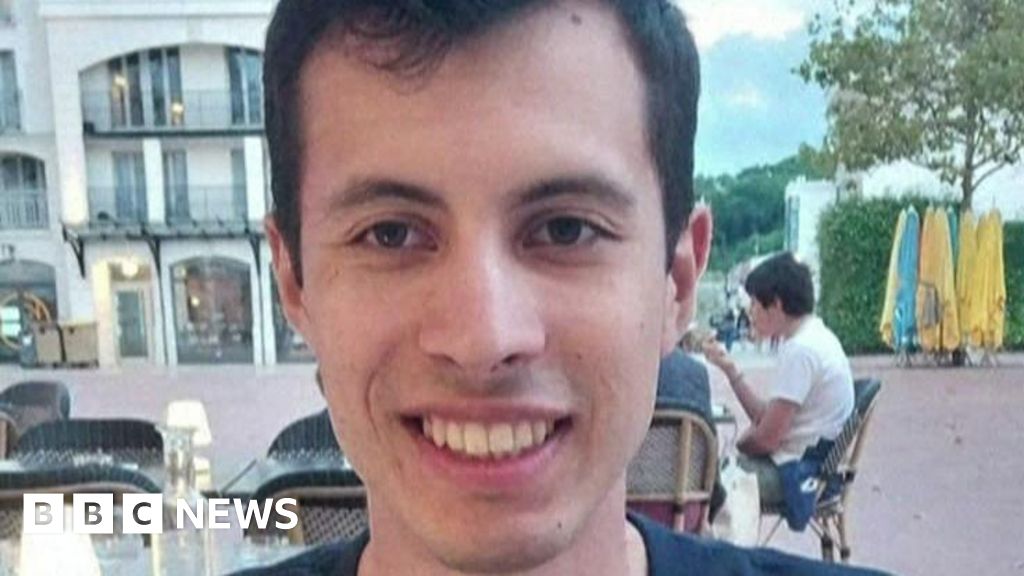
The political landscape of France is undergoing a seismic shift, potentially reversing decades of established political ostracism. The tragic killing of nationalist student Quentin Deranque in Lyon by suspected far-left militants has thrust the radical left, particularly Jean-Luc Mélenchon’s La France Insoumise (LFI), into a deeply precarious position as crucial local elections loom, with far-reaching implications for the nation’s political future.
The brutal attack, captured on mobile phone footage showing Deranque being mercilessly kicked and punched to death after a small university protest, has unleashed a torrent of condemnation directed at LFI and its veteran leader. Deranque, a student, was reportedly present to protect far-right feminists during the demonstration on February 12th. His death, attributed to head injuries, has galvanized an array of traditionalist, Catholic, nationalist, and neo-fascist groups, who held a memorial rally in Lyon, though significantly, the populist right National Rally (RN) conspicuously abstained from participating.
The gravity of the situation is amplified by the revelation that the seven suspects charged in connection with the killing are all either members of, or closely affiliated with, La Jeune Garde (The Young Guard). This organization, once responsible for providing security for LFI, was banned last year. Further deepening the scandal, one of the suspects, Jacques-Elie Favrot, served as the salaried parliamentary assistant to LFI deputy Raphaël Arnault, the very individual who founded The Young Guard in 2018. While Favrot faces charges of "complicity to murder by instigation," another suspect, Adrian Besseyre, who also reportedly worked in Arnault’s parliamentary team, is directly charged with murder. Although the suspects deny any intention to kill, acknowledging their presence at the scene and admitting to inflicting blows, the legal proceedings cast a long shadow over LFI.
For half a century, the French political establishment has largely agreed that the party to be marginalized for its links to extremism was the National Front, now the National Rally. However, the events of the past week threaten to upend this established order, potentially completing the "de-demonization" of the RN, a strategy long pursued by its leader Marine Le Pen, while simultaneously creating new "demons" out of the radical left. Both the RN and LFI, despite their diametrically opposed ideologies, fundamentally reject the post-war consensus that has shaped France. The RN champions nationalist interests and a tough stance on crime, often linking it to immigrant communities. Conversely, LFI, rooted in Marxist principles, advocates for the working class, which it now perceives as predominantly of immigrant origin.
While their economic platforms may not be entirely divergent, their stances on critical "identity" issues are marked by mutual animosity. The Gaza conflict serves as a stark example: LFI notably refused to condemn the deadly Hamas-led attacks on Israel on October 7, 2023, while the RN, despite its historical antisemitic leanings, has increasingly aligned itself with Israel.
The potential shift in the locus of political pariah status from the far-right to the far-left carries profound implications for France’s future. Historically, the RN has been contained by a cordon sanitaire, a pact among other parties to unite against its electoral prospects. Despite being the most popular party in the country, the RN has struggled to win outright elections due to this strategic opposition. A prime illustration was the 2024 legislative elections, following President Emmanuel Macron’s dissolution of the National Assembly. Despite the RN’s strong first-round performance, tactical withdrawals by Macronite and left-wing candidates in the decisive second round consolidated the anti-RN vote, resulting in a resurgence of the left and center and preventing any single party from securing a majority.
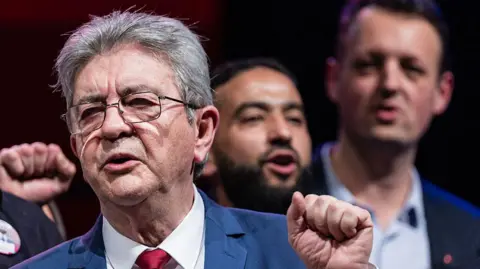
This strategic maneuvering was feasible precisely because other parties were willing to engage with Mélenchon’s LFI, which, unlike the RN, was considered part of the "Republican arc" and thus politically acceptable. The question now is whether the murder of Quentin Deranque and the implicated links to LFI will shatter this fragile alliance. If the Socialists and centrists, who collectively hold a significant number of parliamentary seats, refuse to engage with LFI, the blocking majority against the far-right could crumble.
Furthermore, if the stigma of extremism definitively transfers to the far-left, the far-right could emerge as comparatively rehabilitated. This scenario could embolden the conservative Republicans, with their substantial parliamentary presence, to openly align with the RN, effectively ushering the far-right into the mainstream political arena.

These developments are already casting a significant shadow over the municipal elections scheduled for next month, and their impact will undoubtedly be amplified in the 2027 presidential and parliamentary elections. As Guillaume Tabard, a commentator for the conservative Le Figaro, succinctly put it, "Since Quentin Deranque’s death, the political landscape has shifted. Mélenchon’s party has become the formation that is the most condemned in politics and the media. For [the RN] it is a godsend, after half a century in which the distinction belonged to it."
Circumstances have undeniably played into the hands of Marine Le Pen and RN President Jordan Bardella. Accustomed to facing accusations regarding the RN’s own associations with disreputable organizations or candidates with questionable pasts, they now find the rest of the political class effectively campaigning on their behalf. Centrists, conservatives, and moderate left-wingers are increasingly joining the anti-LFI chorus, making the process of ostracism seem inevitable.
This situation is further exacerbated by LFI’s apparent decision to eschew remorse. While condemning the killing, Mélenchon has refrained from condemning The Young Guard or suspending its founder, Raphaël Arnault, as an MP. For the mainstream French left, this presents a deeply disquieting dilemma, caught between the necessity of distancing themselves from LFI and the ingrained reluctance to empower the far-right. Their only recourse appears to be a persistent reminder to voters of the RN’s own historical ambivalence towards violent extremism.
Dominique de Villepin, a former prime minister and potential presidential candidate who has shifted towards the left, lamented, "By focusing all our attacks on the LFI, we are creating a corridor of respectability for the RN. We are offering the RN what it has always dreamed of: the appearance of normality." The tragic death of Quentin Deranque has inadvertently provided the far-right with a potent opportunity, fundamentally altering the dynamics of French politics on the cusp of crucial electoral contests.



 atisusanti
 Nakalama John
 Ramos Leo
 Roy Suryo