George Anjay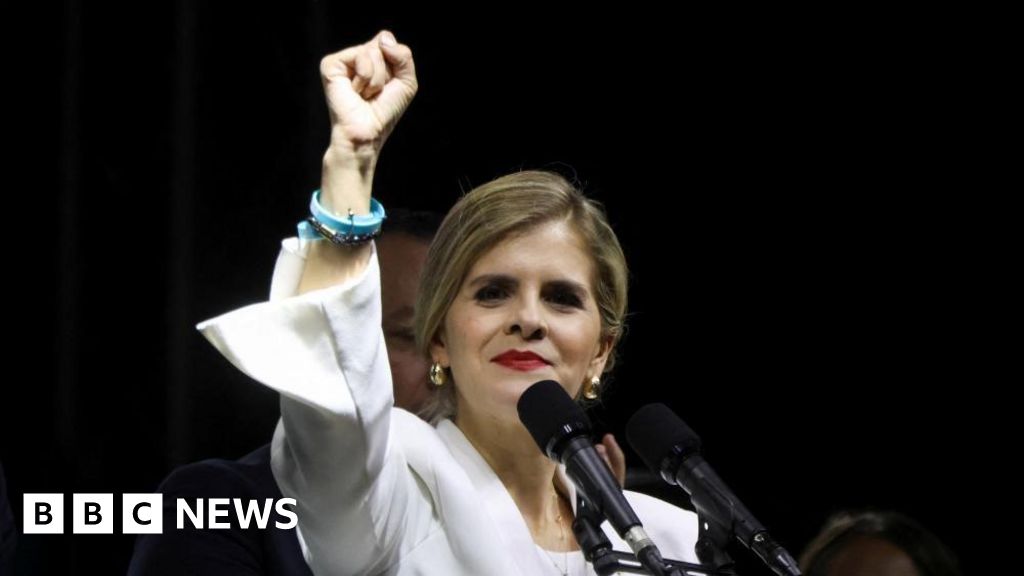
Costa Rica has elected Laura Fernández, the candidate for the governing conservative Sovereign People’s Party, as its next president. The victory, achieved in the first round of voting, signals a continuation of the tough-on-crime policies championed by the outgoing President Rodrigo Chaves, who handpicked Fernández as his successor. With over 88% of the ballots tallied, Fernández secured more than 48% of the vote, decisively outpacing her closest rival, centrist candidate Álvaro Ramos, who has conceded defeat. This outcome means there will be no need for a run-off election, as Fernández surpassed the 40% threshold required for an outright win.
Fernández, a 39-year-old politician who served as Chaves’ chief of staff, is set to be inaugurated on May 8th. Her platform was largely built on a promise to intensify the assertive stance against escalating crime rates, a concern frequently voiced by voters grappling with a surge in drug-related violence across the Central American nation. This trend has seen organized criminal gangs expand their influence in the region, impacting Costa Rica, historically one of its safer havens and a bastion of democratic stability.
In her victory speech, delivered to a jubilant crowd, Fernández affirmed her commitment to continuing the policies enacted under President Chaves. Costa Rican law prohibits presidents from serving consecutive terms, making Chaves ineligible for re-election. Fernández has publicly indicated that she might offer Chaves a position within her cabinet, underscoring the close working relationship and shared political vision between the two.
The rise in crime has been a significant issue for Costa Ricans. Transnational criminal organizations have intensified their operations, leading to an increase in violence, particularly that associated with drug trafficking. Fernández has explicitly stated her intention to emulate some of the strategies employed by El Salvador’s President Nayib Bukele, whose firm approach to crime has garnered high approval ratings and is credited with a dramatic reduction in the murder rate in his country.
Specifically, Fernández has pledged to declare states of emergency in areas heavily influenced by gangs and to expedite the construction of a high-security detention facility, modeled after El Salvador’s CECOT prison. This proposed security framework, while appealing to many voters concerned about public safety, has also raised concerns among critics about potential infringements on civil liberties. In her address, Fernández sought to assuage these fears, stating that her administration would be characterized by "dialogue and national harmony, respectful and firmly based in the rule of law."
However, Fernández also adopted a combative tone, criticizing the opposition for what she termed "obstruction and sabotage." This sentiment likely reflects the challenges President Chaves faced in navigating a parliament often dominated by opposition lawmakers, hindering the passage of his legislative agenda. With her party securing a strong majority of 30 out of 57 seats in parliament, Fernández is anticipated to wield more legislative power than her predecessor, potentially facilitating the implementation of her policy initiatives.
Prior to her presidential bid, Fernández accumulated significant experience in public service, holding positions such as planning minister and other key roles. Her political trajectory has positioned her as the clear heir to President Chaves, sharing his direct communication style and his willingness to engage in confrontational politics when necessary.
Furthermore, Fernández is expected to maintain and potentially strengthen the close ties Costa Rica has cultivated with the United States under the Chaves administration. A notable aspect of this relationship is the "safe third-country migrant agreement" signed with the Trump administration. This accord allows the U.S. to deport migrants from countries deemed unsafe to Costa Rica, which is then considered a safe third country. The U.S. has identified Costa Rica as a crucial transit point for cocaine destined for the American market and a significant waypoint for criminal organizations involved in drug trafficking.
Fernández’s willingness to consider declaring states of emergency, even at the cost of temporarily suspending certain citizen rights, underscores the gravity with which her government views the threat of organized crime. This approach aligns with a broader trend in the region where security concerns often lead to assertive governmental measures.
Upon taking office, Laura Fernández will become the second woman to lead Costa Rica, following in the footsteps of Laura Chinchilla, who was elected president in 2010. Her presidency is expected to be defined by a strong emphasis on security, a continuation of Chaves’ economic policies, and a commitment to maintaining strong international alliances, particularly with the United States. The election results suggest a public mandate for decisive action on crime and a desire for political continuity, even as debates about the balance between security and civil liberties are likely to persist throughout her term. The success of her ambitious security agenda will be closely watched, both within Costa Rica and across the wider Latin American region.



 Ramos Leo
 Roy Suryo
 atisusanti
 Nakalama John