Nana Banana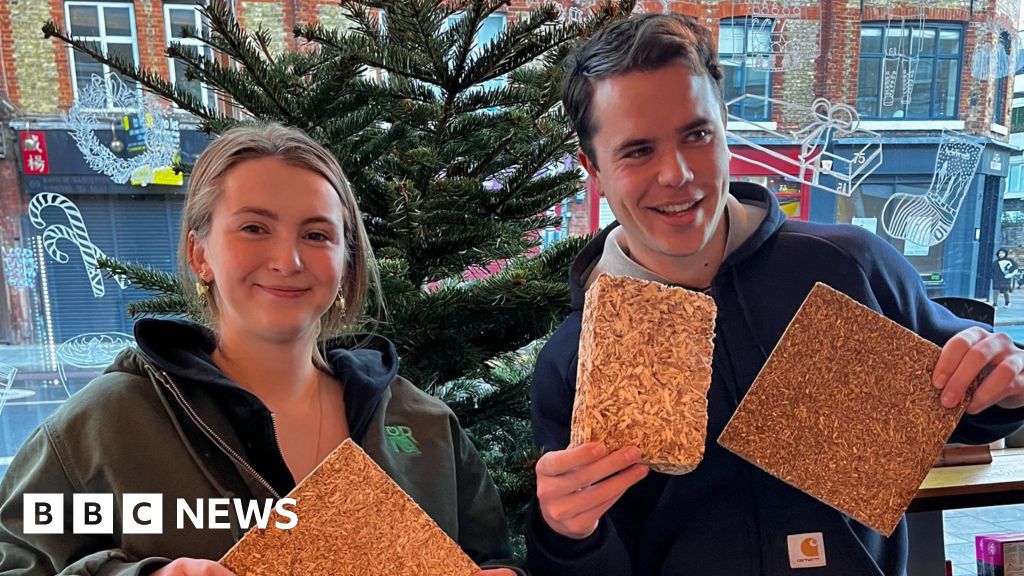
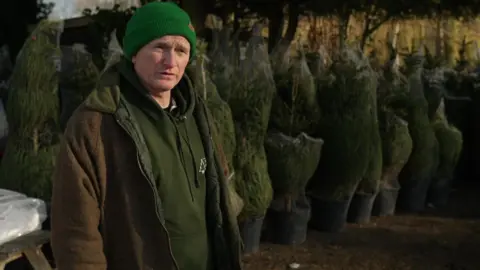
One pioneering option transforming the traditional Christmas tree cycle is the concept of renting a living Christmas tree instead of purchasing a cut one. At London Christmas Tree Rental, the ethos is beautifully simple and profoundly impactful. All of their trees are carefully nurtured in pots, delivered to homes and businesses for the festive season, and then returned after the holidays to be grown on for reuse the following year. "Just simply, rent, water, return," explains Jonathan Mearns, the visionary founder of the company, encapsulating the straightforward process that has captivated eco-conscious Londoners.
Mearns elaborated on the seamless customer journey: "You can rent via our website, pick your preferred dates for delivery and collection, then come along to one of our hubs to choose your tree. You take it home, water it diligently through Christmas, bring it back, and then it continues to grow on our farm." This model not only eliminates the waste associated with cut trees but also fosters a deeper connection between the customer and their festive centrepiece. The trees are made available from four convenient hubs strategically located across London, including a popular spot in Dulwich, south-east London. Once Christmas is over, these potted trees are carefully transported back to a dedicated farm, where they are tended to and allowed to flourish until their next festive outing.
A unique and cherished aspect of this rental service is the possibility for customers to be reunited with the very same tree year after year. "Sometimes people come back and say, ‘is that really my tree?’" Mearns recounted with a smile. "We get pictures and we’ll compare, and they’ll say, ‘actually it is, it’s just grown a little bit!’ So people absolutely love that personal connection." This continuity not only enhances the environmental credentials of the scheme but also imbues the Christmas tradition with a new layer of sentimentality and sustainability. One satisfied customer, speaking to BBC London, echoed this sentiment: "We’ve been doing it about four years now. I just like the idea, it’s more environmentally friendly, and it feels good to know our tree is still growing." This direct feedback underscores the dual appeal of convenience and conscience that drives the rental model.
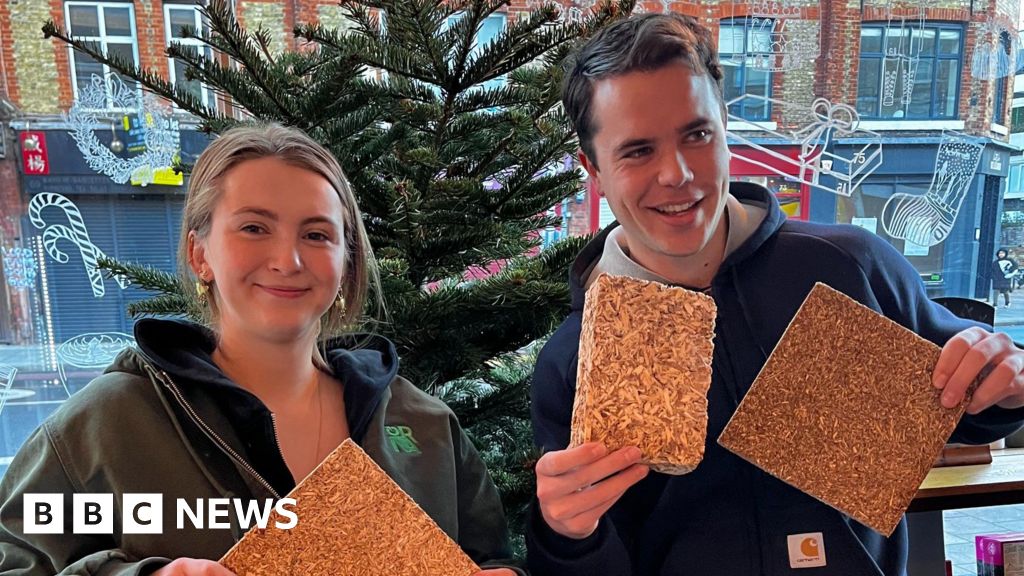
While the rental model offers a proactive approach to preventing waste, a separate and equally ingenious scheme operating out of Peckham, south-east London, focuses on repurposing trees once they have served their festive purpose. The ORNA Group is at the forefront of a groundbreaking initiative, working to transform discarded Christmas trees into valuable construction materials, breathing new life into what would otherwise be considered waste.
Hugo Knox, one of ORNA Group’s co-founders, shared the genesis of this innovative venture, which sprang from his direct experience with the seasonal tree trade. "Back in November 2019, I left my first job coming out of university. I rang up one of my close friends, Max. I said, look, ‘it’s Christmas, Christmas trees, shall we give it a go?’" He recounted how the pair initially went door-to-door in Camberwell, offering trees and installation services, which quickly blossomed into a successful seasonal business. "But from that, I learned a lot about Christmas tree waste and saw all of the waste first-hand in the streets of London, and that’s what led to ORNA Group," Knox explained, highlighting the ‘aha!’ moment that pivoted their focus from selling trees to solving the problem of their disposal.
The environmental impact of discarded trees, particularly those sent to landfill, is indeed significant, a point emphatically underscored by the Carbon Trust. Their research indicates that, on average, a real Christmas tree produces about 3.5kg of carbon dioxide emissions during its growth and lifecycle. However, a two-metre tree that is sent to landfill without its roots can have a significantly larger carbon footprint, soaring to approximately 16kg of CO2 equivalent. This dramatic increase is largely due to the anaerobic decomposition of organic matter in landfill, which produces methane, a potent greenhouse gas. In contrast, the trust notes that an artificial tree, though requiring substantial energy to produce, creates lower emission levels overall if used consistently over several years. This stark comparison highlights the critical importance of diverting real trees from landfill through recycling or repurposing.
Recognising this imperative, most London boroughs have established robust schemes where residents can have their real trees collected and recycled, thereby reducing the number destined for landfill. These council-led initiatives typically involve chipping the trees for use as mulch in local parks and green spaces, or composting them to enrich soil. Comprehensive information on specific council schemes can be readily found at London Recycles, a valuable resource for residents seeking sustainable disposal options.
At the ORNA workshop in Peckham, the transformation process is a testament to circular economy principles. Real trees, collected from homes and businesses, arrive mostly unprocessed, ready for their journey into new materials. "The trees have come straight out of houses or businesses in different forms, but it comes here chipped up into the right consistency," explained material scientist Caelo Dineen Vanstone, another of ORNA Group’s co-founders, detailing the initial stage of their innovative process.
Dineen Vanstone elaborated on the sophisticated yet natural method employed: "The process involves cooking and modifying natural ingredients before combining them with the tree waste to create a homogenous wet material." This carefully formulated mixture, rich in the organic fibres of the Christmas trees, is then pressed, dried, and cured to form durable and versatile construction materials. These innovative boards, panels, and potentially even insulation materials offer a sustainable alternative to traditional building products, reducing demand for virgin resources and sequestering carbon that would otherwise be released into the atmosphere. The applications are diverse, ranging from decorative interior panels and furniture components to soundproofing and thermal insulation, demonstrating the remarkable potential of these humble trees.
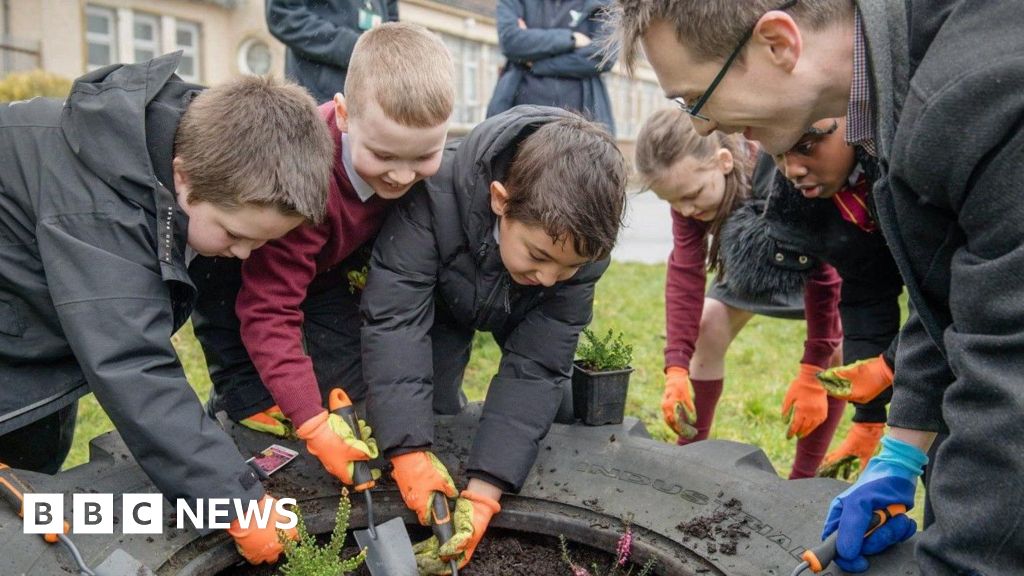
Beyond the tangible products, the ORNA Group is deeply committed to inspiring the next generation. The project actively engages with young people, demonstrating how seemingly small actions can collectively make a significant difference in environmental sustainability. Through workshops and educational initiatives, they aim to foster an understanding of material science, waste reduction, and the circular economy. "We’re not trying to change the world quite yet," Dineen Vanstone modestly stated, reflecting on their grassroots approach. "But it’s just about trying to make our street corner a little bit nicer and trying to do something positive rather than doing something that’s going to impact our future generations in a negative way." This philosophy underscores a broader movement in London – one that sees innovation, community engagement, and a profound respect for resources as key to building a more sustainable future, one Christmas tree at a time. The capital’s efforts in transforming post-holiday waste into valuable resources or replanted joy serve as a beacon, illustrating how collective action and inventive thinking can indeed give London’s Christmas trees a truly meaningful new lease of life.


 George Anjay
 Ramos Leo
 Nakalama John

 atisusanti