atisusanti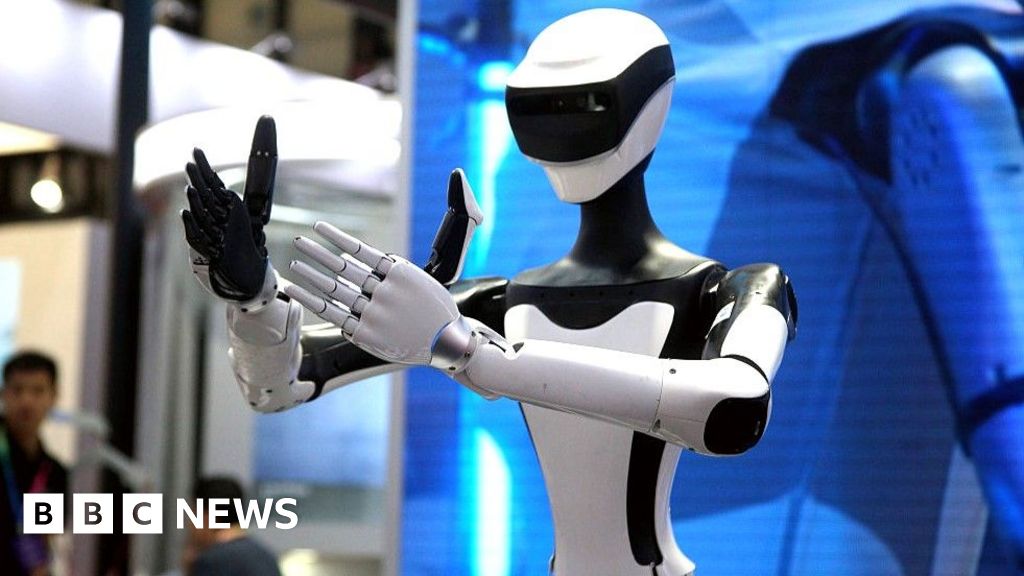
Actuators, the motion-activating components that enable robots to move, are the unsung heroes of the robotics world. These can range from linear (in-and-out) to rotary (spinning) mechanisms, forming the backbone of everything from robotic arms and animal-like machines to sophisticated humanoid robots. For robots to truly evolve beyond their current capabilities, a leap forward in actuator efficiency, precision, and intelligence is paramount. While a few companies can currently produce actuators with high precision at scale, these are still a far cry from the finely tuned, energy-efficient biological muscles that grant animals their remarkable grace and agility. The development of a new generation of actuators holds the promise of transforming robots from clumsy, stumbling machines into more fluid and balletic creations.
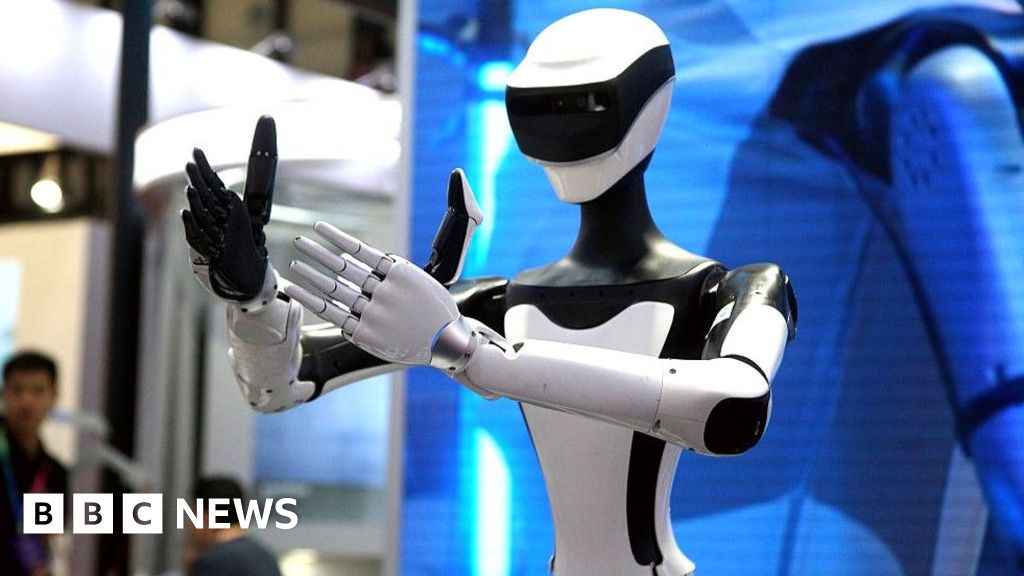
For decades, the robotic industry has relied on Direct Current (DC) motors for locomotion. As Mike Tolley of the University of California San Diego explains, these motors are excellent for applications like spinning fans, operating efficiently at high speeds with low torque. Torque, the rotational force that drives movement, is crucial for tasks such as turning wheels. However, Tolley points out that human movement is vastly different from a spinning fan. "We want to be able to lift things, and push things, and do things that require a lot of force and torque." Moreover, safety dictates that a robot’s arm, if swung towards a person, should be instantly stoppable and reversible without causing harm. This requires "back-driveable" actuators, a feature absent in simpler designs, akin to manual transmission cars that necessitate shifting into reverse.
Beyond control and force, energy efficiency remains a significant hurdle. Jenny Read, programme director in robot dexterity at Aria, a technology funding agency, notes that "Electric motors are terrible at that," referring to their rapid battery depletion. Furthermore, miniaturizing traditional electric motors often leads to overheating issues, posing another considerable challenge for developing smaller, more intricate robots.
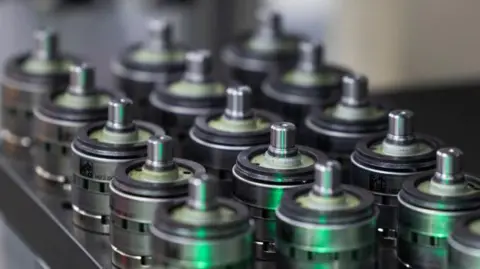
Addressing these limitations, companies like Germany-headquartered Schaeffler are actively developing advanced actuators for British robotics firm Humanoid. Their objective is to create components that enable highly energy-efficient and precisely controlled movement, a critical requirement for bipedal robots designed to coexist and collaborate safely with humans. This involves not only hardware advancements but also the development of actuators that provide extensive real-time data on their position and function, allowing for sophisticated computer control. David Kehr, president of humanoid robotics, describes the intricate process of optimizing friction and back-driveability as a "big puzzle." Schaeffler envisions deploying these robots within their own factories, for tasks like handling newly manufactured parts, to combat existing labor shortages, with a commitment to retraining affected human workers for other roles.
In the United States, leading robotics company Boston Dynamics is collaborating with South Korean automotive parts manufacturer Hyundai Mobis on a new generation of actuators. Se Uk Oh, vice president leading the robotics business division at Hyundai Mobis, likens these actuators to electric power steering systems, comprising a motor controller and reduction gears. This partnership marks Hyundai Mobis’s first foray into supplying actuators for humanoid robots, leveraging their extensive experience and commitment to quality and reliability for human safety.
While current state-of-the-art actuators are predominantly constructed from metals, hard plastics, and electronics, alternative approaches are emerging. Tolley and his colleagues at UC San Diego are exploring "soft robots powered by air," capable of navigating both land and water without concerns about water damage. Their research involves robots that use pneumatics for leg movement, demonstrating remarkable resilience. One notable experiment involved driving a car over one of their robots to showcase its "soft and squishy" nature, capable of enduring significant stress.
Aria is also funding pioneering robotics research that utilizes actuators made from elastomers, a rubbery plastic material. These materials can contract or expand when voltage is applied or removed, mimicking the behavior of biological muscles. While this concept has been explored for years, elastomers have yet to revolutionize actuator technology, emphasizing the need for continued innovation. The ultimate aspiration, according to Read, is to create robots that exhibit far greater "gracefulness" than current models, moving beyond their inherent "clunkiness and heaviness" to achieve the fluid motion characteristic of human movement.




 Ramos Leo
 Nakalama John
 George Anjay