Nana Banana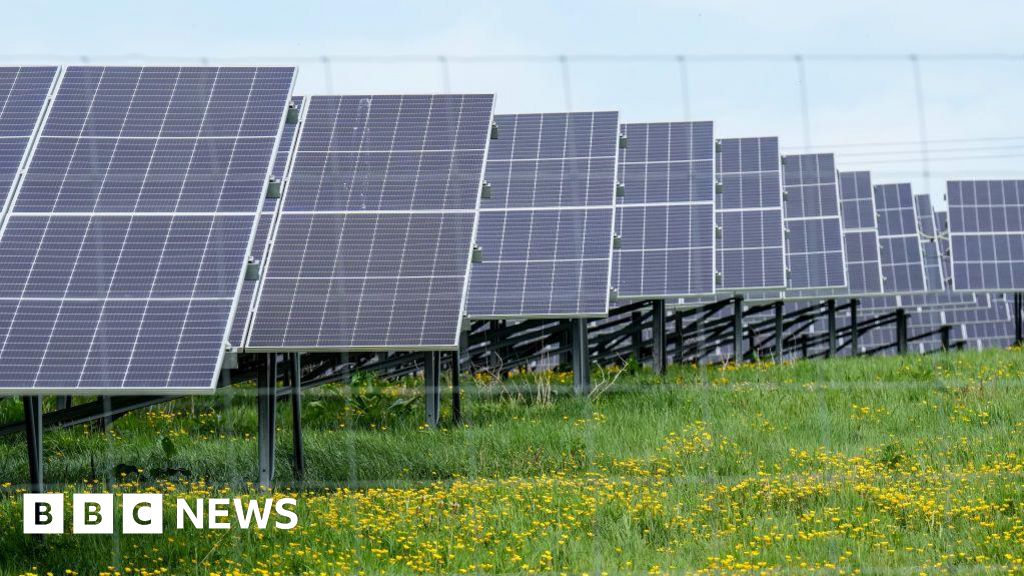
The latest allocation round, known as Contracts for Difference (CfD) Auction Round 6, has proven to be the most successful to date for onshore renewables. The government awarded contracts to an unprecedented supply of 157 solar developments spread across England, Scotland, and Wales, securing an additional 4.9 gigawatts (GW) of capacity. This figure significantly surpasses the 3.3 GW across 93 projects secured in the previous auction in 2024, demonstrating a clear acceleration in solar deployment. Beyond solar, the auction also saw 1.3 GW of onshore wind projects, predominantly located in Scotland, and a small number of innovative tidal power developments receive contracts. These results underscore the government’s commitment to diversifying the energy mix and reducing the UK’s historical reliance on volatile fossil fuel markets.
Solar power is increasingly recognised as one of the most cost-effective and readily deployable clean energy technologies available. Its rapid expansion is crucial for the UK’s energy transition, particularly during the summer months when daylight hours are long and solar generation peaks. This complementarity with wind power, which tends to be stronger during winter, helps to create a more balanced and resilient national grid. By harnessing solar energy, the UK can significantly reduce its dependence on imported fossil fuels, particularly natural gas, which has been a major driver of energy price volatility. The government has set an ambitious target of achieving 45-47 GW of solar power capacity by 2030, with a potential to reach 54-57 GW if rooftop solar installations are maximised. This is a substantial leap from the current capacity, which government figures place at 21 GW as of autumn 2025, while the solar industry estimates it closer to 24 GW. Achieving these targets will require sustained investment not only in solar farms but also in associated infrastructure like battery storage systems, which are essential for capturing and utilising solar energy during non-daylight hours or periods of lower generation.
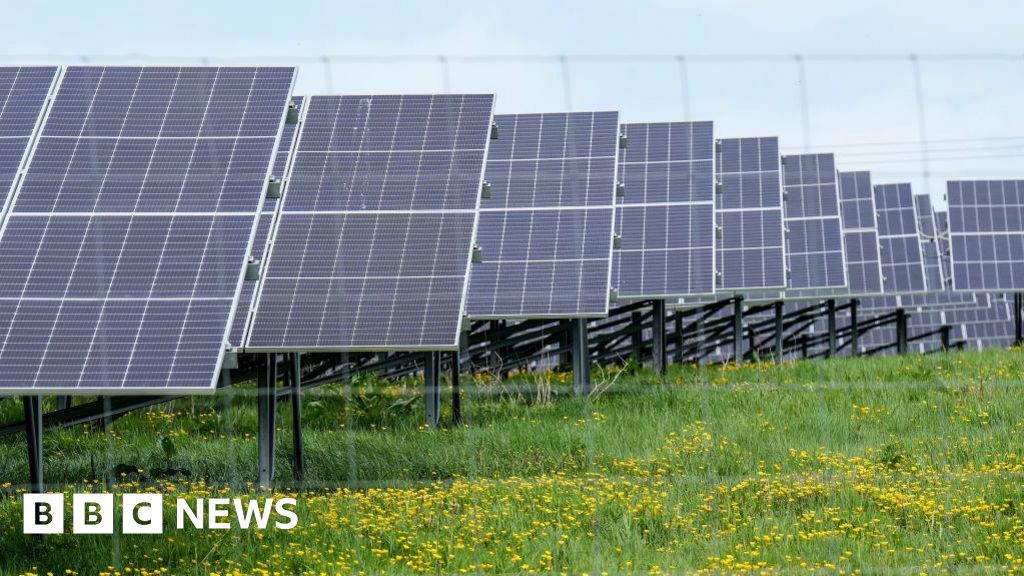
However, the rapid proliferation of large solar developments is not without its critics. While the environmental benefits are clear, local communities often voice strong objections to the "mass industrialisation" of their rural landscapes. Concerns typically revolve around the visual impact of vast arrays of panels, the loss of agricultural land, potential impacts on local ecosystems and biodiversity, and increased traffic during construction. A prominent example is the West Burton solar farm, planned for the Lincolnshire and Nottinghamshire border, which emerged from this auction as the largest ever to win a government contract. Local residents have expressed profound fears that the project will fundamentally alter the character of their countryside. It’s important to note that all solar projects awarded contracts in this round had already navigated the planning permission process, meaning their construction is now imminent over the next few years. Addressing these local concerns and ensuring community engagement, along with appropriate mitigation strategies, remains a critical challenge for the government and developers alike.
The CfD mechanism is central to the government’s strategy for de-risking renewable energy investments. Under this scheme, developers are awarded a guaranteed "strike price" for the electricity generated, fixed for a period (20 years for solar and wind in this auction) and linked to inflation. This certainty provides developers with the financial confidence needed to undertake large upfront capital investments. For this auction, solar projects secured a fixed price of £65 per megawatt-hour (MWh) in 2024 prices, a decrease from the £70/MWh awarded in the 2024 auction. Conversely, onshore wind projects saw a slight increase, from £71/MWh to £72/MWh. These prices are significantly lower than the cost of building and operating new fossil fuel power plants, particularly gas, which typically drives wholesale electricity prices. The ultimate impact on household bills is complex to calculate, as it depends on future gas prices, the pace of grid upgrades, and evolving electricity demand. However, the government argues that by locking in these lower, predictable prices, renewables help to stabilise and ultimately reduce long-term energy costs, insulating consumers from the volatility of international fossil fuel markets.
The political landscape surrounding renewable energy in the UK is dynamic and often contentious. Claire Coutinho, the Secretary of State for Energy Security and Net Zero, lauded the auction results, stating, "This record-breaking auction shows our unwavering commitment to clean energy, driving down bills for good and protecting families and businesses from the fossil fuel rollercoaster. By backing solar and onshore wind at scale, we are strengthening our energy security and creating green jobs across the country." However, the Shadow Secretary of State for Energy Security and Net Zero, Ed Miliband, raised concerns about the wider implications: "While we welcome more clean energy, the government is loading more and more wind and solar on to a grid that isn’t ready. The true cost of this power, once you factor in network charges and the need for backup generation when the sun isn’t shining or the wind isn’t blowing, is far higher. This approach risks making our electricity even more expensive without adequate grid investment."
Other political parties also hold varied stances. Reform UK has consistently questioned the cost and necessity of net zero policies. The Liberal Democrats and the Green Party advocate for an even more aggressive expansion of renewables nationwide, seeing it as essential for tackling climate change and fostering green jobs, though some of their local councillors have voiced objections to specific large-scale developments. The Scottish National Party (SNP) strongly supports renewables and has long championed Scotland having greater control over its abundant energy resources. Plaid Cymru in Wales acknowledges the imperative for diverse renewable technologies but has expressed reservations about large solar farms encroaching on prime agricultural land.
Beyond large-scale projects, the government also announced the launch of its "Local Power Plan," which aims to empower communities across the UK to "own and control their own energy." This initiative is backed by up to £1 billion of funding, drawn from the budget already committed to the state-owned Great British Energy company. The plan seeks to support local energy projects, such as installing solar panels on community buildings like schools and leisure centres, fostering a sense of local ownership and directly benefiting communities from the energy transition.
In conclusion, the record renewables auction marks a pivotal moment for the UK’s clean energy transition, significantly boosting its solar power capacity and reinforcing its commitment to a decarbonised electricity system. While the move is a clear victory for climate goals and energy independence, it simultaneously highlights the ongoing tension between national imperatives and local concerns. The successful integration of these new projects will depend not only on efficient construction but also on effective community engagement, robust grid upgrades, and the strategic deployment of energy storage solutions, ensuring a future where clean, affordable energy benefits all.




 George Anjay
 Ramos Leo
 Roy Suryo
 atisusanti
 Nakalama John