Nana Banana
Perkins’ letter to Miliband highlighted data centres as a "key area of concern" that appeared conspicuously absent from the Seventh Carbon Budget (CB7), the blueprint for the UK’s emissions reductions for the period 2038-2042. This omission, Perkins argued, raises serious doubts about the robustness and credibility of the government’s overall strategy to meet its legally binding commitment to achieve net-zero emissions by 2050. The EAC, currently scrutinising the recommendations for CB7 from the Climate Change Committee (CCC), is particularly worried that a significant blind spot exists in the nation’s climate planning.
Data centres are sprawling, high-tech facilities packed with thousands of powerful computers and servers. They form the backbone of the digital economy, powering everything from everyday streaming services and social media to complex artificial intelligence (AI) computations and cloud storage. Their operation demands colossal amounts of electricity, not only for the computational tasks themselves but also for the extensive cooling systems required to prevent overheating. Furthermore, many data centres rely on gas-powered generators as crucial backup systems, contributing directly to fossil fuel consumption and carbon emissions.
The government, under Prime Minister Keir Starmer, has actively championed the UK’s ambition to become an "AI superpower," a vision that inherently necessitates a dramatic expansion of data centre infrastructure. This strategic push, however, appears to be in direct tension with the imperative to decarbonise the economy. Perkins articulated this dilemma clearly in his correspondence, stating, "We would like to know whether this has been accounted for and how, including projections of emissions and possible mitigations." The lack of explicit detail in CB7 regarding these energy behemoths has led to fears that the UK could inadvertently undermine its own climate commitments while pursuing technological leadership.
The Seventh Carbon Budget is a critical component of the UK’s legislative framework for tackling climate change. It sets a legally binding limit on the total amount of greenhouse gases the UK can emit over a five-year period. While the government is statutorily required to set this budget by June 2024, the Department for Energy Security and Net Zero (DESNZ) has indicated it will be set by June 2026. This timeline discrepancy, coupled with the EAC’s concerns, adds another layer of uncertainty. DESNZ, responding to media inquiries, stated that emissions from data centres "are factored into our modelling" and that CB7 would reflect forecasts of electricity demand that account for broader economic trends. However, critics argue this broad statement lacks the specific assurances and detailed projections required to alleviate profound environmental concerns.
Environmental advocacy groups have been quick to challenge the government’s assurances. Mary Stevens, innovation lead and AI campaigner at Friends of the Earth, voiced strong reservations. "The government says that some data centre growth has been factored into their new climate plan," Stevens acknowledged, "But there are numerous proposals across the UK and if they all get the go-ahead it is difficult to see how they have properly balanced the carbon books." This sentiment underscores a critical lack of transparency and detailed accounting that could render climate targets unattainable.
Indeed, the scale of the impending data centre boom is considerable. Last year, reports indicated that close to 100 new data centres were in various stages of planning or construction across the UK. Many of these projects are being financed by major US tech giants, including Google, and are predominantly clustered around the London area, leveraging existing infrastructure and connectivity. A significant policy decision further exacerbates environmental concerns: the UK government has designated data centres as "critical national infrastructure." This classification grants them special status, often allowing them to bypass local planning objections that might otherwise scrutinise their environmental footprint or energy demands.
Adding to the complexity, the Climate Change Committee (CCC), the independent body that advises the UK government on net-zero targets, confirmed that it had not been specifically asked to provide advice on data centres. While the CCC’s broader advice for CB7 does anticipate a substantial increase in national electricity consumption, it does not disaggregate the specific impact of data centres. This omission by the government in its request to the CCC suggests a potential oversight at the highest levels of climate policy formulation, leaving a significant gap in the expert assessment of future emissions.
The starkest warning comes from a coalition of environmental charities – Opportunity Green, Foxglove, and Global Action Plan. In compelling written evidence submitted to the Environmental Audit Committee’s inquiry, they argued that not explicitly including data centres in carbon budgets "can only be considered a serious oversight of a major, challenging new source" of emissions. Their analysis presented alarming figures: "developers’ own figures indicate that just ten of the larger data centres in planning or construction will cause the UK’s annual emissions to rise by equivalent to 2.75m tonnes of CO2." To put this into perspective, the charities noted, "This partial, conservative figure would all but wipe out the carbon savings expected in 2025 from the switch to electric cars (2.9m tonnes CO2)." Such a substantial increase from a relatively small number of facilities highlights the profound and disproportionate impact these centres could have on the UK’s decarbonisation efforts.
The National Energy System Operator (NESO) further underscores the looming challenge. NESO estimated that electricity demand from data centres in Great Britain was approximately 7.6 terawatt-hours (TWh) in 2025, accounting for roughly 2% of the total national electricity demand, which Carbon Brief analysis put at 322 TWh. Looking ahead, NESO forecasts a dramatic increase, predicting data centre electricity demand could range anywhere between 30 TWh and 71 TWh by 2050. This wide forecast range illustrates the "high uncertainty" surrounding future growth, particularly with the escalating demand for AI. The reliance of many new data centres on on-site gas-powered generation for backup further complicates the energy mix and emissions profile.

Despite these mounting concerns, sources familiar with the government’s internal discussions on carbon budgets suggest DESNZ is "not panicked" by the growth in data centres. However, the same source conceded that the department "recognises the need to balance the carbon budget if growth is faster than they have accounted for." This indicates an evolving awareness within government, but perhaps not yet a comprehensive, proactive strategy to address the issue head-on.
The political impetus behind the data centre boom is undeniable. Prime Minister Starmer has made it a priority for the UK to become a global leader in artificial intelligence, actively promoting "AI Growth Zones" designed to streamline planning proposals for these facilities. This policy directly encourages rapid development, potentially at odds with environmental safeguards. Beyond carbon emissions, data centres raise other environmental red flags, including their significant water consumption for cooling and the potential upward pressure on household energy bills due to increased grid demand.
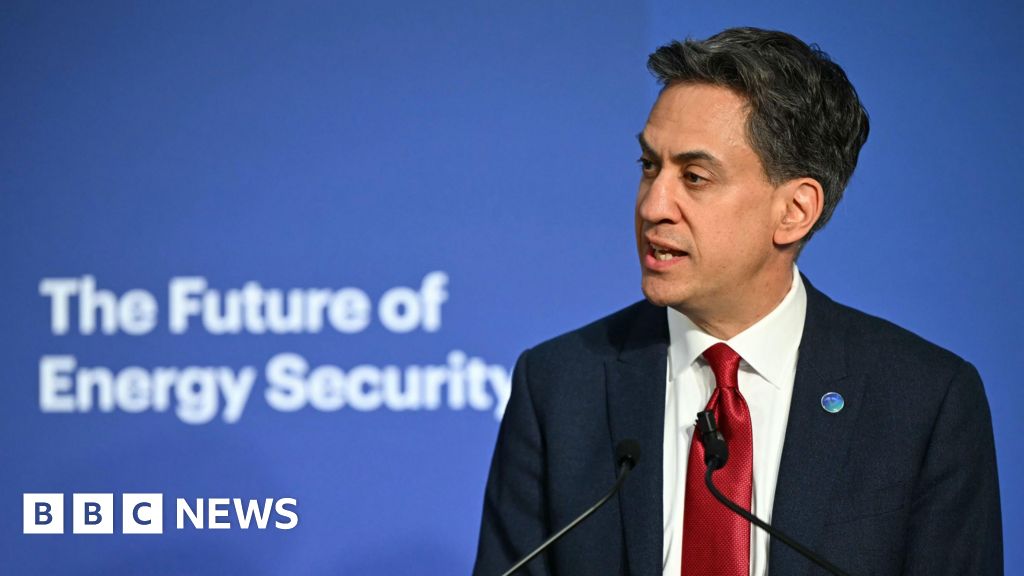
The issue came to a head during Ed Miliband’s recent appearance before the Energy Security and Net Zero Committee. When pressed on the matter, Miliband acknowledged that it was "obviously important to take into account the impact of data centres." However, his subsequent admission that he did not know whether the Climate Change Committee had accounted for data centres in its latest carbon budget proposals – stating, "I don’t know the answer but I’m happy to find out" – underscored the apparent disconnect between high-level policy ambition and the detailed environmental accounting required.
The Conservative shadow energy security and net zero secretary, Claire Coutinho, articulated a clear counter-argument, prioritising economic growth and technological leadership. She stated, "We cannot fall behind in one of the most transformative technologies which can bring growth to Britain because we are worried about domestic emissions targets." Coutinho’s argument hinges on the idea that "those data centres will be built somewhere, just not here in Britain," implying that stopping their construction domestically would not reduce global emissions but merely displace economic opportunity. "Stopping them being built here won’t make a dent on climate change – we will just miss out on the growth and jobs that they could bring us," she added. This perspective highlights the fundamental tension between immediate economic aspirations and the long-term, legally binding commitment to net zero, suggesting a potential willingness to accept increased domestic emissions in pursuit of AI dominance.
As the UK navigates the twin imperatives of technological advancement and climate action, the unaddressed energy demands of a burgeoning data centre industry pose a formidable challenge to Ed Miliband’s net-zero agenda. Without clear, robust, and transparent accounting for these facilities within the nation’s carbon budgets, the risk of derailing the UK’s climate commitments remains a very real and growing fear among MPs and environmental campaigners alike.




 George Anjay
 Ramos Leo
 Nakalama John