Nana Banana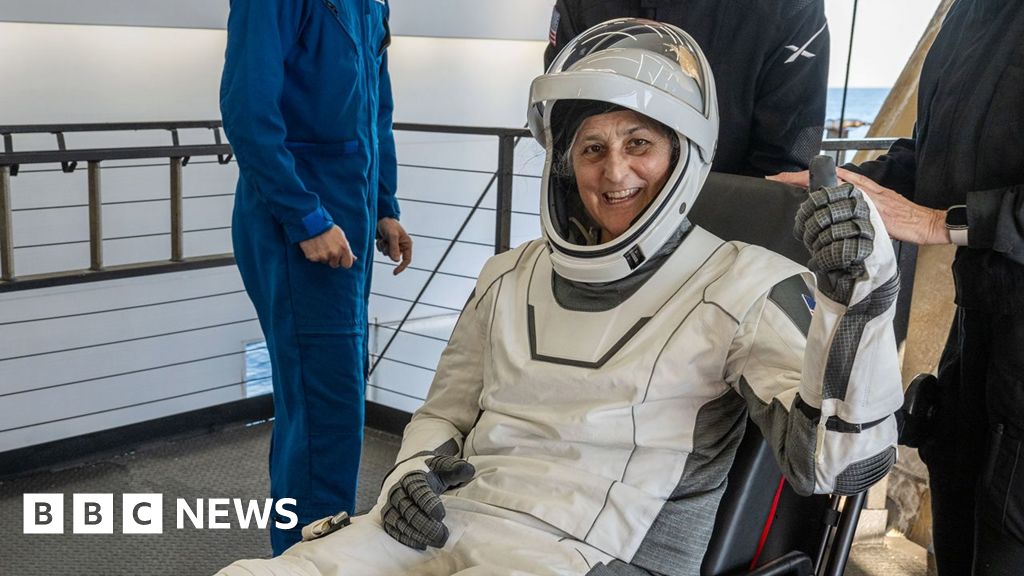
After an unanticipated nine-month odyssey in orbit, NASA astronauts Butch Wilmore and Sunita "Suni" Williams have finally made their triumphant return to Earth, marking the conclusion of a mission that was dramatically extended far beyond its initial eight-day plan. Their journey home culminated in a precise and fiery re-entry through Earth’s atmosphere aboard a SpaceX capsule, followed by a gentle splashdown off the coast of Florida, bringing an end to their remarkable saga.
The spectacle of their return was a testament to both human ingenuity and the unforgiving physics of space travel. The SpaceX capsule, a marvel of modern engineering, streaked across the sky, enveloped in a plasma sheath generated by the immense friction of plunging through the atmosphere at thousands of miles per hour. Inside, Wilmore and Williams, along with fellow returning crew members astronaut Nick Hague and cosmonaut Aleksandr Gorbunov, endured significant G-forces as the craft decelerated. This intense phase, where temperatures outside soared, was meticulously managed by the capsule’s heat shield, protecting the precious cargo within.
As the capsule descended, four massive parachutes deployed in sequence, blooming against the azure sky to progressively slow its descent. What followed was a remarkably gentle splashdown into the calm waters of the Gulf of Mexico, precisely as planned. In a poignant moment, a pod of dolphins was observed circling the bobbing spacecraft, perhaps offering an aquatic welcome home.
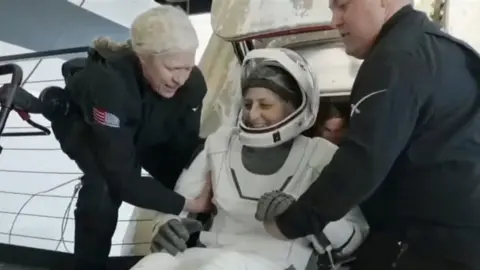
A dedicated recovery ship swiftly moved into position, hoisting the capsule out of the water. Moments later, the hatch opened, revealing the beaming faces of the astronauts. Wilmore and Williams, visibly relieved and ecstatic, waved to the recovery teams, their smiles a clear indication of their successful return despite the prolonged mission. They were carefully assisted out of the capsule, a standard procedure after extended periods in microgravity, which can profoundly affect the human body’s ability to cope with Earth’s gravitational pull.
"The crew’s doing great," affirmed Steve Stich, manager of NASA’s Commercial Crew Program, at a subsequent news conference, radiating satisfaction. Joel Montalbano, deputy associate administrator for NASA’s Space Operations Mission Directorate, echoed the sentiment, stating, "It is awesome to have crew 9 home, just a beautiful landing," while extending gratitude to the astronauts for their "resilience and flexibility" and praising SpaceX as a "great partner" in navigating the unexpected challenges. The entire journey home from the International Space Station (ISS) had taken approximately 17 hours, a significant transit that underscored the vast distances involved in orbital mechanics.
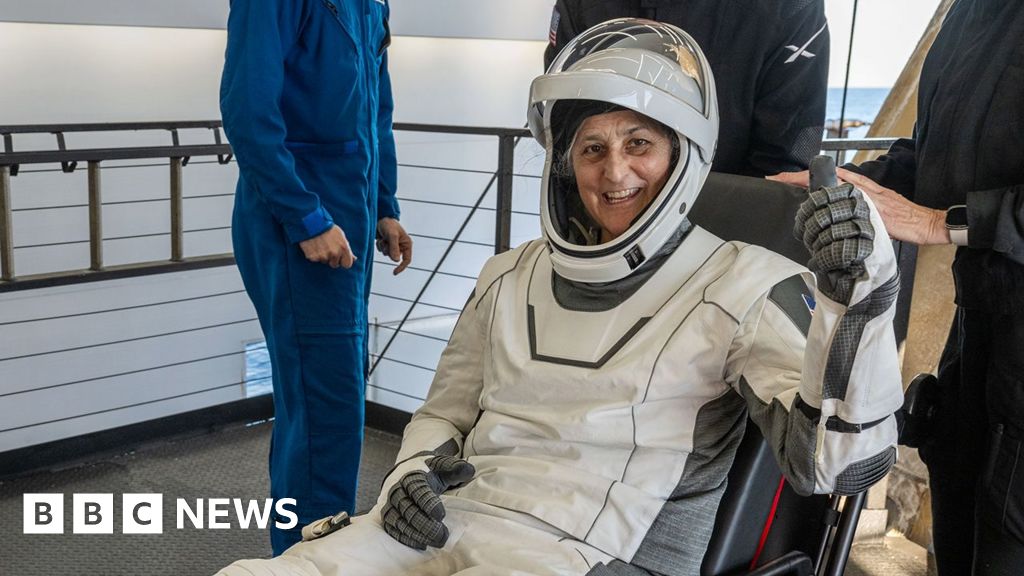
Their initial post-splashdown care involved being helped onto stretchers, a precaution against orthostatic intolerance and muscle weakness. Awaiting them was a comprehensive medical team ready to conduct thorough check-ups before their much-anticipated reunion with their families.
The story of Butch and Suni’s extended stay began in June 2024 when they embarked on what was supposed to be a groundbreaking, short-duration test flight for Boeing’s CST-100 Starliner spacecraft. This mission, known as Crew Flight Test (CFT), was a crucial step in certifying Starliner for regular crew transportation to the ISS, a program designed to provide NASA with a second commercial human spaceflight capability alongside SpaceX’s Crew Dragon. Their original itinerary allotted just eight days for docking with the ISS, testing Starliner’s systems, and returning to Earth.
However, almost immediately upon Starliner’s arrival at the ISS, a series of technical anomalies began to surface. Engineers identified multiple helium leaks in the propulsion system, which, while not immediately critical, raised concerns about the long-term integrity and reliability of the spacecraft. Furthermore, problems with some of the spacecraft’s thrusters were noted. These issues, though seemingly minor individually, collectively presented a significant risk profile for a crewed return journey. After extensive analysis and deliberations, NASA and Boeing determined it was too risky to bring the astronauts home aboard the compromised Starliner capsule.
Consequently, Starliner returned to Earth empty in early September, completing its uncrewed landing successfully, but leaving Wilmore and Williams without their planned ride home. This decision initiated an unprecedented contingency plan: the two veteran astronauts would need a new mode of transport.
NASA turned to its other commercial crew partner, SpaceX. Fortunately, the next scheduled flight to the ISS, a SpaceX Crew Dragon capsule, was due to launch in late September. This particular flight was configured to carry two astronauts instead of its full complement of four, leaving two precious seats available for Wilmore and Williams’ return. The only catch was that this SpaceX mission was a standard, long-duration rotation, planned for a six-month stay on the ISS. This effectively meant that Butch and Suni’s brief eight-day test flight was involuntarily transformed into an almost year-long mission.
Despite the unexpected extension, the NASA pair embraced their longer-than-expected stay in space with remarkable professionalism and dedication. They seamlessly integrated into the existing ISS crew, becoming integral members of the orbiting laboratory’s operations. Their time on the station was far from idle. They participated in an extensive array of scientific experiments, contributing to vital research on microgravity’s effects on the human body, materials science, fluid physics, and Earth observation. These experiments are critical for understanding how to enable longer-duration space exploration, including future missions to the Moon and Mars.
A highlight of their extended mission involved several spacewalks. Suni Williams, already a seasoned spacewalker, added to her impressive record, breaking the record for the woman who has spent the most hours outside of the space station. These extravehicular activities (EVAs) are physically demanding and inherently risky, involving complex tasks such as maintenance, upgrades to the station’s external systems, and installation of new scientific instruments. Their contributions were invaluable to maintaining the health and functionality of the ISS.
The astronauts also made sure to maintain a sense of normalcy and celebration during their prolonged stay. At Christmas, the team on board the ISS dressed in Santa hats and reindeer antlers, sending a festive message to Earth, acknowledging a holiday they had originally planned to spend with their loved ones. As Helen Sharman, Britain’s first astronaut, insightfully noted, "The big thing will be seeing friends and family and the people who they were expecting to spend Christmas with. All of those family celebrations, the birthdays and the other events that they thought they were going to be part of – now, suddenly they can perhaps catch up on a bit of lost time."
It is important to clarify that despite media narratives describing them as "stranded," Wilmore and Williams were never truly without a way home. Throughout their mission, multiple spacecraft from different international partners (including Russian Soyuz capsules and other Crew Dragon vessels) were always docked to the space station, providing contingency options for emergency returns for all onboard crew members. The decision to use a specific SpaceX flight for their return was a planned, safe, and deliberate strategy rather than an emergency rescue.
Now safely back on Earth, the astronauts will be transported to the Johnson Space Center in Houston, Texas. There, they will undergo a rigorous post-flight medical evaluation and rehabilitation program. Long-duration missions in the weightless environment of space take a significant toll on the human body. Astronauts typically experience bone density loss, muscle atrophy, and cardiovascular deconditioning. Fluid shifts in the body can also impact eyesight and lead to other physiological changes.
The recovery process is extensive, requiring a dedicated exercise regime to help their bodies re-adapt to living with gravity. British astronaut Tim Peake, drawing from his own experience, offered a vivid description of this re-adjustment period. "Your body feels great, it feels like a holiday," he told the BBC, referring to the microgravity environment. "Your heart is having an easy time, your muscles and bones are having an easy time. You’re floating around the space station in this wonderful zero gravity environment. But you must keep up the exercise regime. Because you’re staying fit in space, not for space itself, but for when you return back to the punishing gravity environment of Earth. Those first two or three days back on Earth can be really punishing."
Throughout their extended mission, both Butch Wilmore and Suni Williams maintained remarkable composure and professionalism. In various interviews from orbit, they conveyed their preparedness for the unexpected but also shared their simple, earthly desires. Speaking to CBS last month, Suni Williams articulated a universal longing: "I’m looking forward to seeing my family, my dogs and jumping in the ocean. That will be really nice – to be back on Earth and feel Earth." Their safe return not only marks the end of a challenging personal journey but also underscores the resilience of human spaceflight programs and the vital collaboration required to push the boundaries of exploration.

 Ramos Leo
 Nakalama John
 George Anjay