
 Nana Banana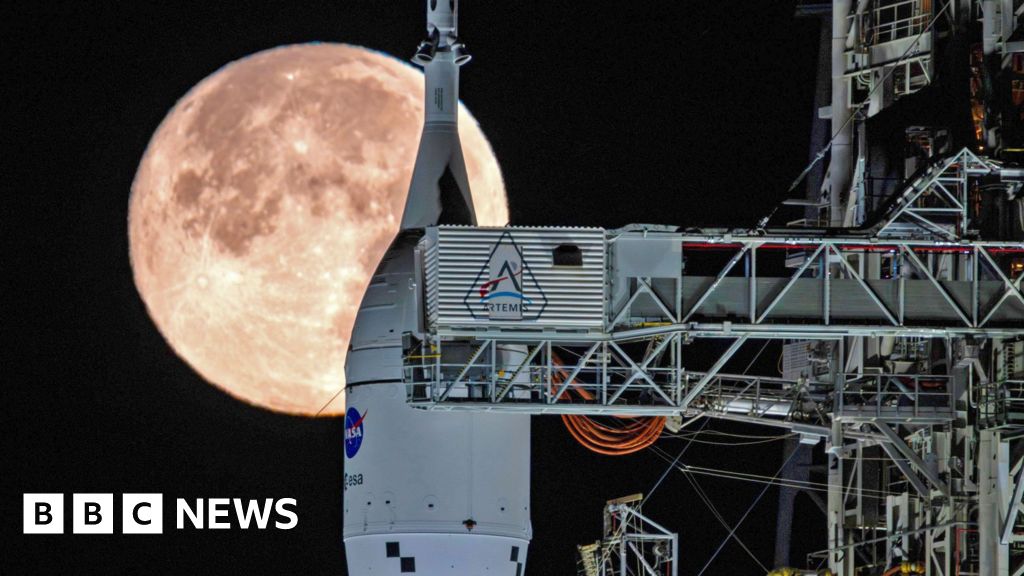
The National Aeronautics and Space Administration (Nasa) has set an ambitious target of early March for the launch of its Artemis II mission, marking a historic return of humans around the Moon for the first time in over five decades. This monumental voyage is designed to be humankind’s deepest penetration into space, a critical stepping stone in the agency’s broader vision for sustainable lunar exploration and eventual human missions to Mars.
Authored by Rebecca Morelle, Science Editor, Alison Francis, Senior Science Journalist, and Greg Brosnan, Senior Science Journalist, this article delves into the intricacies of the upcoming mission.
Artemis II will see a crew of four astronauts embark on an epic 10-day journey. Their mission involves a precise trajectory around the far side of the Moon before returning safely to Earth, a vital precursor to the subsequent Artemis III mission, which aims to put astronauts back on the lunar surface. The targeted launch date of March 6 (translating to early March 7 in the UK) was confirmed following the successful completion of a crucial "wet dress rehearsal" at the Kennedy Space Center in Florida. This pre-launch test is a full-scale simulation where the Space Launch System (SLS) rocket is loaded with propellant and taken through an entire countdown sequence, stopping just short of ignition.
The "wet dress rehearsal" represented the Artemis team’s second attempt at this critical practice run. The first rehearsal, conducted at the beginning of February, had to be cut short due to a hydrogen fuel leak detected at the launch pad. Such leaks, though not uncommon in the complex world of rocket science, highlight the meticulous attention to detail required for crewed missions. Nasa officials confirmed that issues, including those related to seals and filters, had been thoroughly remedied.
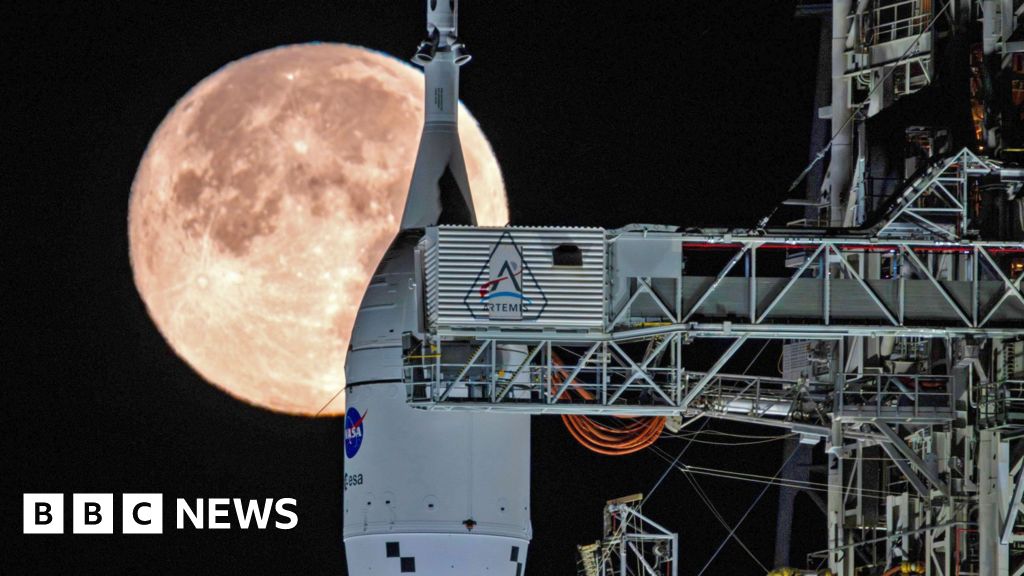
During a news conference on Friday, Lori Glaze, director of Nasa’s Planetary Science Division, conveyed the growing excitement surrounding the mission. "Every night I look up at the Moon and I see it and I get real excited because I can feel she’s calling us and we’re ready," Glaze articulated, her words capturing the palpable anticipation within the space community. "The excitement for Artemis II is really, really starting to build, we can really start to feel it. It’s coming." She further elaborated on the success of the most recent rehearsal: "Yesterday we were able to fully tank the SLS rocket within the planned time line… we also successfully demonstrated the launch countdown."
The four individuals entrusted with this pioneering mission are Reid Wiseman, Victor Glover, and Christina Koch from the United States, alongside Jeremy Hansen from Canada. This international crew underscores the collaborative spirit of modern space exploration. Glaze confirmed that the crew was exhilarated by the successful rehearsal and would soon enter quarantine, a standard procedure to ensure their health and minimize any risk of illness before launch.
Their journey will commence atop Nasa’s mega Moon rocket: the towering 98-meter-tall (322-foot) Space Launch System (SLS). The SLS is currently the most powerful operational rocket in the world, designed specifically for deep-space missions. Its immense thrust is generated by four RS-25 engines and two solid rocket boosters, capable of lifting unprecedented payloads beyond Earth’s orbit. The rocket has only flown once before, in November 2022, during the uncrewed Artemis I mission, which successfully demonstrated the vehicle’s capabilities and the performance of the Orion spacecraft.
The astronauts will be securely strapped into the Orion capsule, which sits atop the SLS rocket. The interior of the Orion spacecraft is approximately the size of a minibus, serving as the crew’s living quarters for the entire 10-day duration. Within this compact space, the four astronauts will eat, sleep, work, and manage the complex systems of their deep-space vessel, relying on its advanced life support systems and communication capabilities.
The initial phase of their mission will involve spending approximately one day in Earth orbit, where the crew and ground control will meticulously check all systems to ensure optimal performance. If all parameters are nominal and all systems are functioning perfectly, the astronauts will then execute a trans-lunar injection burn, propelling them out of Earth’s gravitational influence and onto a trajectory towards the Moon.
The voyage to the Moon is expected to take about four days. Upon reaching the lunar vicinity, the crew will travel around the far side of the Moon – the hemisphere that remains perpetually hidden from our view on Earth. They will reach an astonishing distance of 6,500 to 9,500 kilometers (4,000 to 6,000 miles) above the lunar surface, setting a new record for human travel beyond Earth. During this critical phase, several hours will be dedicated to observing, studying, and capturing images of the lunar landscape, providing invaluable data and breathtaking views.
After successfully completing the lunar flyby, the astronauts will begin their four-day return journey home. The mission will culminate in a precisely choreographed re-entry into Earth’s atmosphere, with the Orion capsule splashing down safely in the Pacific Ocean, where recovery teams will be waiting.
The success of Artemis II is paramount, as it is designed to pave the way for Artemis III, the mission slated to return humans to the lunar surface. The last time humans set foot on the Moon was in 1972, during the Apollo 17 mission, with astronaut Harrison Schmitt famously exploring the lunar terrain. The Artemis program aims to not just repeat this feat but to establish a sustained human presence, building infrastructure like the Gateway lunar orbiting outpost and surface habitats.
Nasa has optimistically targeted a lunar landing by 2028, though this remains an ambitious timeline, given the complexities involved. Elon Musk’s SpaceX company holds a pivotal contract to develop the Human Landing System (HLS) for Artemis III, which will involve a modified Starship rocket transporting astronauts from lunar orbit to the surface. However, ongoing developmental delays with the Starship rocket have prompted Nasa to request a streamlined plan from SpaceX to accelerate the return to the Moon. In a move to foster competition and ensure redundancy, Nasa has also engaged Jeff Bezos’s Blue Origin, asking them to propose an accelerated lunar lander plan for Artemis III.
This renewed push for lunar exploration is unfolding amidst a burgeoning international space race. The United States is under considerable pressure to cement its leadership in deep-space exploration, especially as China has declared its intention to achieve a lunar landing by 2030 and has been making consistent and impressive progress towards this goal. Both nations are strategically eyeing the Moon’s south pole as a prime landing site. This region is of particular scientific and strategic interest due to the potential presence of water ice in permanently shadowed craters, a crucial resource for future lunar bases, providing potable water, breathable air, and rocket fuel. The competition for these coveted landing zones underscores the geopolitical significance of lunar exploration and the long-term vision of utilizing the Moon as a staging post for even grander voyages into the solar system.




 Ramos Leo
 atisusanti
 Nakalama John
 George Anjay

 Roy Suryo