Nana Banana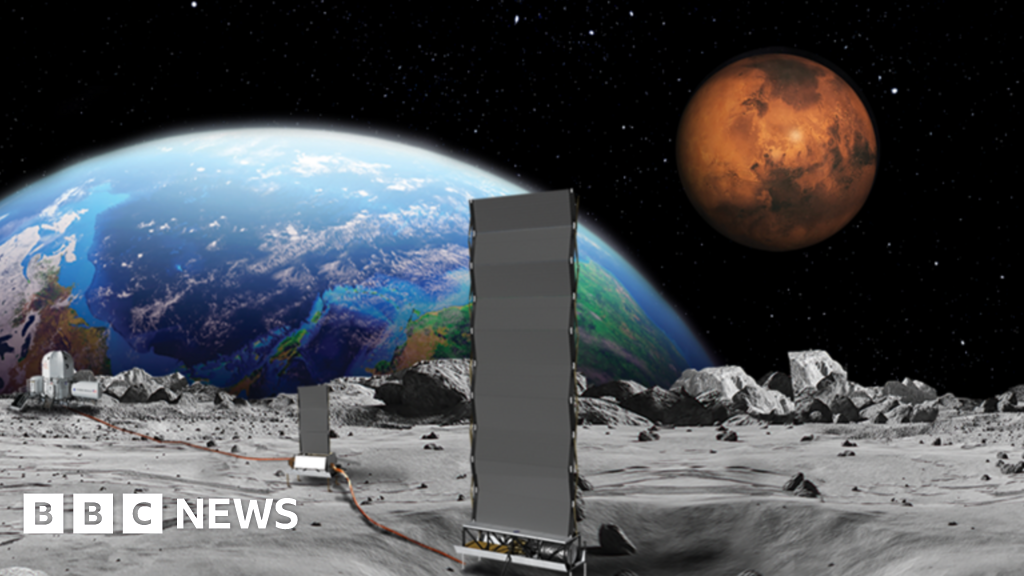
The United States’ space agency, NASA, is reportedly accelerating its ambitions to construct a nuclear reactor on the Moon by the year 2030. This aggressive timeline, reported by US media outlets such as Politico, underscores a pivotal shift in the nation’s lunar exploration strategy, moving beyond transient visits to establishing a permanent, self-sustaining human presence on the lunar surface. The initiative is not merely a scientific endeavor but is deeply intertwined with geopolitical considerations, as senior US officials voice concerns over the lunar ambitions of rival space powers, particularly China and Russia.
According to Politico, the urgency behind this accelerated timeline was articulated by a senior figure within the US administration, reportedly the acting head of NASA. This official pointed to similar plans by China and Russia, warning that these nations "could potentially declare a keep-out zone" on the Moon, a move that would significantly impact future international access and activities. This statement highlights a growing sentiment that the renewed race to the Moon is not solely about scientific discovery but also about securing strategic advantages and demonstrating technological supremacy.
Despite the ambitious goals and the perceived urgency, the feasibility of meeting the 2030 deadline remains a subject of intense debate among experts and within the scientific community. Recent and substantial budget cuts to NASA, including a proposed 24% reduction in 2026 that threatens significant science programs like the Mars Sample Return mission, cast a shadow of doubt over the agency’s capacity to undertake such a capital-intensive and complex project. Furthermore, some scientists express apprehension that the accelerated timeline and the project’s motivations are primarily driven by geopolitical competition rather than purely scientific imperatives.
The global landscape of lunar exploration has become increasingly crowded, with nations like the US, China, Russia, India, and Japan all actively pursuing missions to the Moon’s surface. Many of these countries harbor long-term visions of establishing permanent human settlements, which necessitate robust and reliable power sources. In a memo to NASA, US transport secretary Sean Duffy, who was reportedly appointed temporary head of Nasa by President Donald Trump, emphasized the critical need for speed. He wrote, according to the New York Times, that "To properly advance this critical technology to be able to support a future lunar economy, high power energy generation on Mars, and to strengthen our national security in space, it is imperative the agency move quickly." This statement underscores the multifaceted strategic importance attached to lunar nuclear power, linking it not only to a lunar economy and future Mars exploration but also to national security in the burgeoning domain of space.
Mr. Duffy’s directive specifically called for proposals from commercial companies to design and build a reactor capable of generating at least 100 kilowatts of power. While this might seem a modest output compared to terrestrial power generation – a typical on-shore wind turbine, for instance, generates 2-3 megawatts – it represents a significant leap for lunar operations. Current lunar missions typically rely on solar panels and radioisotope thermoelectric generators (RTGs), which provide far less power, often in the range of hundreds of watts. A 100-kilowatt nuclear reactor would provide power comparable to that required for a small village or a segment of the International Space Station, offering a continuous and robust energy supply essential for long-duration human habitats and scientific endeavors.
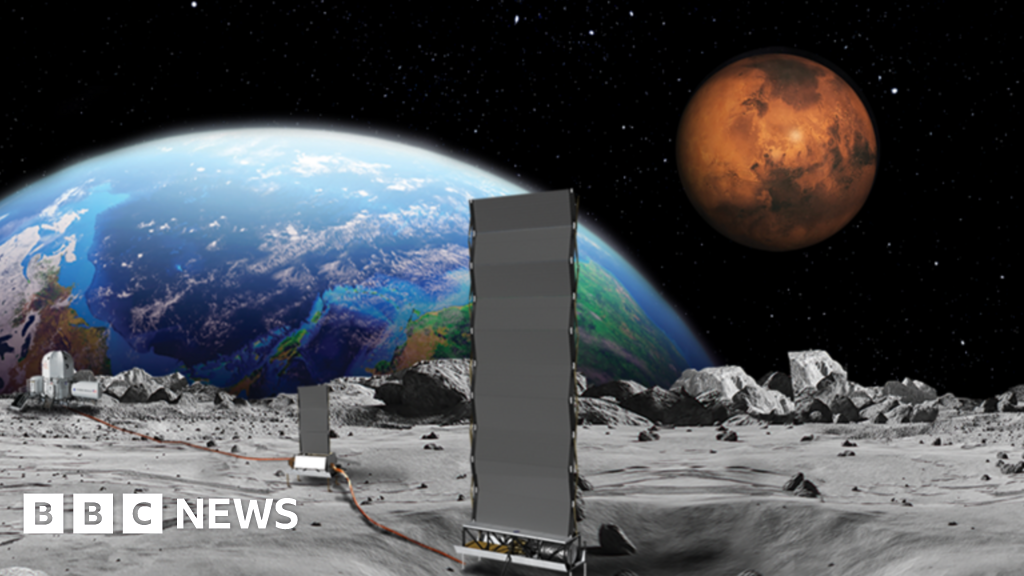
The concept of deploying a nuclear reactor as a primary power source on the Moon is not a novel idea. NASA has been exploring Fission Surface Power (FSP) systems for years. In 2022, the agency demonstrated its commitment by awarding three $5 million contracts to commercial entities – Westinghouse Government Services, BWXT Advanced Technologies, and IX (a joint venture between Intuitive Machines and X-Energy) – to develop preliminary designs for such a reactor. These designs focus on small, lightweight fission power systems that could be delivered to the Moon and operated autonomously. The goal is to produce power reliably for at least 10 years, providing the continuous energy needed for lunar bases, scientific experiments, and the processing of lunar resources.
The competitive aspect of lunar exploration was further highlighted in May of this year when China and Russia jointly announced their intention to build an automated nuclear power station on the Moon by 2035. This declaration undoubtedly intensified the urgency within the US administration, contributing to the push for NASA to accelerate its own plans. The race is on, not just to reach the Moon, but to establish the infrastructure necessary for long-term presence and resource utilization.
From a scientific and engineering perspective, many experts concur that nuclear fission power is arguably the most viable, if not the only, method to provide the continuous and substantial power required for permanent human operations on the lunar surface. The Moon’s unique environmental conditions pose significant challenges for alternative energy sources. A lunar day, for example, spans approximately 29.5 Earth days, meaning that any given location experiences two weeks of continuous sunlight followed by two weeks of absolute darkness, with temperatures plummeting to extreme lows. This prolonged period of darkness makes reliance on solar power alone impractical, as it would necessitate massive energy storage solutions that are currently unfeasible for lunar deployment.
Dr. Sungwoo Lim, a senior lecturer in space applications, exploration, and instrumentation at the University of Surrey, emphatically states, "Building even a modest lunar habitat to accommodate a small crew would demand megawatt-scale power generation. Solar arrays and batteries alone cannot reliably meet those demands. Nuclear energy is not just desirable, it is inevitable." This perspective is widely shared, underscoring the foundational role nuclear power could play in enabling sustained lunar operations, including life support systems, scientific instruments, in-situ resource utilization (ISRU) for producing water and fuel, and advanced communication systems.
Professor Lionel Wilson, a professor of earth and planetary sciences at Lancaster University, believes that placing reactors on the Moon by 2030 is technically achievable "given the commitment of enough money." He points out that designs for small, robust reactors already exist, and the primary hurdle would be the logistical challenge of transporting and assembling them on the lunar surface. "It’s just a matter of having enough Artemis launches to build the infrastructure on the Moon by then," he adds, referring to NASA’s Artemis spaceflight program, which aims to return humans to the Moon and establish a sustainable presence.
However, the ambitious timeline and the technology itself are not without significant challenges and concerns. Safety is a paramount consideration. Dr. Simeon Barber, a planetary science specialist at the Open University, highlights the risks associated with launching radioactive material through Earth’s atmosphere. "You have to have a special license to do that, but it is not insurmountable," he notes, suggesting that while strict protocols and specialized clearances would be necessary, the challenge is manageable with current regulatory frameworks and safety engineering. Beyond launch, concerns also extend to the safety of operating a nuclear reactor in the lunar environment, including radiation shielding for astronauts, managing heat dissipation in a vacuum, and the long-term disposal or containment of nuclear waste on another celestial body.
The issue of NASA’s budget cuts creates a stark contrast with the directive to fast-track the lunar reactor project. The proposed 24% cuts in 2026, which would severely impact high-profile scientific missions like the Mars Sample Return – a cornerstone of planetary science aimed at bringing Martian samples back to Earth for detailed analysis – raise questions about resource allocation and strategic priorities. It suggests a potential shift in focus from broad scientific exploration to specific, strategically important infrastructure projects, driven by perceived geopolitical necessity.
Many scientists are indeed concerned that this sudden acceleration is largely a politically motivated move in the burgeoning international race to the Moon. "It seems that we’re going back into the old first space race days of competition, which, from a scientific perspective, is a little bit disappointing and concerning," says Dr. Barber. While competition can spur innovation, he warns, "if there’s a narrower focus on national interest and on establishing ownership, then you can lose sight of the bigger picture which is exploring the solar system and beyond." This sentiment reflects a desire for international collaboration and open scientific inquiry to prevail over nationalistic rivalries in space.
The comments made by Mr. Duffy regarding the potential for China and Russia to declare "keep-out zones" on the Moon are understood to reference the Artemis Accords. Initiated by the US in 2020, the Artemis Accords are a set of non-binding international agreements designed to establish principles for cooperation and responsible behavior in space, particularly on the Moon and Mars. To date, over 40 nations have signed these accords, which include provisions for the establishment of "safety zones" around operations and assets built by signatory countries on the Moon.
Dr. Barber explains the implications of these safety zones: "If you build a nuclear reactor or any kind of base on the Moon, you can then start claiming that you have a safety zone around it, because you have equipment there." He further elaborates on the potential interpretation of such zones: "To some people, this is tantamount to, ‘we own this bit of the Moon, we’re going to operate here and you can’t come in’." This interpretation raises concerns about the potential for de facto territorial claims on celestial bodies, despite the 1967 Outer Space Treaty which prohibits national appropriation of outer space. The Accords aim to provide clarity for operations, but their enforcement and interpretation in a competitive environment could lead to disputes.
Beyond the geopolitical and financial hurdles, Dr. Barber also points out the practical challenges that need to be overcome before a lunar nuclear reactor can serve its intended purpose for human settlements. NASA’s Artemis III mission, which aims to land humans on the lunar surface by 2027, has already faced numerous setbacks and uncertainties regarding funding and development. "If you’ve got nuclear power for a base, but you’ve got no way of getting people and equipment there, then it’s not much use," he observes, highlighting the need for a cohesive and integrated strategy. "The plans don’t appear very joined up at the moment," he concludes, suggesting that while the vision for lunar power is clear, the path to achieving it within the broader context of NASA’s lunar exploration program still requires significant synchronization and unwavering commitment.
Ultimately, NASA’s accelerated plan to build a nuclear reactor on the Moon by 2030 represents a bold, technologically demanding, and strategically vital undertaking. It embodies the agency’s long-term vision for human expansion into space, from establishing a permanent lunar base to enabling future missions to Mars. However, the success of this ambitious project hinges not only on overcoming formidable engineering challenges and ensuring stringent safety protocols but also on navigating complex geopolitical dynamics, securing consistent funding, and integrating seamlessly with the broader Artemis program. The urgency is palpable, driven by both the scientific necessity for continuous lunar power and the competitive pressures of a new global space race, making the next few years critical in shaping humanity’s future on the Moon.




 Ramos Leo
 Nakalama John
 George Anjay