
 Nana Banana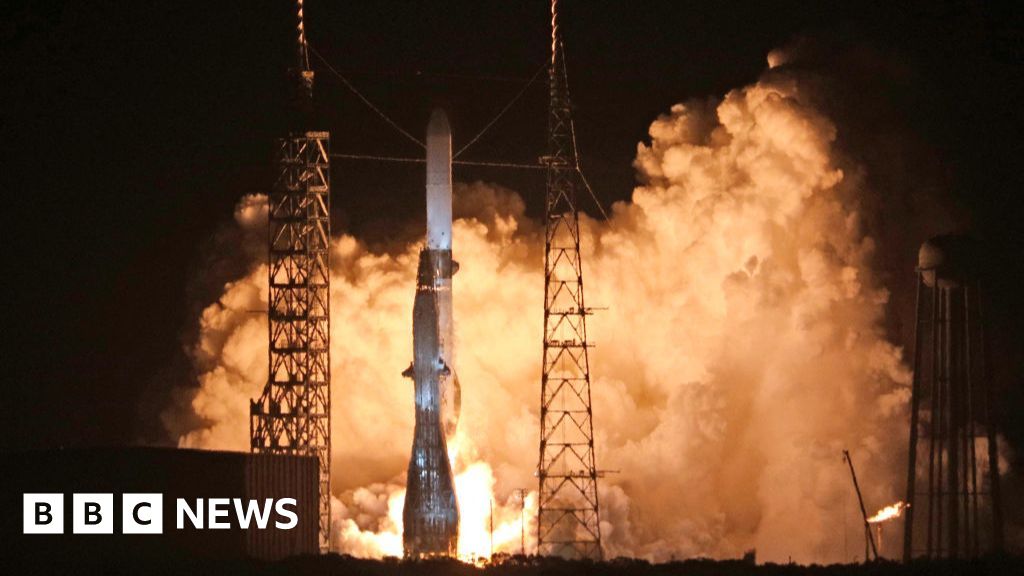
The long-anticipated maiden flight of Amazon founder Jeff Bezos’s Blue Origin’s New Glenn rocket has successfully blasted into orbit, marking a pivotal moment in the escalating commercial space race and directly challenging the established dominance of Elon Musk’s SpaceX. Launched from Cape Canaveral Space Force Station in Florida at 02:02 local time (07:02 GMT), the towering 98-meter rocket pierced the pre-dawn sky, propelling Bezos’s company into the league of heavy-lift orbital launch providers and firmly pitting the world’s two richest men against each other in a high-stakes, high-tech battle for the heavens.
The successful ascent into orbit represents a significant milestone for Blue Origin, a company that, despite its ambitious goals and substantial funding, has often been perceived as lagging behind its rival. The launch was met with cheers from employees and crowds gathered near Cape Canaveral, a testament to the years of development and perseverance required to bring such a complex vehicle to fruition. The immediate success in reaching orbit drew a direct, albeit subtly competitive, congratulation from Elon Musk himself, who posted on X: "Congratulations on reaching orbit on the first attempt!" This brief exchange underscores the intensely personal and public nature of this rivalry, as both billionaires vie not just for market share, but for the legacy of shaping humanity’s future in space.
Blue Origin CEO Dave Limp expressed immense pride in the achievement, acknowledging the learning curve ahead. "We’ll learn a lot from today and try again at our next launch this spring," Limp stated, hinting at the iterative process inherent in complex aerospace development. Indeed, the path to this launch was not without its challenges. The mission had faced several delays earlier in the week, notably due to technical barriers such as ice formation, highlighting the intricate engineering and precise environmental conditions required for a successful launch. Overcoming these hurdles to achieve orbital insertion on the maiden attempt is a commendable feat, particularly in an industry known for its unforgiving nature.
While the primary objective of reaching orbit was achieved, Blue Origin did encounter a setback regarding its ambitious reusability goals for the booster. The company had hoped to land New Glenn’s main rocket engine, or booster, onto a platform in the Atlantic Ocean, a crucial step toward its vision of a fully reusable launch system akin to SpaceX’s Falcon 9. However, after approximately 20 minutes of flight, Blue Origin confirmed that it had lost the booster. This failure to recover the first stage means that while the orbital launch was a success, the immediate goal of demonstrating booster reusability—a key economic driver in modern spaceflight—was not met. This aspect will undoubtedly be a focal point for future missions as Blue Origin strives to emulate the cost-saving efficiencies pioneered by SpaceX.
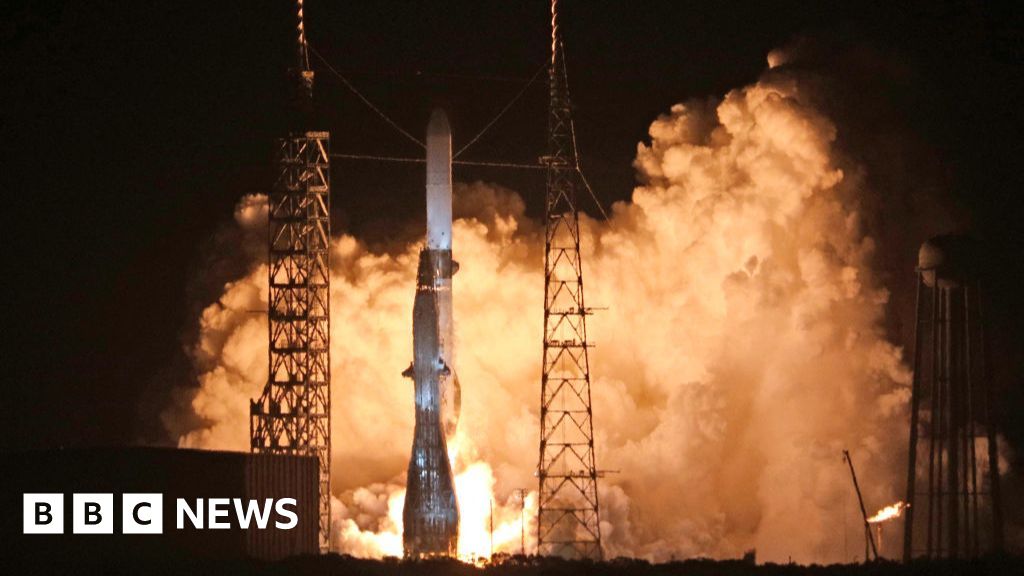
The name "New Glenn" itself pays homage to John Glenn, the pioneering American astronaut who, more than 60 years ago, became the first American to orbit Earth. This choice of name not only connects Blue Origin to a rich history of space exploration but also subtly emphasizes the rocket’s orbital capabilities, differentiating it from Blue Origin’s earlier, suborbital New Shepard vehicle.
New Glenn is designed to be a formidable competitor in the heavy-lift launch market. Standing 98 meters tall, it is more powerful than SpaceX’s most commonly used rocket, the Falcon 9, which has become the workhorse of the commercial space industry. New Glenn boasts a significantly larger payload capacity, making it attractive for deploying constellations of satellites and larger spacecraft. This capability is central to Jeff Bezos’s Project Kuiper, an ambitious initiative to deploy thousands of low-Earth orbit (LEO) satellites to provide global broadband internet services. Project Kuiper directly challenges Elon Musk’s Starlink, which has already established a significant footprint in the satellite internet market, creating a direct head-to-head competition for global connectivity from space. The success of New Glenn is thus not merely about launching rockets, but about enabling a vast network infrastructure that could reshape global communications.
Jeff Bezos founded Blue Origin 25 years ago with a stated vision of "millions of people working and living in space." For much of its history, the company primarily focused on its New Shepard rocket, a smaller, reusable vehicle designed for suborbital flights. New Shepard has successfully carried both payloads and human passengers to the edge of space, including Bezos himself in 2021. These flights, while groundbreaking, were limited in scope and did not achieve orbit, leading to perceptions that Blue Origin was moving at a slower pace compared to its rivals. In contrast, SpaceX has dramatically outperformed Blue Origin in terms of launch frequency and orbital capabilities, conducting an astonishing 134 launches last year alone, demonstrating a rapid pace of innovation and operational efficiency.
However, the landscape of commercial space is constantly evolving. While New Glenn represents a significant leap for Blue Origin, SpaceX is already pushing the boundaries further with its next-generation rocket, Starship. Even more powerful and larger than New Glenn, Starship is central to Musk’s long-term aspirations of colonizing Mars and establishing lunar bases. SpaceX hopes to conduct Starship’s seventh test flight later today, further showcasing its relentless pursuit of even grander space ambitions. The continuous development of these mega-rockets signifies an era of unprecedented capability and competition, where each company strives to outdo the other in terms of thrust, payload, and reusability.
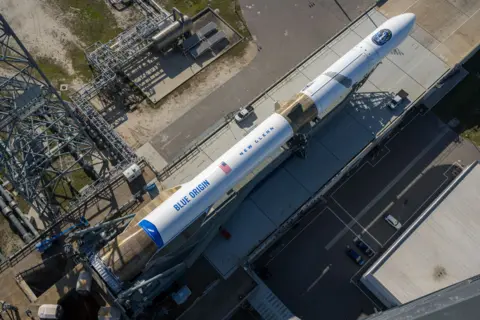
Experts believe that a successful New Glenn rocket will inject vital competition into the commercial space sector, potentially driving down the costs of space operations for everyone. Dr. Simeon Barber at the Open University in the UK suggests, "What you are going to see are these two companies challenge each other to make even greater strides." This rivalry is not just about personal pride; it has profound implications for the accessibility and affordability of space. Increased competition often leads to innovation, efficiency, and lower prices, benefiting government agencies, scientific institutions, and commercial clients alike. As private companies take on more of the heavy lifting, national space agencies like NASA are increasingly shifting their focus from developing their own launch vehicles to acting as procurers of services from the private sector.
Historically, governments have spent billions on building rockets and conducting space missions. However, the paradigm is changing rapidly. The US space agency NASA, for instance, is increasingly moving away from relying solely on public money and has issued huge contracts to private companies to provide launch services, cargo resupply to the International Space Station (ISS), and even crew transport. Elon Musk’s SpaceX has already been a major beneficiary of this shift, having received billions of dollars worth of space contracts, including pivotal roles in the Artemis program to return humans to the Moon. The interplay between private enterprise and government funding highlights a new era of public-private partnerships, where innovation from companies like Blue Origin and SpaceX is leveraged for national strategic goals.
Adding another layer of complexity to this already dynamic environment is the political dimension. Elon Musk’s publicly acknowledged close relationship with former President and potential future US president, Donald Trump, could potentially strengthen SpaceX’s position further in securing lucrative government contracts, depending on future political landscapes. This intertwined web of technological innovation, economic competition, and political influence makes the commercial space race one of the most compelling narratives of the 21st century.
In conclusion, the successful orbital launch of Blue Origin’s New Glenn rocket is more than just a single launch; it is a declaration of intent, a powerful statement that Jeff Bezos’s vision for space is ready to challenge the status quo. While SpaceX maintains a significant lead in operational experience and advanced projects like Starship, New Glenn’s debut signifies that Blue Origin is now a serious contender in the heavy-lift market. This escalating rivalry between two of the world’s most ambitious entrepreneurs is set to accelerate innovation, reduce costs, and ultimately shape the future of human presence and activity beyond Earth, driving humanity into an unprecedented era of space exploration and commercialization.




 Ramos Leo
 Nakalama John

 atisusanti

 George Anjay