
 George Anjay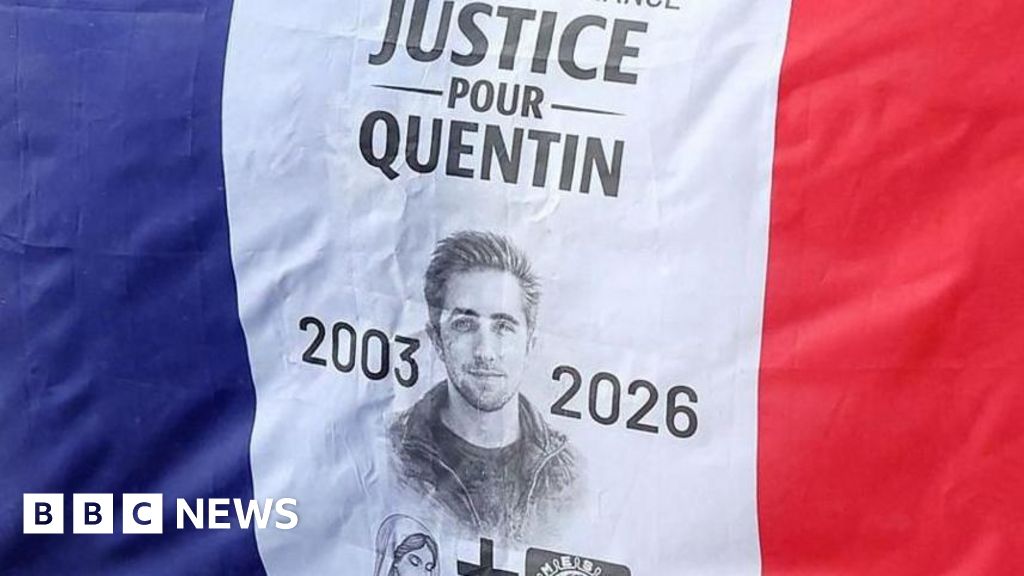
The tragic death of Quentin Deranque, a 23-year-old far-right nationalist student, has sent shockwaves through France, leading to the arrest of nine individuals, including a parliamentary assistant for a deputy of the radical left France Unbowed (LFI) party. Deranque succumbed to his injuries in hospital on Saturday, two days after a brutal assault in Lyon. The attack, which involved a gang of masked young men, occurred following a demonstration by far-right feminists whom Deranque was reportedly helping to protect. The incident took place at the city’s Institute of Political Studies (IEP), widely known as Sciences-Po.
The arrests strongly suggest that the perpetrators are linked to far-left militant groups, with a particular focus on La Jeune Garde (The Young Guard), a group that has previously been banned. The most significant development in the ongoing investigation is the detention of Jacques-Elie Favrot, a young man who, until his arrest, served as a parliamentary assistant at the National Assembly in Paris for an LFI deputy. This connection has placed immense pressure on the LFI party, its 70 Members of Parliament, and its prominent leader, Jean-Luc Mélenchon, who is considered a potential contender in the upcoming presidential election.
In the immediate aftermath of Deranque’s death, Mélenchon vehemently denied any involvement of his party, stating on Sunday, "My party has nothing to do with this story. Those who accuse us are committing libel." He further expressed the party’s "consternation, but also our empathy and compassion for [Deranque’s] family and friends. We have said dozens of times that we oppose all forms of violence." However, the arrest of Favrot, a member of his parliamentary staff, has cast a shadow over these pronouncements and intensified scrutiny of the LFI’s relationship with far-left activism.
Thierry Dran, the state prosecutor, provided further details of the attack during a press conference on Monday. He revealed that Deranque was subjected to blows from "at least six" assailants, with the post-mortem examination confirming fatal damage to his skull and brain as a result of being kicked and punched. The violence inflicted upon Deranque has ignited a fierce political debate in France, highlighting the deep divisions and escalating tensions between far-right and far-left factions, particularly within student and activist circles.
Quentin Deranque was a prominent figure within the far-right student movement, known for his activism and his association with nationalist ideologies. His involvement in protecting a far-right feminist demonstration at Sciences-Po, a prestigious institution known for its politically engaged student body, placed him directly in the path of opposition. The fact that the demonstration was organized by far-right feminists adds another layer of complexity to the incident, suggesting a convergence of ideological fronts that ultimately led to the fatal confrontation.
The alleged perpetrators, identified as militants from the far-left, are believed to be connected to La Jeune Garde. This group has been known for its radical stances and its involvement in street protests and confrontations. Its previous banning by French authorities underscores the perceived threat it poses to public order and its capacity for direct action. The connection between Favrot and this group, if confirmed by further investigation, would represent a significant blow to the LFI and Mélenchon’s efforts to distance themselves from extremist elements.
The political fallout from Deranque’s death is substantial. The LFI, which positions itself as a force for social justice and anti-fascism, now faces accusations of complicity or, at the very least, of fostering an environment where such violence can occur. Mélenchon’s leadership will be tested as he navigates this crisis, attempting to maintain his party’s integrity while addressing the concerns of both his supporters and a wider electorate. The upcoming presidential election, where Mélenchon is a significant figure, will undoubtedly be influenced by this event and the ongoing investigation.
The incident also brings into sharp focus the broader issue of political violence in France. The country has a history of ideological clashes, but the intensity and apparent coordination of such attacks are a growing concern. The targeting of a student at an academic institution, a space traditionally associated with intellectual debate and free expression, is particularly alarming. It raises questions about the erosion of civil discourse and the increasing reliance on physical confrontation to settle political differences.
Sciences-Po, as the site of the incident, has also become a focal point. The institution, which prides itself on fostering a diverse and inclusive environment, now grapples with the reality of political extremism manifesting within its walls. The presence of both far-right and far-left activists, and the violent confrontation that ensued, highlights the challenges faced by educational institutions in managing ideological tensions among their students.
The investigation into Deranque’s death is ongoing, with authorities working to establish the precise roles of each of the nine arrested individuals. The evidence gathered, including witness testimonies and forensic analysis, will be crucial in determining the charges and bringing those responsible to justice. The outcome of this investigation will have significant implications not only for the individuals involved but also for the broader political landscape of France, potentially reshaping the discourse on extremism, political violence, and the responsibilities of political parties.
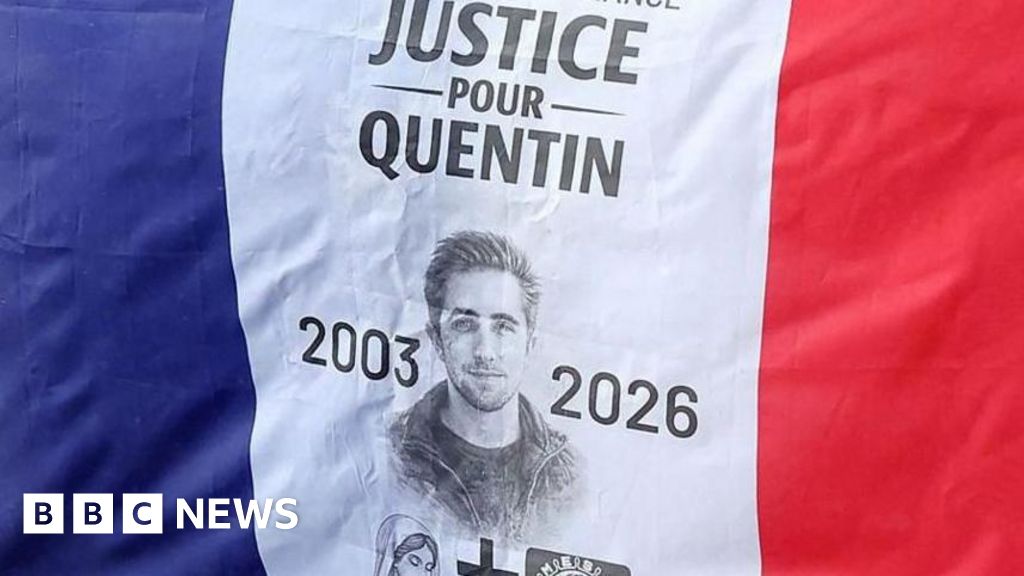
The image accompanying the news report, depicting a poster demanding "Justice for Quentin" with his birth and death years, underscores the emotional weight of the event and the public’s demand for accountability. The years 2003 and 2026, as depicted on the poster, represent his tragically short life, cut short by violence. The presence of "Justice for Quentin" in French further emphasizes the national dimension of the tragedy and the widespread desire for resolution. The poster itself, a form of visual activism, serves as a stark reminder of the human cost of political conflict.
The alleged involvement of a parliamentary assistant in such a violent act raises serious ethical and legal questions. It suggests a potential blurring of lines between political representation and extremist activity, a concern that has plagued many political parties across the spectrum. The LFI’s denial of responsibility, while understandable from a political damage control perspective, will be under intense scrutiny as more details emerge. The public will be watching closely to see how the party responds to these allegations and whether it takes any disciplinary action against Favrot, should his involvement be definitively proven.
The French judiciary faces the challenging task of ensuring a fair and impartial investigation, free from political interference. The sensitivity of the case, given its political ramifications, demands transparency and a commitment to upholding the rule of law. The arrest of nine individuals is a significant step, but it is only the beginning of a complex legal process that could have far-reaching consequences for French politics and society. The hope is that justice will be served for Quentin Deranque, and that this tragedy can serve as a catalyst for a broader societal reflection on the dangers of political extremism and the importance of peaceful dialogue.

 Ramos Leo
 atisusanti
 Nakalama John

 Roy Suryo