atisusanti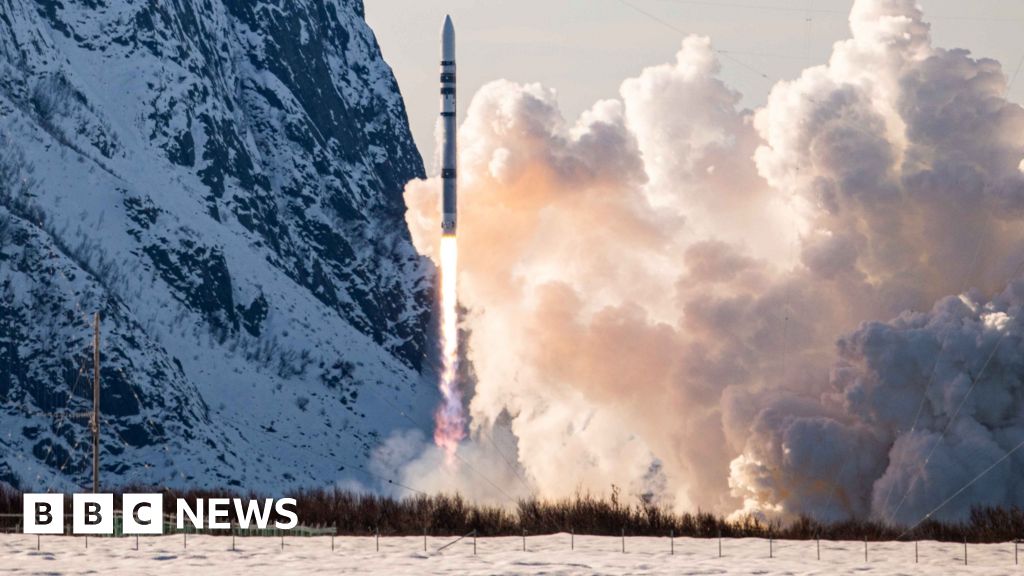
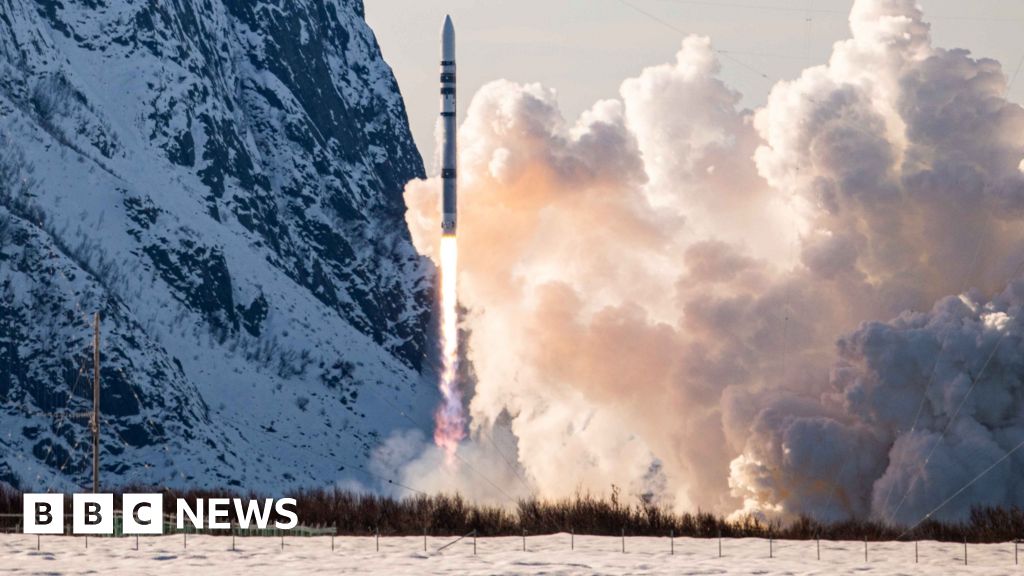
It’s 04:00 on a snow-covered hill in Swedish Lapland, 120 miles (200km) north of the Arctic Circle. A countdown echoes from a Tannoy: "Three, two, one." A rocket blasts off from a launcher, shooting into the sky and illuminating the darkened valley below. Moments later, a second rocket motor kicks in with a deafening roar. We are visiting the Esrange Space Centre near the city of Kiruna, run by the Swedish Space Corporation (SSC Space), where more than 600 rockets have launched since the 1960s, mostly sub-orbital rockets used for scientific research, or to test-run space flights. Built by scientists from the German Aerospace Centre Mapheus, the rocket I saw blast off, flew for 14 minutes, leaving the atmosphere and reaching an altitude of almost 260km. "It was a good flight, we’re really relieved," beamed campaign manager Thomas Voigtmann. This rocket was on a quest for several minutes of valuable micro-gravity or weightlessness, carrying experiments that will help researchers study biological cells, materials and other processes.
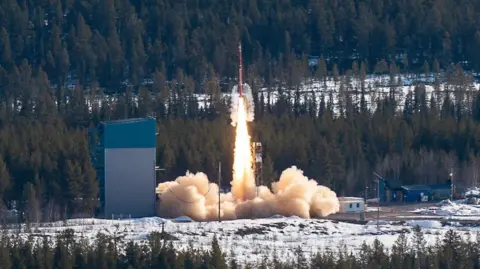
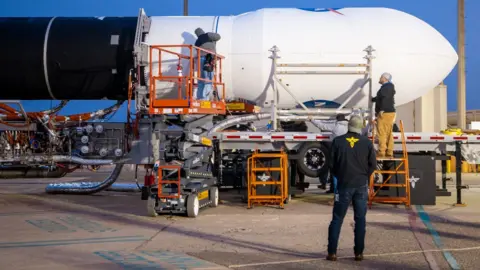
However, Esrange has also emerged as a pivotal player in a Europe-wide race to establish robust orbital rocket launch capabilities. "Within a couple of years, we will have the first satellite launch from here," states SSC business development director Mattias Abrahamsson, highlighting the facility’s evolving role. The new launchpad, inaugurated in early 2023, represents a significant investment in Europe’s independent access to space, though it has faced some delays in its operational timeline. Two key clients are currently preparing rockets to carry vital satellites into orbit from this strategic northern Swedish location: South Korea’s Perigee, a burgeoning space technology firm, and the American company, Firefly Aerospace, which notably achieved a lunar landing last year, showcasing its advanced propulsion and landing systems. "We are now building out more infrastructure that is specific to Firefly’s Alpha rocket," explains Katarina Lahti from SSC’s orbital launch and rocket test division. This bespoke development includes the integration of specialized fuelling, enhanced security protocols, and comprehensive safety systems, all tailored to the requirements of Firefly’s launch vehicle.
The recent signing of a technology safeguard agreement between the United States and Sweden is another major milestone, according to Lahti. This agreement is crucial as it facilitates the transfer of advanced space technology, enabling American companies like Firefly to leverage Swedish infrastructure and expertise. Meanwhile, Esrange is actively hosting crucial ground tests for Themis, Europe’s ambitious project for the first reusable rocket, as well as vital engine testing for the German start-up Isar Aerospace, further cementing its status as a hub for European space innovation.
The surge in demand for global internet connections, advanced communications networks, and sophisticated Earth observation capabilities has led to a dramatic increase in the number of satellites orbiting our planet. Projections indicate this number could reach an astonishing half a million by the end of the 2030s, according to a recent report published in the prestigious journal Nature. "There’s around 10,000 satellites orbiting right now. The plan is to go to about 40-50,000 satellites in just some years," explains Abrahamsson, gesturing towards a cluster of large, imposing antennae that are crucial for satellite communication and tracking. This exponential growth is drawing an increasing number of commercial companies into a segment of the space industry that was once the exclusive domain of government agencies and national space programs.
This burgeoning commercial interest has also spurred the development of several new spaceport projects across Europe, spanning diverse geographical locations from the Azores in Portugal to the far north of Norway. "This is a big market and there’s room for all of us," asserts Lahti, expressing confidence in the collective European effort. She hopes that SSC’s extensive legacy, spanning over 60 years in rocket development and launch operations, will provide a significant advantage in securing orbital launch contracts. Furthermore, Esrange’s strategic northern location offers inherent benefits for launching satellites into polar orbits, a critical requirement for many Earth observation and scientific missions, complemented by the region’s generally stable weather conditions conducive to reliable launch operations.
Beyond Esrange, other European ventures are pushing the boundaries of space access. The Atlantic Spaceport Consortium (ASC) operates from the Portuguese island of Santa Maria, leveraging its oceanic location for potential launches. Meanwhile, the start-up EuroSpaceport is exploring an innovative approach, aiming to conduct orbital flights from a vessel anchored in the North Sea, approximately 50km off the Danish coast. On Scotland’s Shetland Islands, SaxaVord Spaceport has emerged as the UK’s first licensed vertical spaceport, actively collaborating with a range of companies, including Germany’s Rocket Factory Augsburg (RFA) and HyImpulse, to facilitate their launch operations.
However, the ambitious sky-high aspirations of some competitors have already encountered significant challenges, demonstrating the inherent complexities and risks of the space launch industry. "Spaceports will be like seaports, and you will need multiple for the amount of traffic, but also for resilience," observes Hermann Ludwig Moeller, director of the European Space Policy Institute, drawing a parallel with established global logistics networks. "You will have winners and losers," he reckons, emphasizing that success will hinge less on the rocket technology itself and more on the ability to capture and serve a viable market. "It’s not so much the rocket [technology]. It is really the market," Moeller stresses. He further predicts that "There are two or three [spaceports] that you could imagine will succeed," and anticipates witnessing a successful European continental orbital launch "this year," underscoring the dynamic and competitive nature of the current landscape.
On a remote island located 300 kilometers above the Arctic Circle, Norway’s Andøya Spaceport has rapidly positioned itself as a frontrunner in the European orbital launch race. Isar Aerospace launched its 28-meter Spectrum rocket from this location last year; however, the mission was cut short after just 30 seconds of flight, resulting in a spectacular crash into the Norwegian Sea, a stark reminder of the challenges involved. Now, the Munich-based company is targeting another attempt this March, and if successful, it will represent a monumental leap forward for Europe’s commercial space ambitions. "Our goal with this mission is to demonstrate real progress," states CEO and co-founder Daniel Metzler, conveying the team’s determination and focus. "To achieve that, we will once again push our systems to their limits," he adds, highlighting their commitment to pushing technological boundaries.
The evolving geopolitical and security landscape globally has prompted European leaders to re-evaluate their strategic approach to space, imbuing their efforts with a renewed sense of urgency and a strong desire to establish greater autonomy in space access. SSC’s Abrahamsson underscores the strategic importance of possessing indigenous orbital launch capabilities on European soil, stating, "We need to have the capacity in Europe to do it on our own." This self-reliance is not merely about ambition but also about practical considerations. "It also enables rapid deployment or replacement of critical systems if you have a crisis or a threat," Lahti suggests, highlighting the direct implications for national security and defence. "This also strengthens European defence capabilities," she concludes, pointing to the dual-use nature of advanced space technologies and launch infrastructure.
The geopolitical shifts, particularly the ongoing sanctions and the invasion of Ukraine, have led to a significant disruption in European reliance on Russia’s Baikonur Cosmodrome in Kazakhstan, a key launch site for decades. This has intensified the need for independent European launch solutions. The European Space Agency’s (ESA) facilities at Kourou in French Guiana remain a cornerstone of European launch capabilities, capable of handling approximately a dozen orbital launches per year. However, ESA also relies on the United States, which possesses several crucial launch sites, ranging from NASA’s historic Cape Canaveral to SpaceX’s dedicated Starbase facility in Texas.
Kourou’s strategic position near the equator on the South American continent offers certain launch advantages, such as maximizing payload capacity due to the Earth’s rotation. Nevertheless, European-built rockets must be shipped thousands of kilometers from their manufacturing sites to Kourou and then meticulously reassembled, adding significant logistical complexities and costs to each launch campaign. Ariane 6, Europe’s most powerful rocket to date, recently launched from Kourou earlier this month, carrying a payload of satellites destined for Amazon’s Project Kuiper constellation, a direct competitor to Elon Musk’s Starlink satellite internet service.
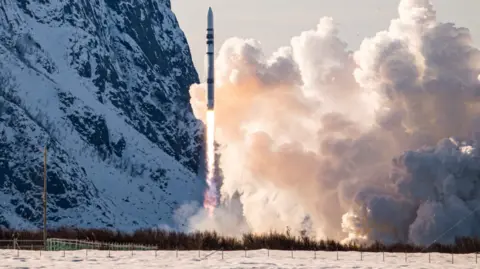
"There’s a lot going on in space for internet connectivity," observes Moeller, speaking to the BBC from French Guiana, where he had just witnessed the successful liftoff of Ariane 6. "It is part of what I call the ‘internet age’ of space," he elaborates, characterizing the current era as one of unprecedented expansion in space-based communication infrastructure. "It will be a competition between Amazon Leo and Starlink. You will also see Chinese developments, and maybe European developments eventually," he adds, anticipating a multi-polar landscape of satellite internet providers.
Data from 2025 illustrates this disparity: of the 319 successful orbital launches worldwide, only seven originated from Europe (specifically Kourou), a stark contrast to the 189 launches from the US and 90 from China. Europe possesses the essential "know-how" and "engineering skill" required for space exploration and launch, Moeller asserts. While investment in the European space sector has seen a significant uptick in recent years, it still represents a fraction of the expenditure by the United States, indicating that Europe is still in a phase of playing catch-up in terms of scale and infrastructure development.
Back at Esrange, Mattias Abrahamsson remains optimistic about the competitive landscape, expressing a pragmatic view on the proliferation of new European spaceports: "Every site is needed because there’s that many satellites that need to be launched, and that many rockets that are being developed." This perspective highlights the immense potential growth in the satellite market and the corresponding demand for launch services, suggesting that collaboration and diverse capabilities will be essential for the collective success of Europe’s orbital ambitions.




 George Anjay
 Ramos Leo
 Roy Suryo
 Nakalama John