Nana Banana
Last year, a chilling discovery shattered the domestic peace of John Gladwin’s Croydon home. Opening the cupboard beneath his kitchen sink, he found a bag of soil, once neatly stored, ripped violently to shreds. Days later, an unfamiliar, musty, and slightly astringent odour, reminiscent of his building’s communal bin area, began to permeate his flat. “I knew what it was straight away,” he recounts with a shiver, “Rats.” These pervasive rodents, once confined to the periphery of his estate’s overflowing bins, had breached the sanctity of his living space. Their presence quickly escalated from unseen damage to an audible menace. “I heard them in the cupboards and behind the bath panel. One morning when I woke up they were fighting under the bath, screaming and squealing.” The harrowing sounds of their skirmishes underscored the depth of the infestation.
Living with his five children, Mr. Gladwin wasted no time. He deployed peppermint oil and rat poison, and for now, the immediate threat has subsided. Yet, the experience left an indelible mark, not just of fear for his children’s health, but a profound sense of shame. “It’s not nice to say we’re infested, that our family is living in a rat-infested property.” This personal ordeal is, unfortunately, a microcosm of a much larger, increasingly urgent crisis gripping urban centres worldwide.
Pest control companies across the UK are reporting alarming surges in rat activity. Cleankill, the firm addressing the infestation on Mr. Gladwin’s estate, has witnessed a “remarkable” 20% increase in rat-related call-outs over the past two years in southern England. The British Pest Control Association (BPCA), a leading trade body, confirms this trend, with over half of its member companies reporting a significant rise in rodent infestations over the last five years. While the elusive nature of rats makes precise population counts notoriously difficult – estimates for the UK alone range wildly from 10 million to a staggering 120 million – the evidence of their growing presence is undeniable. Freedom of Information requests compiled by Drain Detectives reveal that UK councils recorded more than half a million rodent infestations between 2023 and mid-this year, highlighting the escalating pressure on public services and urban residents alike.
This isn’t an isolated British phenomenon. Major international cities, from the bustling streets of Washington D.C. and New York City to the historic canals of Amsterdam and the sprawling metropolis of Toronto, are grappling with similar spikes. San Francisco, too, reports a surge in its rodent population. Beyond the immediate revulsion they inspire, rats pose significant public health risks. Though not inherently dirty, their habitats in sewers and bins mean they are carriers of serious diseases such as Leptospirosis (Weil’s disease), transmitted through their urine, and Hantavirus, spread by inhaling infected droppings. Economically, they decimate farm produce and contaminate vast quantities of food supplies. The pressing question now facing urban planners and public health officials is stark: what will it truly take to curb this relentless tide? Or have we reached a point where preventing cities from being overrun by rats is an insurmountable challenge?
Rising Temperatures, Rising Rat Activity

Bobby Corrigan, a self-proclaimed urban rodentologist, has dedicated his life to understanding these creatures. Starting his career as an exterminator in the intricate subterranean world of New York City’s sewers, he spent countless hours attempting to deploy poison baits. Years later, during his college studies, he immersed himself so deeply in their world that he once slept on the floor of a rat-infested barn to observe their behaviours firsthand. What struck him most profoundly was not just their cunning, but their surprisingly complex social structures, even exhibiting what he believed were signs of altruism. He recalls witnessing "young rats carrying food and giving it to older rats that couldn’t get around," a testament to their adaptability and communal intelligence.
Corrigan was determined to unearth the root causes behind their burgeoning numbers. While various factors contribute – Niall Gallagher, technical manager at the BPCA, points to our increasing consumption of fast food, less frequent municipal rubbish collections, and the disruption of sewer networks by widespread road and building works – a significant and increasingly compelling body of evidence links the rise in rat activity directly to rising global temperatures.
Scientific research has long indicated that rat populations are sensitive to environmental temperatures. Dr. Corrigan, formerly a research scientist at the New York City Department of Health, collaborated with researchers from the University of Richmond, Virginia, to conduct a comprehensive study. Their objective was to ascertain if the observed increase in rat activity correlated with temperature rises. Published earlier this year in the esteemed journal Science Advances, their study analysed data from 16 cities, predominantly across North America, over periods ranging from seven to seventeen years. The findings were stark: 11 of these cities recorded significant increases in rat activity. Washington D.C. saw an almost 400% surge, San Francisco a 300% increase, Toronto 180%, and New York a substantial 160%. Only three cities, including Tokyo and New Orleans, reported declines. Crucially, the study concluded: "Cities experiencing greater temperature increases over time saw larger increases in rats," with some areas experiencing temperature rises approaching 2°C during the study period.
Dr. Corrigan’s belief is unequivocal: as long as global temperatures continue their upward trajectory, particularly manifesting in warmer winters, the relentless proliferation of rat populations is almost certainly set to continue. This grim forecast aligns with broader climate projections, with Climate Action Tracker, an independent group of climate researchers, predicting global temperatures will rise by at least 1.9°C to 2.7°C above pre-industrial averages by 2100.
Phenomenal Breeders – Until It’s Cold
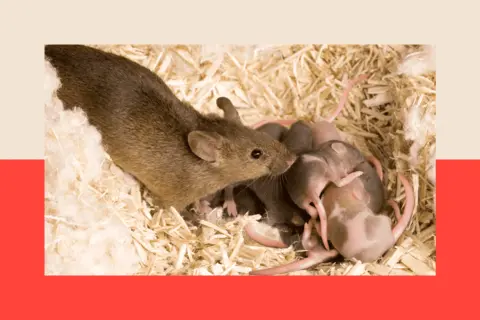
Rats are biological powerhouses, known for their phenomenal reproductive capabilities. A single female rat can typically produce around six litters annually, each containing up to 12 pups. These young rats mature at an astonishing pace, becoming capable of breeding themselves after just nine weeks. This rapid lifecycle means that, theoretically, a pair of rats could generate over 1,000 offspring within a single year. Critically, rats do not hibernate. In colder climates, harsh winters naturally act as a significant population control, killing off weaker individuals and severely limiting breeding cycles, leading to fewer "pups" and slowing overall growth. Warmer winters, however, remove this natural barrier, extending their breeding seasons and enabling more offspring to survive and reproduce.
Urban environments further exacerbate this issue. Cities, with their vast expanses of heat-absorbing tarmac and towering buildings, create what is known as the "urban heat island" effect, causing them to warm more rapidly and retain heat longer than surrounding rural areas. This microclimate provides an ideal, consistently warm habitat for rats, insulating them from the colder temperatures that would otherwise naturally suppress their numbers. Moreover, the global trend of urbanisation plays a significant role. As Dr. Corrigan notes, "Land is disappearing like crazy, and we’re putting up buildings so we reduce their [rats’] habitat in the wild." This relentless urban expansion means more structures, more intricate networks of pipes and drains, and an ever-increasing array of hidden nooks and crannies for rats to establish their burgeoning colonies, adding layers of complexity to the challenge of population control.
A Surprising Superpower and the Limitations of Traditional Control
One of the most curious and frustrating facts about rats – a fact that profoundly impacts the efficacy of conventional poison baits – is their inability to vomit. In theory, this would suggest that any ingested poison would be lethal. However, rats possess another crucial survival trait: neophobia, an inherent fear of new things. Professor Steven Belmain, an ecology professor at the University of Greenwich, believes these two characteristics are intrinsically linked, forming a sort of "superpower." When encountering a potential new food source, rats do not simply gorge themselves. "They will only try a little bit," he explains. "So once they understand that they don’t feel ill, they’ll realise, ‘okay, I can eat that.’ You could argue that this cautious approach to life has stood them well." This evolutionary cunning means that if a bait has an immediate adverse effect, even if not lethal, the rat will learn to avoid it, rendering the poison ineffective for the rest of the colony.

Dr. Alan Buckle of the University of Reading, who has spent three decades endeavouring to develop new rat poisons, admits with a wry laugh, "I failed." He highlights the core problem: if a poison tastes bad or causes any immediate discomfort, rats will simply refuse to consume more. This necessitates the use of slower-acting substances, primarily anticoagulants – drugs that prevent blood from clotting. These potent chemicals take up to a week to work, allowing rats to ingest a lethal dose over time without immediate suspicion. However, the mechanism of action, causing internal bleeding, is widely recognised as a cruel and inhumane way to die. Adding to the complexity, rats have, in recent years, developed genetic mutations that grant them a degree of immunity to these powerful drugs, further diminishing their effectiveness. Consequently, researchers are now exploring more humane alternatives, such as oral contraceptives, to prevent rat numbers from escalating without resorting to lethal methods.
On Patrol with the Rat Tsar
Few understand the intricacies of urban rat management better than Kathleen Corradi. In 2023, she was appointed New York City’s inaugural “Rat Tsar” by the city’s mayor, a role tasked with tackling an estimated three million rats inhabiting the five boroughs. Granted a reported $3.5 million budget, Corradi spearheaded efforts to heighten public awareness and implement comprehensive rat mitigation strategies. She established a "rat academy," an innovative program designed to educate residents on how to prevent their neighbourhoods from being overrun. “They take a rat walk with me, where we go out into neighbourhoods, and we talk about human behaviour and we talk about rat behaviour,” she explained to the BBC. “We talk about how it all comes together and what they could be doing in their neighbourhoods.”
Her team actively encouraged New Yorkers to report rat sightings or any behaviours likely to attract rodents. These reports triggered investigations, leading to mandatory corrective actions and the imposition of stiff fines for non-compliance. A pivotal policy change implemented under her tenure was the requirement for most New York residents to abandon traditional plastic rubbish bags on the street in favour of rat-proof bins. This simple yet profound shift directly attacked the rats’ primary food source. Although Corradi has since moved on from the role, she affirms that this multi-pronged approach is beginning to show promising results. Ultimately, she reiterated, “cutting off rats’ food source is the key to a sustained reduction.”
Overflowing Bins and a Fractured Future
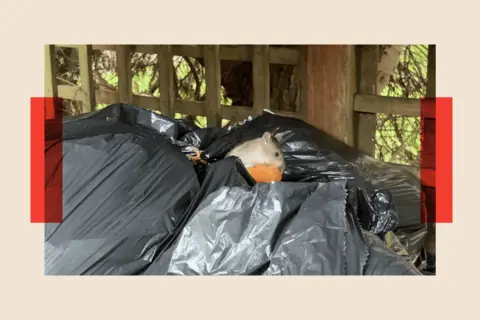
Back in Croydon, as dawn breaks, Alex Donnovan, a pest controller for Cleankill, leads the way into the backyard of the estate where John Gladwin lives. He motions for quiet, and moments later, a rustling sound gives way to a rat darting from beneath a concrete walkway towards the communal bins. Then, the audacious head of a large rat emerges from a burrow, surveying its domain. Over two hours, the scene unfolds: rats climbing high into a tree, and one particularly brazen individual leaping into a bin, brazenly extracting a hunk of food from a plastic bag, mere feet from an observer.
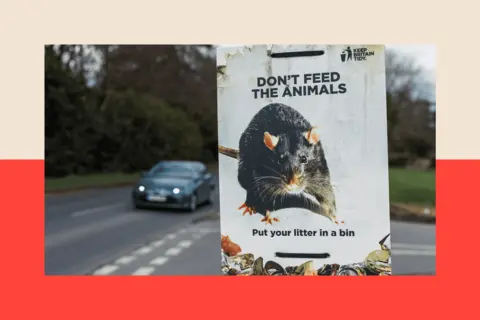
Donnovan’s assessment is bleak. He believes controlling an infestation of this magnitude is "almost impossible." His gaze sweeps over bins overflowing with rubbish bags. “There’s just so much food,” he explains. “Even if we put down rodenticide, they won’t eat it. They are just not interested… Once these bins are infested with rats, the bin men don’t want to collect it either.” It’s a vicious cycle, where the lack of adequate waste management directly feeds the problem, making eradication efforts futile.
The truth is multifaceted: warmer global temperatures undoubtedly fuel burgeoning rat populations by extending their breeding seasons. But this environmental shift is compounded by human factors – our insatiable fondness for fast food, our increasingly overflowing bins, and the fragmented nature of urban communities struggling with waste management. In the UK, population density continues to rise; the Office for National Statistics projects an increase from 67.6 million in 2022 to 72.5 million by 2032, with an ever-growing proportion concentrated in urban areas. More people, more waste, more potential habitats – all contributing to the perfect storm for rodents.
The solution, therefore, may not lie in ever-stronger poisons or more sophisticated traps, but in something far more fundamental and collective. Dr. Corrigan’s ultimate philosophy is disarmingly simple: "If we take care of our city environment, then we won’t have to worry about being so inhumane to them." By systematically denying rats access to our food scraps and waste, we can mitigate the need for brutal, often ineffective, control methods. The challenge now is to implement these changes rapidly and on a vast scale. As Dr. Corrigan starkly puts it, we have already "underestimated them." "We ignored rats and let them get out of hand… and now we are paying the price."

Additional reporting: Florence Freeman
BBC InDepth is the home on the website and app for the best analysis, with fresh perspectives that challenge assumptions and deep reporting on the biggest issues of the day. And we showcase thought-provoking content from across BBC Sounds and iPlayer too. You can send us your feedback on the InDepth section by clicking on the button below.




 George Anjay
 Ramos Leo
 Nakalama John