Roy Suryo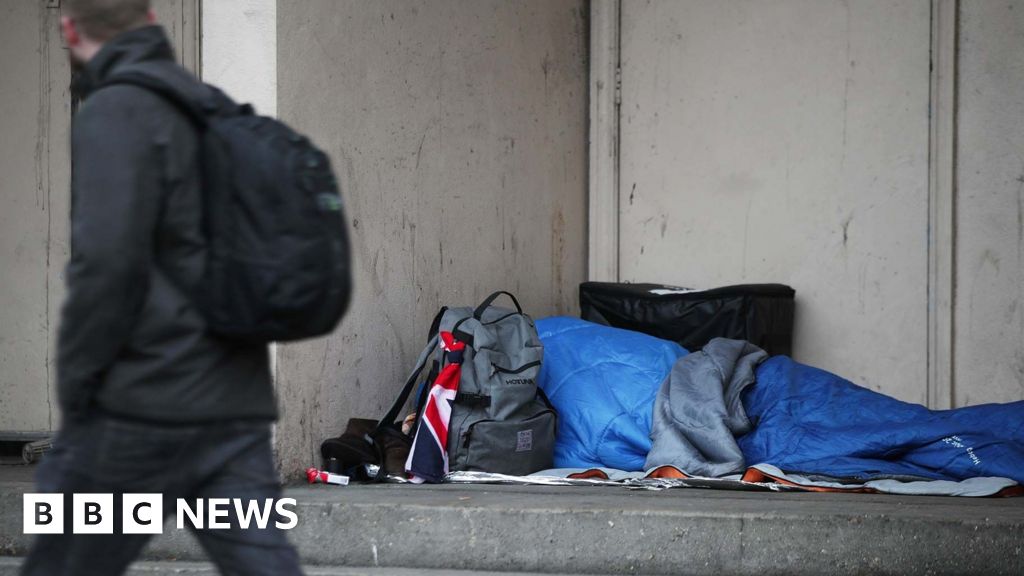
England is facing a deepening homelessness crisis, with the latest government figures revealing that the number of people sleeping rough is at its highest level since records began in 2010. A stark snapshot taken on a single night last autumn estimated that 4,793 individuals were sleeping on the streets, marking a concerning 3% increase from the previous year. This upward trend is particularly worrying for female rough sleepers, whose numbers have risen by a significant 8% to 733. Overall, the figures indicate 3,938 men and a further 122 individuals whose gender was not recorded were also experiencing homelessness.
In response to these alarming statistics, the government has announced a commitment of £50 million in funding over three years, intended to support local councils and frontline homelessness services. However, the geographical distribution of rough sleeping highlights a stark disparity. London continues to bear the brunt of the crisis, with 1,277 individuals sleeping on its streets. Yet, the most dramatic year-on-year increase has been observed in the north east of England, where rough sleeping numbers have surged by an alarming 31% to 162.
The human impact of these rising numbers is acutely felt by charities working tirelessly on the ground. In Leeds, the Homeless Street Angels charity has been a lifeline for rough sleepers for the past seven years, providing essential items such as food, shoes, sleeping bags, and blankets. Their weekly Thursday outreach, which sees dozens of people queuing for support, is a testament to the escalating demand for their services.
"It’s getting worse and worse, week in, week out," shared Becky Joyce, co-founder of Homeless Street Angels, her voice carrying a note of weariness in the biting February air. "We’re seeing a lot of new faces tonight, which is quite upsetting because the more people we think we get off the streets, the more people are coming onto the streets." The charity’s efforts reflect this growing need, with their production of food boxes doubling to 240 per week compared to three years ago. Even with this increased output, they frequently run out of meals before completing their rounds, a poignant illustration of the overwhelming demand.
One individual seeking this vital support is Josh, who has been homeless for over a year after losing his rented accommodation. The arduous reality of his situation is evident as he explains, "I have to walk two hours a day to come into town to get food." Josh chooses to find shelter outside the city centre, where he feels a greater sense of safety, often sleeping under a bridge in a one-man tent. Despite the immense challenges, Josh expresses a resolute "determination" to turn his life around and is actively trying to secure social housing. However, the lack of a mobile phone presents a significant hurdle, making it difficult to contact his social worker and navigate the complex application process. "I’m going to keep sticking at it until I get a home," he vows.
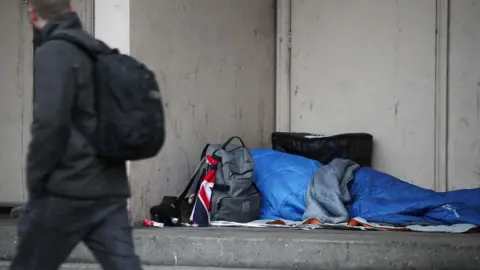
The support provided by Homeless Street Angels extends beyond immediate relief. While some individuals they assist are sleeping rough, others are sofa surfing or have recently moved into temporary accommodation. Gareth, 31, found stability six months ago after a year-and-a-half on the streets. He recalls the turning point: "One day I just woke up and after a year-and-a-half on the streets I thought, ‘I need to do something’." Approaching a local charity proved to be the catalyst for change. Gareth reflects on his time on the streets, noting that while most encounters were with kind individuals, some subjected him to critical comments and theft. The transformative impact of having a place to stay is profound. "It makes you feel a better person," he states.
Charities emphasize that securing accommodation is only the first step. Preventing individuals from returning to the streets requires ongoing support, and Gareth’s continued engagement with Homeless Street Angels, even after finding housing, highlights the importance of community and mental health support. He attends their sessions as much for the comfort of seeing familiar faces as for the food parcel.
However, the capacity of charities like Homeless Street Angels is being stretched to its limit. They are frequently contacted by probation services seeking assistance for individuals released from prison with no immediate housing options, requiring free sleeping bags and food parcels. In Leeds alone, the number of people sleeping rough has seen a staggering 75% increase over the past three years, rising from 37 to 65 individuals according to the snapshot data. While the 2025 figure shows a slight decrease from the 69 recorded in 2024, the overall trend remains deeply concerning. "It’s only me and my twin sister," says Becky Joyce, her voice laced with concern, questioning, "How long can we keep going when the need is getting bigger and bigger?"
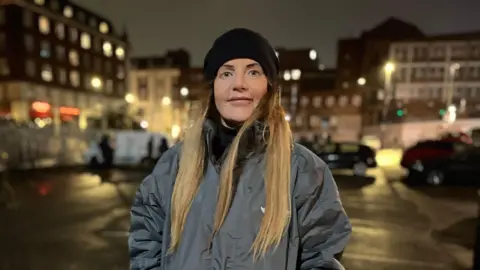
The figures for 2025 represent the highest recorded since the inception of the data collection in 2010, surpassing the previous peak observed in 2017. A further breakdown reveals a 5% year-on-year rise in the number of people born in the UK sleeping rough. Charities consistently argue that these figures are likely an underestimation of the true scale of the problem, as the snapshot methodology only captures those sleeping rough on a single night in the autumn.
Adding to the severity of the homelessness crisis, separate data released concurrently shows that the number of families living in temporary accommodation has also reached an all-time high. Between July and September 2025, a staggering 134,760 households were housed in hotels, bed and breakfasts, and temporary flats – a concerning 6.9% increase compared to the same period in 2024. Alarmingly, 85,730 of these households include children, highlighting the devastating impact of homelessness on families and the future generation.
In response to this escalating crisis, the government has articulated its ambition to halve "long-term rough sleeping" by 2030 and implement measures to prevent more households from experiencing homelessness in the first place. However, the current trajectory of the figures suggests that achieving these goals will require a significant and sustained escalation of efforts and resources.


 atisusanti
 Nakalama John
 George Anjay