atisusanti
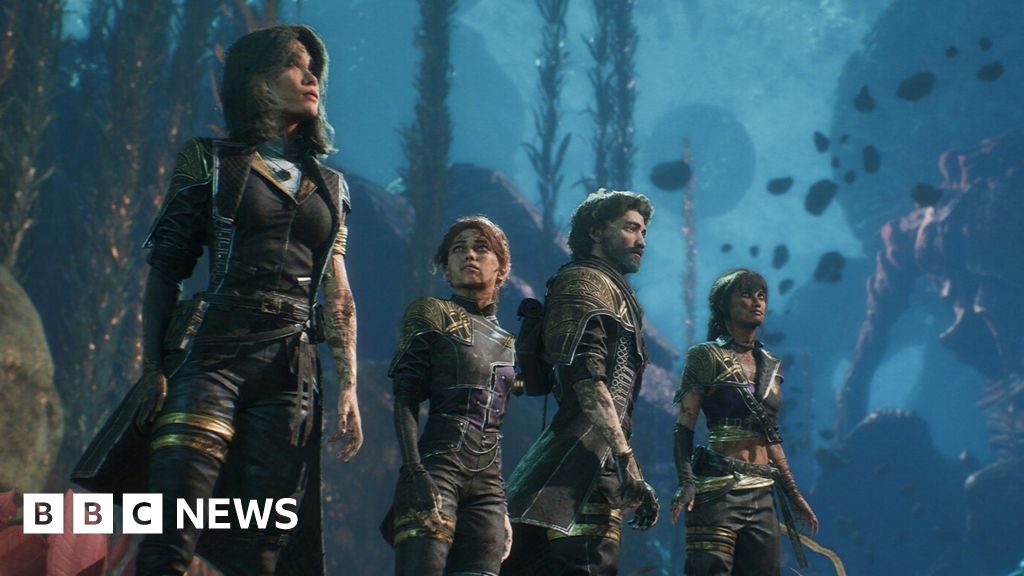
Thirty years after its groundbreaking debut, the Resident Evil franchise continues to be a titan of the survival horror genre, a genre it arguably birthed. This potent cocktail of heart-pounding tension, intricate puzzle-solving, and demanding inventory management has cemented Capcom’s series as its best-selling intellectual property, spawning a multimedia empire of books, films, and television programs. As the latest installment, Resident Evil Requiem, lands in the hands of eager fans worldwide, the crucial question arises: how does a franchise 30 years deep continue to deliver fresh scares and surprising gameplay?
Koshi Nakanishi, the director of Resident Evil Requiem, confided to the BBC that the delicate dance between "familiarity and freshness" presented a "huge challenge." However, he expressed optimism that the new title successfully manages to "redefine survival horror in interesting new ways," all while "respecting the DNA of the series." Throughout its storied history, the franchise has often oscillated between an emphasis on pure terror and high-octane action, with varying degrees of success. The prospect of Requiem attempting to blend these elements has, predictably, sparked apprehension among some fans, with discussions on platforms like Reddit voicing concerns about a potentially "jarring" experience.

Producer Masato Kumazawa, however, emphasized that the development team’s core vision for Requiem and the Resident Evil series as a whole has always remained consistent: fear. "Fear is such a human emotion," he explained. "And through entertainment, we find ways to use fear as a thrill, but in a positive way. So I think that even with 30 years on the game’s legacy, people still want to go through those thrills over and over again, because that’s really what makes us human."
The genesis of the survival horror genre can be traced back to the ominous opening lines of the original Resident Evil: "They have escaped into the mansion where they thought it was safe. Yet…" While some may point to Capcom’s own 1989 title Sweet Home as the true progenitor of survival horror, it was Resident Evil‘s 1996 release, under director Shinji Mikami, that popularized and arguably codified the term. The phrase was employed to encapsulate the game’s pervasive sense of dread, masterfully cultivated through its innovative fixed camera angles, relentless zombie hordes, and the constant pressure of dwindling ammunition.
However, as freelance games journalist Vikki Blake noted in her discussion with the BBC, the series hasn’t always adhered strictly to its foundational horror roots. She observed that a subsequent "pivot to action" left some fans feeling that "Resident Evil forgot about the horror part of survival horror." By the time Resident Evil 6 arrived in 2012, with its heavy reliance on set pieces, the franchise appeared to be doing "very little" to differentiate itself from the burgeoning crowd of "cookie-cutter zombie games" that had emerged in its wake. Resident Evil 7: Biohazard was widely lauded as a "return to form," re-emphasizing the series’ horror core. Requiem, however, sees the reintroduction of action elements, but with a deliberate nod to the past.

This strategic integration of action is embodied by one of the game’s two playable protagonists: a now-older Leon S. Kennedy, a beloved character from earlier installments. Director Nakanishi revealed that the decision to introduce a second, entirely new lead character, FBI agent Grace Ashcroft, was crucial in allowing players to experience a "more tense" gameplay style. This approach is particularly suited to Ashcroft, who lacks the combat experience and specialized training of seasoned operatives like Kennedy, forcing a more survival-oriented approach to encounters.
Requiem will see the return of familiar locales, such as the iconic Raccoon City Police Department from the second game, where the now-older and distinguished Leon S. Kennedy will once again navigate its treacherous corridors. Yet, both Leon and Grace will also venture into a host of entirely new environments, promising fresh challenges and terrifying discoveries. Nakanishi acknowledged the inherent difficulty in seamlessly blending such disparate elements—the old and the new, action and horror—within Requiem to create something that is "more than the sum of their parts."
"It’s never possible to make something 100% original," Nakanishi admitted. "You always need to ground it in something familiar as a starting point to give people the sense that it’s going to be the same kind of game that you liked before." He elaborated on this duality, noting that it extends even to the development team itself. Despite the need for familiar touchstones, the team has, according to producer Masato Kumazawa, brought "something new to the table" with their latest offering. "We don’t want to make players feel like we’ve just produced yet another game in the series with the same old content," Kumazawa stated. "I want players to feel like this is a really fresh new entry in the series." Nakanishi further elaborated, "The double protagonist angle really is a feature that lets us explore the duality of the characters, but also the storyline and the different horror approaches."

Monique Alves, a Brazilian content creator and host of the comprehensive fan-led website and YouTube channel Resident Evil Database, shared her insights. When Requiem‘s blend of survival horror and action was initially announced, some fans expressed concern, "afraid of having Resident Evil 6 all over again." However, having been granted early access to three hours of the game prior to its release, Alves reported that this time felt "different." She explained, "Resident Evil 6 is a product of its time. So of course we were going to have more action and explosives. I think we are going to be safe in that aspect. The Grace and the Leon roots, I think they are going to be very well combined."
Early critical reception appears to largely support this sentiment, with many reviewers concurring that the game’s ambitious fusion of distinct gameplay styles represents a successful evolution for the series, rather than a regression. Nakanishi expressed his hope that players will share this positive assessment. "We’ve really taken care that we just don’t do the same thing over and over again," he concluded. "I think that means fans know that they want another game because they’re never quite sure what kind of experience they’re going to get—and that’s really exciting as a player."


 Nakalama John
 George Anjay