Roy Suryo
When Bethan James, brimming with youthful optimism, spoke to her YouTube followers at the age of 16, her aspirations for 2026 painted a picture of a future filled with partnership, a fulfilling career, and perhaps even the pitter-patter of tiny feet. Tragically, Bethan would never reach her 27th birthday. Her vibrant dreams were extinguished at the age of 21, a victim of a devastating combination of sepsis, pneumonia, and Crohn’s disease. The cruel reality was that Bethan’s sepsis was not identified in time, leading to a critical delay in life-saving treatment. Now, her heartbroken parents, Jane and Steve James, are embarking on a relentless campaign, advocating for enhanced training to combat one of the UK’s most lethal conditions.

A recent BBC investigation has cast a stark light on the persistent gaps in sepsis awareness training across Wales, revealing that it remains non-mandatory in most hospitals. This alarming oversight fuels the James family’s profound fear that the tragic events that befell their daughter could befall countless others. The very hospital where Bethan tragically lost her life, the University Hospital of Wales in Cardiff, was among those where sepsis awareness training was not compulsory. While the Welsh government insists that sepsis awareness is a "focus" and a "priority," and the Welsh Ambulance Service asserts that "meaningful changes" have been implemented, the Jameses remain unconvinced, haunted by the "needless death" of their eldest child in 2020.
Jane, a physiotherapist, and Steve, a former England cricket international and now a sports writer for The Times, describe their lives as "haunted and totally devastated." "She was just the kindest, most caring, loving person and she had so much to give," Jane shares, her voice thick with emotion. Steve’s grief is palpable as he reflects, "It just pulls at your heartstrings thinking, where would Bethan be today and what would she be doing? We still go about daily things, but underneath there’s just this total devastation and so many dark, dark moments. It’s a totally abnormal life we live."

What is Sepsis?
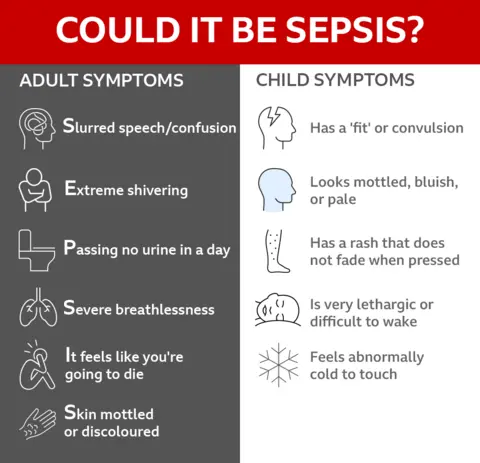
Sepsis is a life-threatening condition that arises when the body’s response to an infection damages its own tissues and organs. It is not an infection itself, but a severe complication that can develop from any type of infection, from a simple urinary tract infection to pneumonia or a cut. The UK Sepsis Trust estimates that approximately 48,000 people succumb to sepsis-related illnesses annually in the UK, with a significant proportion of these deaths being preventable.

The BBC’s investigation, based on Freedom of Information requests submitted to all health boards in Wales, revealed a deeply concerning landscape. Sepsis awareness training is still not a mandatory requirement at Wales’ largest hospital, the University Hospital of Wales in Cardiff, the site of Bethan’s death. "You go into the hospital and there’s sepsis posters on lifts and walls but if their actual frontline staff can’t recognise the symptoms of sepsis, it just beggars belief," Jane laments.
Bethan had been unwell for 10 days prior to her death, making five visits to the hospital. "They were just quite dismissive of her symptoms," Jane recalls. "Her heart rate was high, her blood pressure was low – it was so hard to get them to listen." Bethan’s condition deteriorated, prompting another hospital visit where she encountered the same doctor. Steve vividly remembers one medic reassuring them that Bethan would recover within two weeks, a statement that would later prove tragically inaccurate. "Even on the Saturday when she died, [Bethan] kept saying to Jane ‘that doctor said I was going to be OK’," Steve recounts with profound regret. "I went to Ireland. That’s a decision I’ve got to live with the rest of my life – I regret it so deeply, but I just took his word."
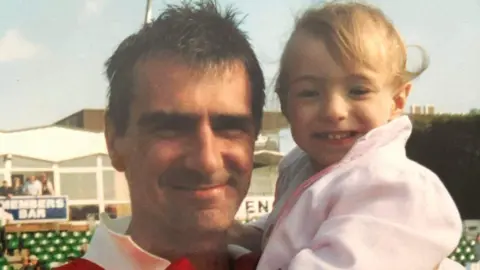
The day after Steve departed for Dublin to cover a Six Nations rugby match, Bethan’s condition worsened dramatically. Jane made an emergency call to 999. A paramedic arrived at their Cardiff home, noting Bethan’s elevated temperature, grey complexion, cold extremities, and chest pain. "We found out later that they couldn’t record her blood pressure because it was so low. All of those symptoms were a red flag for sepsis," Jane explains. Bethan was assessed using a National Early Warning Score (NEWS), a system designed to identify patients at risk of deterioration. A NEWS score of eight or above indicates a severe risk of sepsis, necessitating urgent escalation to emergency medical review. Bethan’s NEWS score was eight, yet the paramedic reportedly failed to recognise the potential for sepsis.
An ambulance was called, but Bethan was not classified as a priority, and the hospital was not forewarned of her critical condition. Consequently, upon their arrival at nearly 8 PM GMT, no resuscitation bed was prepared for her. "A&E that night was chaos, there was no-one taking overall care of Bethan," Jane recalls with anguish. "She was so unwell, her blood pressure was so low, her lips were going blue, she was all blotchy, she was breathing really fast to try and get air in. The nurse that triaged her should have known that it was sepsis with a NEWS score of eight."

Tragically, almost an hour after admission, Bethan was transferred to the resuscitation unit, where tests confirmed sepsis. Antibiotics were administered, but it was too late. "The doctor said to Bethan ‘we think you’ve got sepsis’," Jane recounts, her voice trembling. "That’s the last thing she heard. They asked me to leave. She had a cardiac arrest about five minutes later and died at 22:00." Steve, en route from Dublin, received the devastating news of his daughter’s death while driving home from Heathrow.
The Welsh Ambulance Service has since issued an apology for the "errors identified in Bethan’s case," stating that sepsis training is now mandatory and "meaningful changes" have been implemented. Cardiff and Vale University Health Board acknowledged that "sepsis awareness and early recognition are priorities" and confirmed ongoing reviews of sepsis training. However, the BBC’s investigation revealed that where training is mandated, it is often integrated into broader modules rather than being standalone sepsis-specific education. Furthermore, the auditing of this training is inconsistent, with some health boards failing to record completion rates altogether.
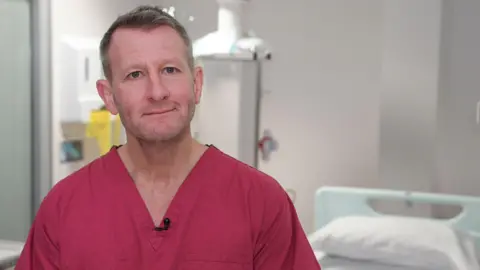
Dr. Ron Daniels, Chief Medical Officer of the UK Sepsis Trust, expressed profound concern: "It’s absolutely shocking. This is one of the biggest killers we face. For hospitals not to ensure that their staff are regularly trained is almost negligent. It’s letting people die because their staff are not trained, but they also perceive that their organisation doesn’t take this condition seriously." The UK Sepsis Trust advocates for mandatory, standalone sepsis awareness training for all clinical hospital staff to ensure early detection. "For every hour we delay giving life-saving treatment, the patient’s chance of survival falls," Dr. Daniels emphasized. "In rapidly progressing cases like Bethan’s, that’s even more time critical."
A positive development has emerged from Aneurin Bevan University Health Board in south-east Wales, which has introduced a "Call for Concern" scheme. This initiative allows staff, patients, families, and carers to request a second opinion for inpatients whose conditions deteriorate rapidly. While this scheme is being rolled out in other Welsh health boards, it currently excludes outpatient areas like A&E. In England, a similar system, "Martha’s Rule," named after Martha Mills who died from sepsis in 2021, allows families to seek urgent second opinions in A&E.

Bethan’s parents, along with the UK Sepsis Trust, are now calling for a similar "Martha’s Rule" in Wales, extending its coverage to A&E departments. The National Institute for Health and Care Excellence (NICE) guidelines recommend that ambulance services administer antibiotics for sepsis cases where transfer and handover times to hospital emergency departments exceed one hour. The BBC’s inquiry revealed that only Scotland and the Isle of Wight fully comply with these guidelines, with South Central Ambulance Service in England having partially implemented them. The UK Sepsis Trust urges other ambulance services to follow suit, arguing that prolonged transit times necessitate pre-hospital antibiotic administration. "If we lived in the Isle Of Wight, Bethan would be alive," Steve states, his voice heavy with the injustice of it all. "That postcode lottery is just so unfair."
Jane’s grief is compounded by the knowledge that her daughter’s life could have been saved. "I think the worst thing is that I know she could have survived if she had the right treatment," she says with a profound sense of loss. "I don’t want any other family to go through this – because she should still be here with us. We want changes to be made – and I feel like Bethan’s on my shoulder, saying this is what we need to do." The Welsh Ambulance Service has expressed its openness to further research on the benefits of pre-hospital antibiotic administration by ambulance staff.
Steve and Jane are urging the Welsh government to mandate standalone, audited sepsis awareness training for all Welsh health boards. A government spokesperson stated that sepsis will be a "focus for NHS Wales improvement plans in 2026-27 to ensure consistent, high-quality care," and that significant steps are being taken to enhance sepsis recognition and response, including the use of National Early Warning Scores, new patient safety information, and the rollout of Call4Concern. However, the James family’s persistent fight for immediate, comprehensive change underscores the urgent need to prevent other families from experiencing the devastating consequences of sepsis misdiagnosis.



 George Anjay
 Ramos Leo
 Nakalama John

 atisusanti