
 Nana Banana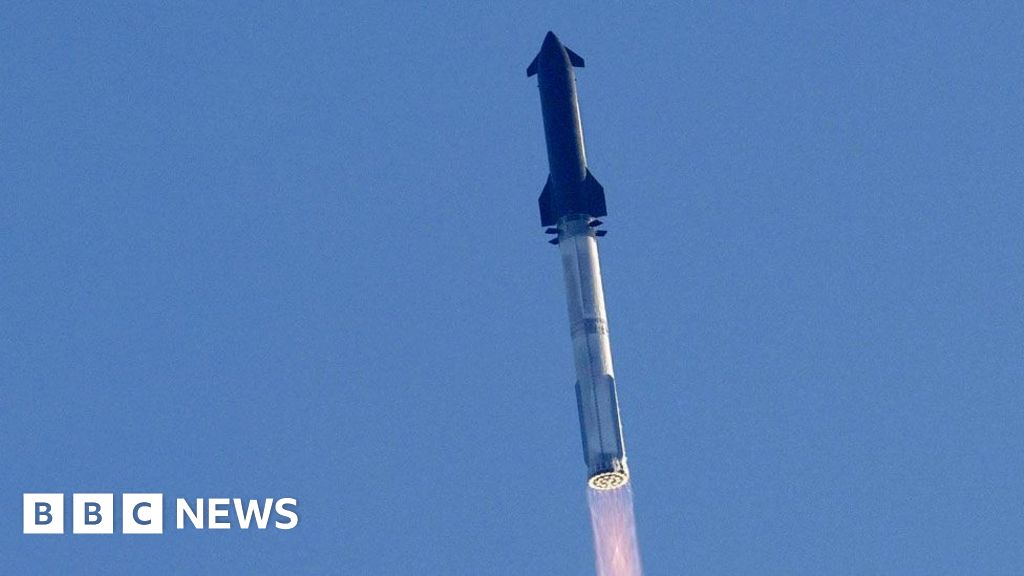
Officials at Elon Musk’s pioneering aerospace company confirmed that problems developed shortly after the two-stage system cleared the launchpad. Despite the loss of the Starship upper stage, there was a notable success that sparked enthusiastic applause from ground control teams: the massive Super Heavy booster, which powers the initial ascent, successfully executed its controlled return and managed to "catch" itself back on its launchpad as planned. This partial success underscores SpaceX’s relentless pursuit of full reusability for its rocket systems, a cornerstone of its strategy to make space travel more affordable and frequent.
The mission’s dramatic unfolding was quickly acknowledged by Elon Musk himself, who took to X (formerly Twitter) to provide initial insights and maintain the company’s characteristic transparency. "Starship experienced a rapid unscheduled disassembly during its ascent burn. Teams will continue to review data from today’s flight test to better understand root cause," SpaceX posted on X, a sentiment echoed by Musk. He further elaborated on the company’s philosophy: "With a test like this, success comes from what we learn, and today’s flight will help us improve Starship’s reliability." Later, Musk offered a preliminary technical diagnosis, stating, "Preliminary indication is that we had an oxygen/fuel leak in the cavity above the ship engine firewall that was large enough to build pressure in excess of the vent capacity." Despite the anomaly, his forward-looking approach remained evident, adding that "nothing so far suggests pushing next launch past next month," indicating a rapid turnaround for future tests.
This high-stakes test came mere hours after a significant milestone for a rival space venture: the inaugural flight of the Blue Origin New Glenn rocket system, backed by Amazon founder Jeff Bezos. New Glenn’s successful maiden launch from Florida marked a pivotal moment for Bezos’s company, which has spent years developing its heavy-lift orbital launch capability. The proximity of these two events vividly highlighted the intense, high-stakes competition between the two tech billionaires, both of whom harbor ambitions to dominate the burgeoning commercial space vehicle market and shape the future of space exploration.
Unverified footage, widely shared across social media platforms, captured what appeared to be the Starship upper stage breaking up in a spectacular fiery display against the sky. Eyewitness accounts and video from as far away as the Haitian capital of Port-Au-Prince showed orange balls of light streaking across the night sky, leaving a distinct trail of smoke behind them, testament to the immense power and dramatic failure of the world’s largest rocket. "Success is uncertain, but entertainment is guaranteed!" Mr. Musk quipped on X, sharing a video of the fiery trail and maintaining his characteristic blend of technical ambition and public engagement. He also reassured followers that "improved versions" of both the Starship upper stage and its Super Heavy booster were "already waiting for launch," reinforcing the iterative and rapid development cycle that defines SpaceX’s approach.
The live stream of the launch, which clocked an impressive 7.2 million views, showcased the immense public interest in Starship’s progress. The Starship system had lifted off from its dedicated launch complex in Boca Chica, Texas, at 17:38 EST (22:38 GMT). The crucial separation of the Starship upper stage from its Super Heavy booster occurred nearly four minutes into flight, proceeding as planned. However, shortly after this critical maneuver, SpaceX communications manager Dan Huot reported on the live stream that mission teams had lost contact with the ship, signaling the unfortunate end of the upper stage’s flight.
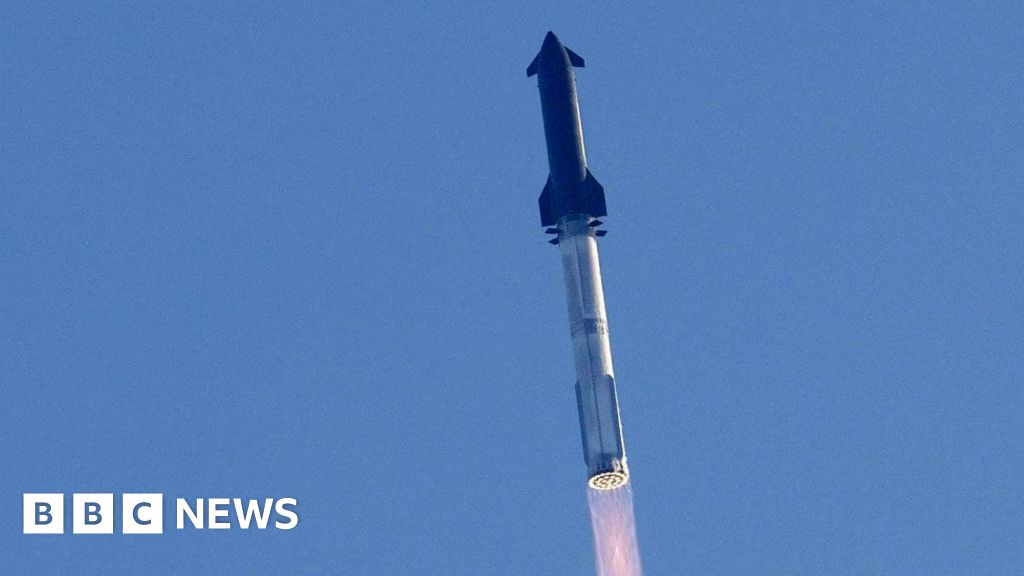
In contrast to the Starship’s fate, the Super Heavy booster’s performance was a cause for celebration. Approximately seven minutes after lift-off, the colossal first stage executed a precise controlled descent and landed back on its launch mount, a complex maneuver that represents a significant leap forward in reusable rocket technology. This successful recovery, achieved amidst the upper stage’s failure, prompted an eruption of applause and cheers from the ground control teams, underscoring the vital importance of booster reusability to SpaceX’s long-term vision.
The US Federal Aviation Administration (FAA), which oversees commercial space launches, quickly acknowledged the incident. The FAA stated it was aware "an anomaly occurred" during the SpaceX mission. As a precautionary measure, "The FAA briefly slowed and diverted aircraft around the area where space vehicle debris was falling. Normal operations have resumed," it said in a statement. The FAA will now likely initiate an investigation into the failure, a standard procedure for any launch anomaly, to ensure public safety and determine the root cause, which could influence the timeline for future Starship launches.
The Starship system is a marvel of engineering, designed to be fully reusable, towering nearly 400 feet (120 meters) tall when stacked. Its ultimate goal is nothing less than revolutionizing space travel, enabling humanity’s journey to the Moon, Mars, and beyond, as well as facilitating rapid point-to-point travel on Earth. Comprising the Starship spacecraft (the upper stage) and the Super Heavy booster, it is powered by SpaceX’s cutting-edge Raptor engines. The iterative testing approach, characterized by frequent launches and a philosophy of "rapid iteration and learning from failure," has been a hallmark of Starship’s development, with each flight providing invaluable data, regardless of its ultimate success in achieving all mission objectives.
This test flight comes just a day after another significant SpaceX mission: a Falcon 9 rocket successfully blasted off from Florida, carrying two privately constructed lunar landers and a micro rover towards the Moon. That uncrewed Falcon 9 launch from the Kennedy Space Center on Wednesday showcased SpaceX’s broader capabilities and its role as a leading launch provider for a diverse array of commercial and scientific missions, even as its most ambitious project, Starship, navigates its developmental challenges. The contrast between these two missions highlights the dual nature of SpaceX’s operations: reliably launching proven rockets while aggressively pushing the boundaries of what’s possible with experimental, groundbreaking systems like Starship.
The competitive backdrop of the space industry adds another layer of intrigue. Jeff Bezos’s Blue Origin, with the successful launch of its New Glenn rocket, is positioning itself as a formidable competitor in the heavy-lift launch market, aiming to serve commercial satellite customers and government agencies, including NASA. New Glenn, also designed for reusability, represents a direct challenge to SpaceX’s dominance and its aspirations for future deep-space missions. The rivalry between Musk and Bezos, often playing out publicly, fuels innovation and investment in the private space sector, promising an exciting future for space exploration and commerce. While Starship’s latest test ended in a spectacular "rapid unscheduled disassembly," SpaceX’s resilience and commitment to learning from every flight ensure that this setback is likely just another step on its ambitious journey to make humanity a multi-planetary species.




 Ramos Leo
 Nakalama John

 atisusanti

 George Anjay