Nana Banana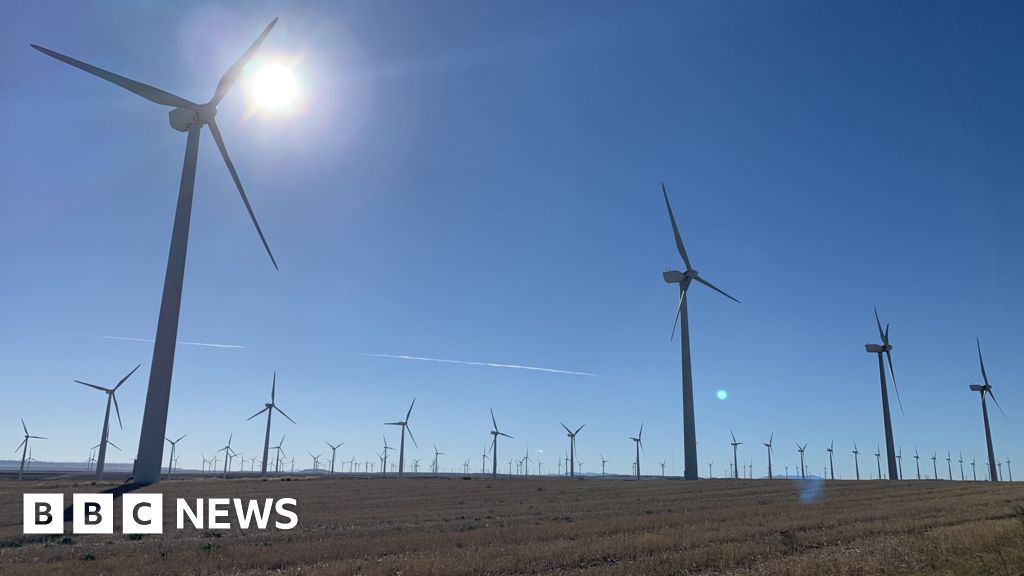
Figueruelas’s reputation as a vanguard of Spain’s green transition has received a substantial boost recently, as ground has been broken on an ambitious project nearby: the construction of a massive gigafactory dedicated to producing batteries for electric vehicles. This monumental undertaking is a joint venture, with Chinese industrial giant CATL and the Netherlands-based multinational automotive corporation Stellantis pooling an impressive €4 billion (approximately $4.7 billion; £3.5 billion) into the state-of-the-art facility. Yao Jing, China’s ambassador to Spain, underscored the project’s significance, hailing it as "one of the biggest Chinese investments Europe has ever seen," signaling strong international confidence in Spain’s green industrial future.
Luis Bertol Moreno, the mayor of Figueruelas, articulates the strategic logic behind selecting this particular location for such a pivotal enterprise. "We’re in Aragón, where there’s wind all year round, there are lots of hours of sunshine, and we are surrounded by wind turbines and solar panels," he explains. "Those [energy sources] will be crucial in generating electricity for the new factory, and I understand that was the key reason for building it here in Figueruelas." The mayor’s comments highlight the symbiotic relationship between abundant renewable resources and the attraction of high-tech green industries, promising not only sustainable energy but also significant economic revitalization for the region.
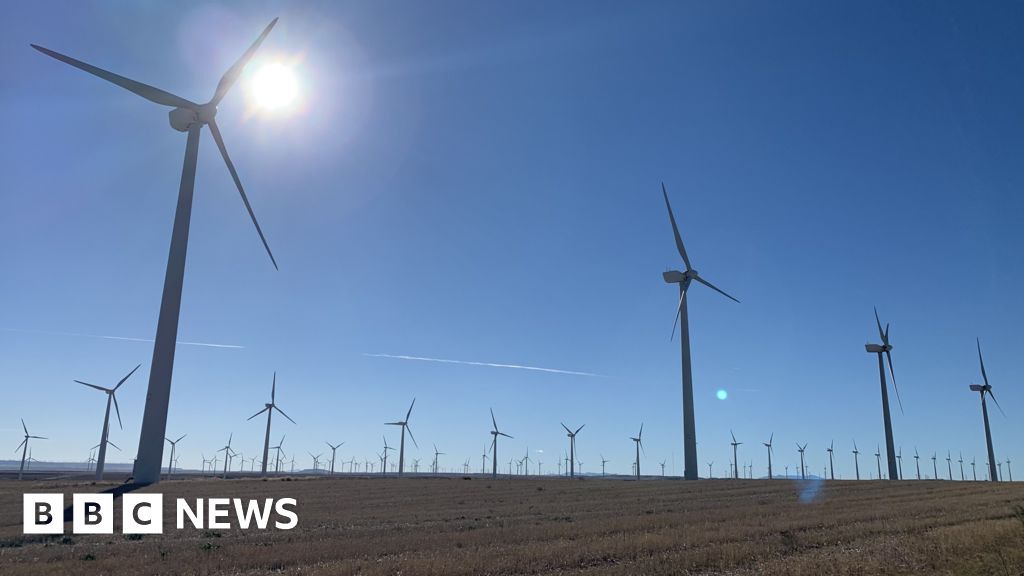
The battery factory stands as a powerful testament to the efficacy of Spain’s energy model, one that has steadfastly prioritized the integration of renewable sources. The nation has undergone a remarkable energy transformation in a relatively short period. In 2017, renewable energy sources contributed a mere one-third of Spain’s total electricity production. However, by the close of last year, that figure had soared to an impressive 57%, demonstrating an accelerated shift away from fossil fuels. The government’s ambition shows no signs of waning, with a bold target set for renewables to account for 81% of electricity output by 2030. This aggressive push is not merely an environmental goal but a strategic economic one, aiming to position Spain as a leader in Europe’s green industrial revolution.
Earlier this year, Prime Minister Pedro Sánchez encapsulated his government’s unwavering commitment during a pointed riposte to former US President Donald Trump’s pro-fossil fuel rallying cry, "Dig, baby, dig." Sánchez, a prominent Socialist leader, countered with his own succinct and resonant slogan: "Green, baby, green," drawing a stark ideological contrast and emphasizing the multifaceted benefits of renewable energy – from environmental protection to economic growth and energy independence. This statement underscored the government’s political will to embed green policies at the core of national development.
However, despite these ambitious targets and impressive strides, Spain’s all-in commitment to renewables has recently faced intense scrutiny, casting a shadow of doubt over its long-term trajectory. This re-evaluation was largely triggered by a widespread power blackout on April 28, which plunged homes, businesses, government buildings, public transport networks, schools, and universities across Spain and neighboring Portugal into darkness for several unsettling hours. The incident, whose precise cause remained elusive for days, immediately ignited a fervent political debate over the nation’s energy mix.
Alberto Núñez Feijóo, the leader of the conservative opposition Partido Popular, seized upon the opportunity to criticize the government’s green agenda, accusing it of "fanaticism" and suggesting that an over-reliance on intermittent renewable sources might have contributed to the widespread outage. Feijóo and other right-wing politicians advocated for a comprehensive rethink of the national energy model, arguing for a more diversified and stable energy portfolio. Their claims were further fueled by the fact that, just a week prior to the blackout, solar generation in mainland Spain had registered a record 61.5% share of the electricity mix, lending a perceived credibility to their concerns about grid stability.
Yet, both the government and Red Eléctrica de España (REE), the national grid operator, have vehemently denied any direct link between the outage and the prevalence of renewable energy sources. Concha Sánchez, head of operations for Red Eléctrica, asserted, "We have operated the system with higher renewable rates [previously] with no effect on the security of the system. Definitely, it’s not a question of the rate of renewables at that moment." Ms. Sánchez explained that the blackout was attributed to a complex combination of issues, including an "unknown event" within the system moments before, which resulted in anomalous voltage oscillations. Despite ongoing investigations and awaiting comprehensive reports to pinpoint the exact cause, a cyber-attack has been repeatedly and definitively ruled out. Nevertheless, the incident undeniably provided ammunition for critics and highlighted the perceived vulnerabilities of a rapidly transforming energy system, regardless of the ultimate technical cause.
In the wake of the April blackout, Spain’s electricity mix has indeed seen a subtle but significant modification, with a noticeable increase in reliance on natural gas. This shift, even if temporary, reinforces the notion that the country stands at a crucial energy crossroads, balancing its ambitious green goals with immediate concerns about grid stability and energy security. The question of how to ensure a reliable baseload supply when solar and wind power are not fully available has become a central point of contention.

Spain’s nuclear industry, which currently contributes approximately 20% of the national electricity supply from its five operational plants, has become particularly vocal since the blackout. It is actively pushing back against the government’s long-standing plans to systematically close these nuclear facilities between 2027 and 2035, starting with the Almaraz plant. This planned phase-out positions Spain as something of an outlier, especially when many other European countries are experiencing a "nuclear renaissance." Nations like France, the UK, Poland, and the Czech Republic are either extending the operational lifespans of their existing reactors or actively investing in new nuclear power plant construction, driven by concerns over energy security, the need for stable baseload power, and the imperative to meet ambitious net-zero emissions targets.
Ignacio Araluce, president of Foro Nuclear, an influential association representing the Spanish nuclear industry, highlights this stark contrast. He states that Spain is "the only country in the world that is scheduling the closure of nuclear plants that are in operation." Araluce firmly believes that nuclear energy provides indispensable stability and reliability, serving as a critical complement to intermittent renewable sources while remaining compatible with the broader green energy transition. "It’s prudent to have a mix of renewables and nuclear energy," he argues, emphasizing the inherent variability of wind and solar. "How can you produce energy in those hours when the renewables are not producing?" he asks rhetorically. The answer, he insists, is "with a source like nuclear, that is not producing CO2, that is producing all hours of the year." The companies owning the Almaraz plant in south-western Spain, scheduled to be the first to shut down, have formally requested a three-year extension to its operational life until 2030, a request currently under careful consideration by the government.
The political opposition is staunchly aligned with the nuclear industry’s position, vociferously opposing the planned shut-down. The far-right Vox party, in particular, has been a vocal critic of the government’s perceived lack of transparency regarding the April blackout, and has consistently championed nuclear power as "a crucial source of stability" for the national grid. The mainstream conservative Partido Popular also largely supports extending the life of nuclear plants, seeing them as a pragmatic solution to ensure energy independence and reliability during the transition to a fully renewable system.

Ms. Sánchez of Red Eléctrica acknowledges that, despite Spain’s significant progress, there remains ample room for improvement within the national electricity model. She points specifically to the Iberian peninsula’s relative isolation from the broader European grid, compared to most of its EU neighbors, which can limit system resilience and cross-border energy sharing. Furthermore, she identifies energy storage as a critical area requiring urgent attention. "While we have taken a good path when it comes to renewable installation, we cannot say the same regarding storage," she concedes. "We need to foster storage installation." Adequate storage solutions, such as large-scale batteries and pumped-hydro storage, are essential to balance the intermittency of renewables and ensure a consistent power supply, a challenge that becomes more acute with higher renewable penetration.
Adding a significant layer of uncertainty to Spain’s energy future is the volatile political panorama. The Socialist-led coalition government has been embroiled in a series of corruption scandals, and its parliamentary majority appears to have fractured in recent weeks, raising the distinct possibility of a snap election in the coming months. Should a right-wing government emerge victorious – an outcome suggested by current opinion polls – it would almost certainly lead to a fundamental re-evaluation of the current energy policy. Such a government would likely place less singular emphasis on renewables, advocating instead for a partial return to more traditional energy sources, which would entail extending the operational lifespans of nuclear power plants and potentially increasing the use of natural gas as a transitional fuel. This political instability introduces considerable risk and unpredictability for long-term investors in Spain’s green energy sector.
Yet, amidst these swirling doubts and political crosscurrents, Spain’s renewable transition continues to gather momentum on the ground. For Figueruelas, in Aragón, this means not just the promise of cheap, clean energy, but a transformative influx of investment and population growth. The town’s current population, a modest 1,000 residents, is projected to increase dramatically with the anticipated arrival of 2,000 Chinese workers tasked with constructing the new battery plant. Once fully operational, the gigafactory is expected to generate up to 35,000 indirect jobs, revitalizing the local economy and creating a ripple effect across various sectors. Local resident Manuel Martín articulates the widespread optimism: "These kinds of investments revitalize the area, they revitalize the construction sector, hostelry. And the energy is free – it just depends on the sun and the wind." Spain’s energy journey remains a complex interplay of ambitious vision, technical challenges, and political realities, charting a course that is both promising and uncertain.



 George Anjay

 Ramos Leo
 Nakalama John