Nana Banana
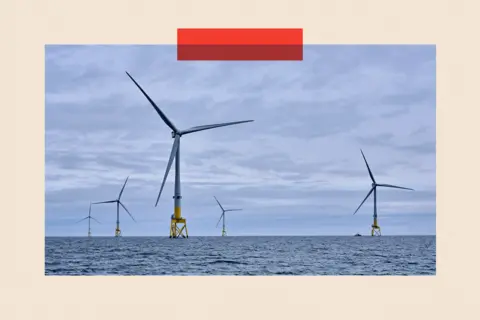
Consider the early hours of 3 June. At 1 am, powerful winds were battering the Scottish coast, creating ideal conditions for the Moray East and West offshore wind farms. These immense installations, located 13 miles off the north-east coast and featuring some of the UK’s largest turbines, are designed to power over a million homes. Yet, despite the perfect weather for maximum output, they were paid to reduce their generation.

The core of the problem lies in the antiquated design of the UK’s electricity grid. Historically, the grid was engineered to transmit power from large, centralised coal and gas-fired power stations, typically situated close to major population centres in England. This infrastructure is ill-equipped to handle the surging influx of renewable energy generated in remote, wind-rich coastal areas or expansive solar farms in rural regions. The "wires" – the transmission lines – simply lack the capacity to carry all the electricity produced from these new, often distant, sources to where it is needed.
This mismatch has dire financial consequences for consumers. Under the current system, known as "constraint payments" or "curtailment payments," electricity generators like Ocean Winds receive compensation when the National Electricity System Operator (NESO) instructs them to reduce their output because the grid cannot handle the excess power. On that particular June morning, Ocean Winds was paid a staggering £72,000 for just one half-hour period to curb generation from its Moray Firth wind farms due to grid overload. This wasn’t an isolated incident; output was restricted multiple times that day.

Compounding this inefficiency, at the very same time Ocean Winds was being paid to switch off, the gas-fired Grain power station on the Thames Estuary, 44 miles east of London, was paid £43,000 to increase its electricity supply. This happens almost daily, creating a bizarre scenario where clean, cheap power is effectively discarded, while more expensive, carbon-emitting power is brought online, all at the consumer’s expense.
The scale of these payments is alarming. Octopus Energy, a major UK energy supplier, analysed data for Seagreen, Scotland’s largest wind farm, and found it was paid £65 million last year alone to restrict its output 71% of the time. This "balancing" act has already cost the country over £500 million this year, according to Octopus Energy’s analysis. NESO, the body responsible for managing the grid, warns that these costs could skyrocket to nearly £8 billion per year by 2030 if no changes are made. These enormous sums are ultimately passed on to households and businesses through their energy bills, directly contradicting the government’s promise that transitioning to net-zero energy would lead to cheaper electricity.

In response to this escalating crisis, the government is contemplating a radical overhaul of the electricity market: replacing the current single national market with a series of smaller, regional markets. This "zonal pricing" approach is touted as a potential solution to drive efficiency and reduce bills, but it has ignited what one senior energy industry executive described as "the most vicious policy fight" he has ever witnessed. The debate has become so contentious that some claim to have "lost friends" over it.
Politically, the stakes are exceptionally high. The proposed changes come at a time when the government’s net-zero policy is under intense scrutiny. Opposition parties, including the Tories and Reform UK, are increasingly vocal about the perceived costs of green policies. Reform UK’s deputy leader, Richard Tice, has even declared that the next election will be fought on "immigration and net stupid zero." Public polls consistently show that the cost of living, particularly rising energy prices, is a top concern for most people. Energy Secretary Ed Miliband, who championed aggressive clean energy policies, initially promised that achieving 95% low-carbon electricity by 2030 would slash the average electricity bill by £300. However, the benefits of renewables in lowering costs have not materialised for consumers, largely due to these grid balancing issues and the continued reliance on gas to top up the system, which frequently sets the wholesale price.
Supporters of zonal pricing argue that it would finally break gas’s stranglehold on electricity costs. In regions like Scotland, blessed with abundant wind resources but a relatively small population of 5.5 million, local pricing would mean wind farms wouldn’t need to be curtailed. Instead, they would sell their excess power to local residents at potentially much lower prices. On extremely windy days, Scottish customers might even receive electricity for free. Other areas with significant renewable generation, such as Yorkshire, the North East, parts of Wales, and increasingly Lincolnshire and other eastern English counties with growing solar investment, would also stand to benefit from plummeting prices.
Beyond direct bill reductions, advocates contend that cheap, localised power could revitalise regional economies by attracting energy-intensive industries like data centres, chemical plants, and manufacturing facilities. While London and much of the south of England might face higher electricity prices under this model, proponents suggest that the hundreds of millions saved through increased grid efficiency could be used to mitigate these increases, ensuring no one pays more than they currently do. Furthermore, higher prices in demand-heavy areas could incentivise investors to build new wind and solar plants closer to consumption centres, reducing the need for extensive new transmission lines and pylons, thereby saving money and preserving rural landscapes.
Greg Jackson, CEO of Octopus Energy, is a vocal proponent, asserting that "Zonal pricing would make the energy system as a whole dramatically more efficient, slashing this waste and cutting bills for every family and business in the country." Research commissioned by Octopus estimates potential savings of over £55 billion by 2050, translating to £50 to £100 off the average annual bill. They point to Sweden, which successfully transitioned to regional pricing in just 18 months, as a model. Key institutions like NESO, Citizens Advice, Ofgem, and even a House of Lords committee have endorsed the switch.
However, many businesses involved in developing and operating renewable energy plants are fiercely opposed. Tom Glover, UK chair of the German power giant RWE, expresses significant apprehension: "We’re making billions of pounds of investments in renewable power in the UK every year. I can’t go to my board and say let’s take a bet on billions of pounds of investment." His primary concern is that fundamental changes to pricing mechanisms could introduce unacceptable levels of revenue uncertainty, undermining existing contracts and jeopardising future investments crucial for the government’s green energy push.
The economics of renewable projects are highly sensitive to financing costs, as the majority of their expense is upfront capital investment. Glover highlights that even minor fluctuations in interest rates can significantly impact project viability and the cost of the electricity produced. This is particularly relevant given current high interest rates and rising material costs for steel and other components, which have already led to the cancellation of major projects, such as a huge offshore wind farm off the Yorkshire coast last month.
Stephen Woodhouse, an economist with AFRY, a consultancy firm that has studied regional pricing for power companies, cautions that "Those additional costs could quickly overwhelm any of the benefits of regional pricing." He also points out that National Grid is already investing £60 billion over the next five years to upgrade the transmission system for clean power. This substantial investment is designed to increase capacity and facilitate the flow of electricity from northern renewable sources to the south, which could naturally reduce the need for and the potential savings from a regional pricing system in the future.

Critics also raise concerns about the practicalities and fairness of zonal pricing. They warn that implementation could take years, that energy-intensive industries like British Steel cannot easily relocate to benefit from cheaper regional power, and that a "postcode pricing" system would be inherently unfair, creating different energy costs for different citizens.
Octopus Energy’s Greg Jackson retorts that the opposition from power companies is driven by a desire to protect their "attractive returns from this absurd system." However, the power companies counter that Octopus itself has a vested interest, being the UK’s largest energy supplier with seven million customers and owning a sophisticated billing system it licenses to others, potentially gaining from such market restructuring.

With the clock ticking on the UK’s clean power targets, the need for investor certainty in the electricity market is paramount. A decision on this contentious issue is expected within weeks, leaving the final call – and its far-reaching consequences for energy bills and net zero – in the hands of Mr Miliband.
Clarification: This article was updated on 29 October 2025 to include the word ‘frequently’ in the sentence: And because gas tends to be more expensive, it frequently sets the wholesale price.
BBC InDepth is the home on the website and app for the best analysis, with fresh perspectives that challenge assumptions and deep reporting on the biggest issues of the day. And we showcase thought-provoking content from across BBC Sounds and iPlayer too.




 George Anjay
 Ramos Leo
 Roy Suryo
 atisusanti
 Nakalama John