Nana Banana
On Valentine’s Day, the enduring allure of "The One" – a soulmate, a perfect match, the person destined to be with you – is palpable. This deeply ingrained belief in a singular, pre-ordained partner has resonated across cultures and centuries, shaping our romantic ideals and expectations. From ancient myths to modern dating apps, humanity has consistently sought to understand if love is a cosmic dictate or a crafted connection.
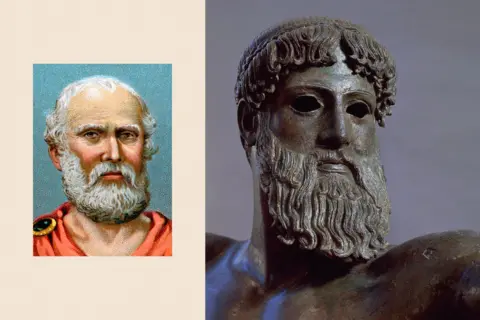
In ancient Greece, the philosopher Plato articulated a poignant origin story for this longing. He posited that humans were once magnificent, whole beings, possessing four arms, four legs, and two faces. Their immense power and radiance, however, provoked the wrath of Zeus, who, in a punitive act, split them into two halves. Ever since, each half has wandered the Earth, consumed by a profound yearning to find its missing other, believing that only through reunion can they regain their original completeness. This myth forms the poetic bedrock of the modern soulmate concept, promising a profound sense of belonging and completion upon finding one’s counterpart.
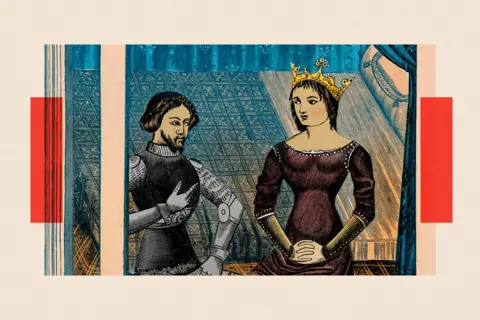
Centuries later, during the Middle Ages, the narrative of love transformed with the rise of troubadours and Arthurian legends. This era introduced "courtly love," a fierce, often clandestine devotion where a knight would demonstrate his worth through acts of self-sacrifice for a beloved, much like Lancelot’s unwavering, albeit forbidden, adoration for Guinevere. This form of love emphasized devotion and loyalty, even if the relationship could never be openly declared, further embedding the idea of an intense, singular bond. By the Renaissance, literary giants like Shakespeare explored the tragic beauty of "star-crossed lovers" – individuals bound by an overwhelming, undeniable connection, yet tragically separated by family feuds, societal pressures, or the cruel hand of fate, suggesting that the universe itself both authored their love stories and conspired against their happy endings. More recently, Hollywood blockbusters and countless romance novels have further cemented these fairy tale notions, portraying love as an effortless, magical convergence of two perfectly aligned souls.
But what does contemporary science, spanning psychology, sociology, biology, and even mathematics, reveal about the concept of soulmates? Is there indeed a singular, special someone out there for each of us, or is the reality far more nuanced?
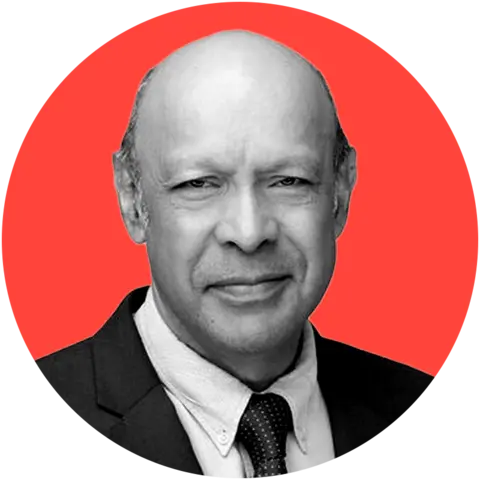
Professor Viren Swami, a social psychologist at Anglia Ruskin University (ARU) in Cambridge, has meticulously traced our modern European understanding of romantic love back to medieval Europe. He highlights how the tales of Camelot, Lancelot, Guinevere, and the chivalry of the Knights of the Round Table were instrumental in propagating the novel idea that one should choose a single individual as a lifelong companion. "Before that, in much of Europe, you could love as many people as you like, and love was fluid, and it was often not about sex," he explains. Swami suggests that as industrialisation uprooted people from their tight-knit agricultural communities, severing traditional attachments, individuals became increasingly "alienated." This societal shift fostered a profound psychological need for a singular figure to provide solace and meaning, leading people to "start looking for one other individual to save them, to save them from the wretchedness of their lives." Ironically, today’s ubiquitous dating apps, while designed to facilitate connections, often transmute this profound search into what Swami terms "relation-shopping." The pursuit of a soulmate, in this context, can become a "soulless experience" for many, transforming the romantic quest into a disorienting process of sifting through countless profiles, often leading to exhaustion rather than connection.

Jason Carroll, Professor of Marriage and Family Studies at Brigham Young University, Provo, Utah, shares a sympathetic view of the deep human yearning for "The One." However, he challenges his students to differentiate between the passive belief in a soulmate and the active pursuit of "the one and only." For Carroll, the distinction lies crucially between destiny and deliberate effort. A "soulmate," in the traditional sense, is simply found, a pre-existing perfect fit. In contrast, "a one and only is something two people carve out together over years of adapting, apologising, and occasionally gritting their teeth." This perspective transforms the romantic ideal from a passive discovery into an active, ongoing creation.
Carroll’s influential report, "The Soulmate Trap," synthesizes decades of research, distinguishing between "destiny beliefs" – the conviction that a truly right relationship should be effortless and free of conflict – and "growth beliefs," which emphasize partners’ active roles in nurturing and improving their relationship. Landmark studies conducted in the late 1990s and early 2000s by Professor C. Raymond Knee at the University of Houston revealed that individuals holding strong "destiny beliefs" were significantly more prone to doubt their commitment and the relationship’s viability after experiencing conflict. Conversely, those with a more "growth-minded" outlook tended to remain committed, even amidst disagreements, viewing challenges as opportunities for collective development. Carroll contends that individuals with growth-based views still aspire to a unique connection but anticipate and accept inevitable "rough patches." They proactively ask, "what can they do to make their relationship better, have improvement and have growth?"
In Carroll’s analysis, the soulmate belief becomes a "trap" not because romance is inherently flawed, but because it fosters an unrealistic expectation that love should never be arduous. He argues that the most "soulful" aspect of a long-term relationship isn’t a cinematic, effortless charge, but the privileged position of having "front-row seats not only for each other’s strengths, but… [their] challenges and weaknesses." This "sacred space," he explains, is built on vulnerability and trust, allowing partners to truly know and accept each other. When love is perceived as a matter of fate, people often become less inclined to undertake the unglamorous, consistent work required to sustain it. The "soulmate trap" makes relationships particularly vulnerable when they encounter their first serious obstacle. "The first time there’s any type of struggle, the immediate thought is, ‘well, I thought you were my soulmate. But maybe you’re not, because soulmates aren’t supposed to deal with things’," Carroll observes. Yet, he concludes, "if relationships are going to go long term, it’s never just going to be a downhill run."
Vicki Pavitt, a London-based love coach, frequently encounters individuals who believed they had found their soulmate, only to discover that the intense "fairy tale" chemistry was entangled with emotional manipulation, inconsistency, and persistent anxiety. She posits that an intense "spark" can sometimes signify the activation of "old unhealthy patterns, like old wounds." A partner who exhibits inconsistent "hot and cold" behaviour can create a powerful, almost addictive longing, where the anxiety generated paradoxically fuels a desire for more. Pavitt explains that what feels like destiny or an undeniable pull may, in fact, be a response from our nervous system, recognizing familiar, albeit unhealthy, dynamics from past experiences and attempting to "fix" them. Therapists refer to this phenomenon as a "trauma bond."
This trauma bond can mimic the intensity of love, drawing individuals into detrimental dynamics not because they are perfectly matched, but because the patterns are familiar. A seminal study by Canadian psychologists Donald Dutton and Susan Painter, published in 1993, provides compelling evidence. They tracked 75 women who had left abusive partners, measuring the strength of their ongoing attachment to their ex-partners against the nature of their past relationships. Their findings were striking: the strongest bonds were observed not in women subjected to consistent abuse, but in those whose partners alternated between charm and cruelty. Dutton and Painter theorized that this intermittent reinforcement – the unpredictable mix of danger and affection – creates a powerful, confusing bond that can make individuals feel "magnetized" back to relationships that are objectively harmful, perceiving familiarity as an intense connection rather than a warning sign. Pavitt emphasizes the importance of discerning genuine compatibility from this "familiar sense of anxiety" in her coaching. "In my language, I never talk about soulmates," she states. "I don’t personally believe that there is one person for everybody… but I do believe that we become ‘The One’ for someone."
If ruling out the existence of a singular soulmate seems to diminish the romance, the complex biology of attraction offers further perspective. Hormonal contraceptives, for instance, may subtly influence how partners perceive and feel about each other. Research suggests that oral contraceptives, by flattening the natural fluctuations of a woman’s fertility cycle, can dampen shifts in attraction that would typically occur. This can potentially alter initial mate choice and even influence ongoing relationship dynamics. One extensive study involving 365 heterosexual couples revealed that women’s sexual satisfaction was higher when their current contraceptive status aligned with their status at the time they initially chose their partner. This hints that changes in pill use could subtly modify a partner’s perceived attractiveness or compatibility. While these effects are generally small, they contribute to understanding why some couples experience puzzling shifts in their chemistry over time, underscoring that biological factors are part of attraction, but not a deterministic force for a single perfect match.

Beyond psychology and biology, mathematics offers yet another intriguing perspective on "The One." Dr. Greg Leo, an economist at Vanderbilt University, has developed a compatibility algorithm, suggesting that instead of a singular "One," we likely have "lots of ‘Ones’." In his "Matching Soulmates" paper, published in the Journal of Public Economic Theory, a computer simulation involves thousands of digitally created daters ranking each other. His algorithm identifies "first-order soulmates" – pairs who mutually choose each other in a stable matching. These pairs are then removed, and the process is repeated with the remaining daters to find "second-order soulmates," and so on. Leo’s simulations revealed that while it was extremely rare for individuals to be each other’s mutual first picks, many people found satisfactory matches as second or third choices. In this scenario, a couple is deemed "happy" if each partner ranks the other near the top of their list and neither could find an alternative partner they (and that alternative partner) would both prefer more. This mathematical model suggests that the ideal partner is not a unique entity, but rather one of many viable, highly compatible individuals with whom a deeply fulfilling relationship can be forged.
So, if "The One" is not found but co-created, how do couples cultivate this profound connection? Professor Jacqui Gabb, Professor of Sociology and Intimacy at The Open University, explored this in her "Enduring Love" project, published in Sociology in 2015. This extensive research involved surveying approximately 5,000 people and then closely following 50 couples, using a blend of quantitative data, diaries, interviews, and "emotion maps" to capture the intricate fabric of their daily lives. When asked what made them feel appreciated, participants consistently highlighted not grand romantic gestures like sunset proposals or surprise trips to Paris, but rather "everyday attentive acts." These included "surprise gifts, thoughtful gestures and the kindness of a cup of tea in bed," warming the car on a cold morning, picking wildflowers, or sharing a private smile across a crowded room.

Quantitatively, these seemingly small, consistent acts of care proved far more powerful than extravagant displays. Gabb’s survey revealed that 22% of mothers and 20% of childless women identified such minor gestures as one of the top two factors making them feel valued – a higher percentage than those who prioritized big nights out or expensive presents. Relationship satisfaction, the data indicated, was not primarily driven by financial status or overt romance, but by "intimate couple knowledge" and its expression in daily life.
Consider the diary entry from Sumaira, a young woman participating in the project. She describes her partner coming home, the dinner she has cooked, a hug in the hallway, and the two of them eating together at the table. "It’s perfect," she writes, "Just us and food. What more could I want?" The entry continues with a spontaneous dance in the living room, a walk in long grass where she feels a fleeting fear of the dark, and a photo her partner cherishes so much he makes it his phone background. It reads like a beautiful, authentic everyday tale, not a fantastical fairy tale – featuring wellies rather than glass slippers. Yet, as Gabb emphasizes, interwoven with these moments of sweetness are the real-life pressures of money worries, family obligations, and a history of depression that the couple navigates together. "The soulmate feeling here doesn’t float above life; it is made, inch by inch, by life, in the way the pair meet those pressures," she concludes.
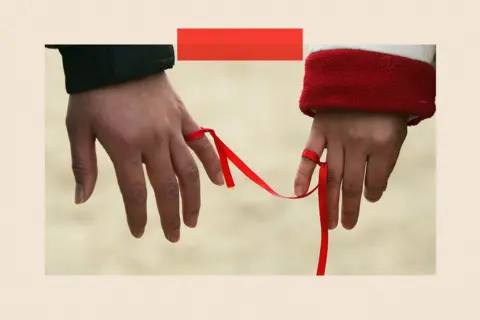
The scientific exploration of soulmates does not diminish the romance; rather, it empowers it to flourish, both in times of ease and adversity. As Jason Carroll suggests, "I’m pretty comfortable with the aspiration to be in a unique special relationship as long as we remember it needs to be created." Vicki Pavitt concurs, believing "it’s fine, helpful, even to have faith that your person is out there, so long as you know there are many people that you could form a really great connection with and stop expecting anyone to be perfect."
Ultimately, the science points to a profound paradox: the people who achieve relationships that feel uniquely "meant to be" are often those who ceased waiting for fate to deliver a perfect match. Instead, they consciously chose to turn towards the imperfect, flawed person in front of them and, with dedication and mutual effort, effectively said: "Shall we make something truly special of this?"

Additional reporting by Florence Freeman
Top image credit: Getty Images


 George Anjay
 Ramos Leo
 Nakalama John