 Nana Banana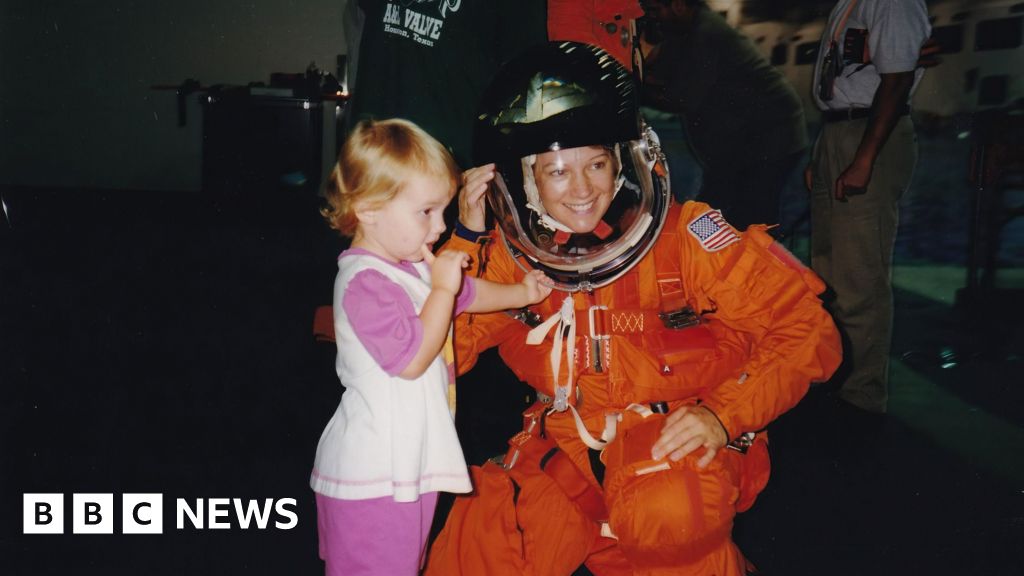
Meeting Collins at London’s prestigious Science Museum, one is immediately struck by her unassuming demeanor. Softly spoken, warm, and profoundly down to earth, she belies the immense power and responsibility she once wielded. Yet, beneath this gentle exterior, a steely resolve and unwavering focus quickly become apparent—qualities essential for anyone daring to venture into the cosmos. Her ambition ignited at a tender age. "I was reading a magazine article on the Gemini astronauts. I was probably nine years old, and I thought that’s the coolest thing. That’s what I want to do," she recalls, her eyes alight with the memory. At a time when women were conspicuously absent from the astronaut corps, young Eileen simply thought, "Of course, there were no women astronauts back then. But I just thought, I’ll be a lady astronaut." This early, seemingly simple declaration was, in fact, a revolutionary aspiration, challenging the norms of her era.
Growing up in Elmira, New York, Collins’ childhood dream was nurtured by an innate curiosity and a rigorous academic pursuit. She understood that to fulfill her ambition, particularly to be at the controls of a spacecraft, she would need to follow a demanding and unconventional path. This meant joining the military and becoming a test pilot—a profession dominated almost exclusively by men. She earned a Bachelor of Arts in mathematics from Syracuse University in 1978, followed by a Master of Science in operations research from Stanford University in 1986, and a Master of Arts in space systems management from Webster University in 1989. Her academic prowess laid a solid foundation, but it was her unparalleled skill in the cockpit that truly distinguished her.
Collins entered the U.S. Air Force, where her exceptional talent as a pilot quickly saw her rise through the ranks. She became a T-38 instructor pilot and then an aircraft commander and instructor pilot on the C-141 Starlifter transport aircraft. By 1989, she was selected to attend the U.S. Air Force Test Pilot School at Edwards Air Force Base, California, a critical stepping stone for aspiring astronauts. Here, she not only stood out from the crowd but excelled, demonstrating the precision, calm under pressure, and technical mastery required for experimental flight. This rigorous training made her an ideal candidate for NASA’s highly competitive astronaut program, which she joined in 1990.
The Space Shuttle program, NASA’s pioneering fleet of reusable "space planes," was her destiny. Her first mission, STS-63 aboard the Space Shuttle Discovery in 1995, marked a monumental milestone: she became the first woman to pilot a Space Shuttle. The weight of expectation was immense. "As the first woman to pilot the Space Shuttle, I worked very hard at that because I didn’t want people to say, ‘Oh look, the woman has made a mistake.’ Because it wasn’t just about me, it was about the women to follow me," she asserts, highlighting the profound responsibility she felt. Her performance was flawless, setting an impeccable standard. "And I wanted there to be a reputation for women pilots that was: ‘Hey, they’re really good’." Her trailblazing flight opened doors and reshaped perceptions, proving unequivocally that gender was no barrier to operating the most complex machines in human history.
Her exceptional capabilities did not go unnoticed. Just four years later, in 1999, Collins was promoted to commander, taking charge of the Space Shuttle Columbia for the STS-93 mission. This made her the first woman to command a U.S. spacecraft—an even greater feat, placing her at the helm of a crew and a multi-million-dollar mission with ultimate authority and responsibility. As commander, she was not just flying the vehicle; she was leading a team, making critical decisions, and overseeing every aspect of the mission from launch to landing.
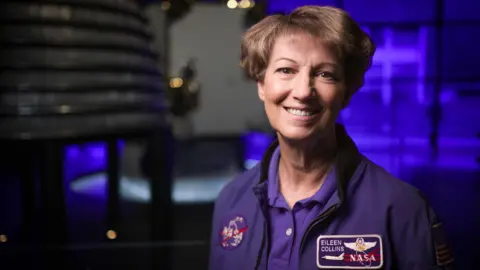
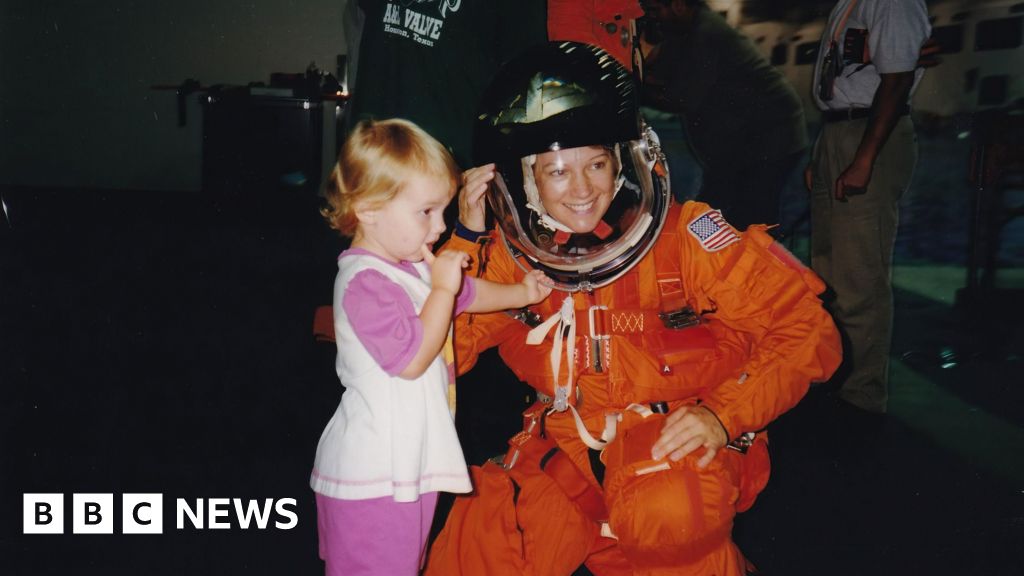
Throughout her career, Collins was also a parent to two young children. This fact, often brought up with an air of disbelief by journalists at press conferences, underscored the prevailing societal expectations for women, particularly in high-profile, demanding careers. While many struggled to reconcile her roles as a working wife and mother with that of an elite astronaut, Collins embraced both with equal passion. She fondly describes being a mum and a commander as "the two best jobs in the world." With a chuckle, she adds a surprising revelation: "But I’m going to tell you it is harder to be a parent than to be a space shuttle commander." She elaborates on this profound insight, stating, "The best training I ever had for being a commander was being a parent – because you have to learn how to say no to people." This analogy speaks volumes about the diplomatic skills, firm decision-making, and unwavering resolve required in both roles, whether navigating a child’s demands or a complex mission control scenario.
NASA’s Space Shuttle program, which spanned three decades, was a saga of breathtaking triumphs and heartbreaking tragedies. Collins’ career unfolded against this backdrop of both exhilarating success and profound loss. In 1986, the Space Shuttle Challenger disintegrated just 73 seconds after launch, killing all seven crew members. Then, in 2003, the Columbia shuttle, the very craft she had commanded, broke up upon re-entry over Texas, claiming the lives of its seven crew members, including her friends. A piece of insulating foam on Columbia’s external fuel tank had broken loose during launch, fatally damaging the heat shield on the wing. Collins shakes her head, the memory of the disaster and the friends whose lives were lost still palpable. These catastrophic events cast a long shadow over the program, highlighting the inherent dangers of space travel and the razor-thin margins of safety.
Despite the profound grief and the inherent risks, Collins had to pick up the mantle. She was assigned to command the next "Return to Flight" mission, STS-114, aboard the Space Shuttle Discovery in 2005. The question of quitting, of stepping away from such a perilous undertaking, undoubtedly crossed her mind, but her commitment to her colleagues and the program was paramount. "People throughout the shuttle programme were counting on the commander to stick with it," she states quietly, revealing the deep sense of duty that guided her. "I think quitting the mission would have been the opposite of brave… and I wanted to be a brave leader. I wanted to be a confident leader. I wanted to instill that confidence in other people." Her resolve in the face of such adversity solidified her reputation as a leader of extraordinary courage and integrity.
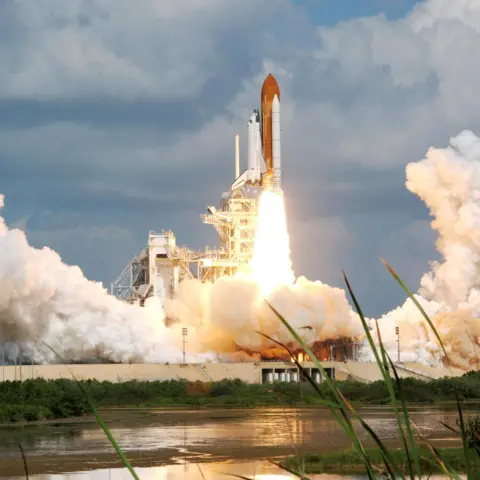
When her mission finally launched in July 2005, the unthinkable happened again. During ascent, a chunk of foam broke away from the external tank, raising immediate fears of a repeat of the Columbia disaster. However, this time, a critical plan was in place to assess the damage. This plan called for one of the riskiest maneuvers in space history, a testament to Collins’s skill and NASA’s determination to prevent another tragedy. Collins had to pilot the 100-ton Space Shuttle through a deliberate 360-degree flip while flying beneath the International Space Station. This intricate dance allowed her colleagues on the orbiting laboratory to photograph the craft’s underside and meticulously check for any breaches in the heatshield.
The maneuver was fraught with peril, and some engineers and managers voiced strong objections, arguing it was too dangerous and could not be done. "I listened to the discussion, they knew I was the commander, and I said: ‘It sounds like we can do it’," Collins recounts with characteristic calm. With her hands steady at the controls, her voice unwavering as she communicated with mission control, Collins guided Discovery through a slow, graceful somersault. The images captured by the ISS crew quickly revealed the damage, confirming the need for an in-orbit repair. A subsequent spacewalk by her crew members successfully patched the compromised areas, ensuring that Collins and her team would make it safely home. This audacious maneuver, executed with precision and nerves of steel, stands as a defining moment in her career, showcasing her exceptional piloting skills and decisive leadership under unimaginable pressure.
STS-114 was Eileen Collins’s fourth and final flight into space. She had always planned to conclude her astronaut career after this mission, a decision made to allow others the opportunity to experience the unique privilege of spaceflight. She has since watched numerous astronauts, including many women, follow in her footsteps, benefiting from the path she meticulously carved. Asked if she has any advice for the next generation dreaming of the stars, her response is wonderfully pragmatic: "Do your homework, listen to your teacher, pay attention in class and read books, and that will give you something to focus on." It’s a matter-of-fact counsel that underscores the fundamental importance of education and dedication.
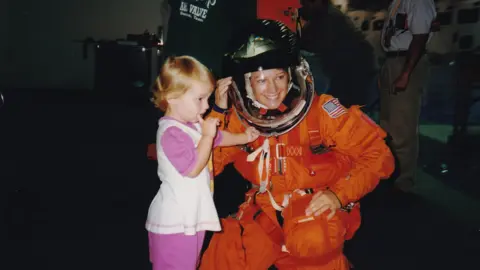
Collins expresses no regrets about bringing her astronaut career to an end, having made her decision and never looking back. Yet, a wistful glint appears in her eye when asked if she would be tempted by a hypothetical seat on a future spacecraft. "Yes, I would love to go on a mission someday. When I’m an old lady, maybe I’ll get a chance to go back in space." It is a testament to her enduring passion for exploration, a flame that burns brightly even after a career that redefined what was possible. Those who follow Eileen Collins into the cosmos will forever be indebted to her, not just for her groundbreaking achievements as the first woman to pilot and command a NASA spacecraft, but for her formidable skill, unwavering bravery, and inspiring leadership that truly made history.


 George Anjay
 Ramos Leo
 Nakalama John